The Sovereignty of Information: An Investigative Analysis of State-Led Regulation, Platform Governance and the Erosion of Digital Pluralism
As I sit here examining the landscape of digital regulation in 2026, I can’t help but feel a growing sense of unease about the direction we’re heading. The very foundations of free speech and open discourse are being challenged under the guise of protecting us from “misinformation.” But I must ask: who appointed governments as the ultimate arbiters of truth?
The global information ecosystem is currently undergoing a systemic reconfiguration where the traditional boundaries between sovereign individual expression and state-sanctioned narrative management are being dissolved. This transition, often codified under the administrative rubric of “combating misinformation,” has evolved into a comprehensive framework of ideological governance that transcends national borders and enters the realm of supranational regulation. The Sovereignty of Information as I call it, is a fundamental human right but yet jeopardised.
I have spent considerable time sitting with this question and the more I examine it, the more it disturbs me. Not because governments are uniquely evil, but because of something far more insidious: the entire machinery of censorship is being constructed with your enthusiastic consent, dressed in the language of protection, safety, and public good. The word they have chosen for this project is “misinformation.” It is a word worth examining very carefully.
Table of Contents
The Mute Button in a Rigged Debate
Let me offer you a simple analogy. Imagine a school debate. One side — the proposers — are given functioning microphones, good lighting, and ample time. The other side — the opposition — are handed microphones with the volume turned to zero. The judges, sitting at the front, hear only one argument. When they vote, they vote unanimously for the proposers. Everyone applauds. “Democracy has spoken,” someone says.
What has actually happened is sabotage.
This is precisely the architecture of government-endorsed information control. It is not that the “approved” position wins on merit in the marketplace of ideas. It is that the opposing position is systematically starved of oxygen — demonetized, deplatformed, shadow-banned, algorithmically buried — until it disappears from public view. The debate appears to have been settled. In reality, it was never held.
I am not saying that every dissenting voice is correct. I am saying something far more fundamental: correctness is not the point. The point is who has the authority to declare something incorrect — and then act on that declaration by silencing the person who said it.
Governments do not have that authority. They have never had it. And when they acquire it, the consequences are always the same.
The Pandemic as a Case Study in Manufactured Consensus
Nothing crystallised this dynamic more starkly than the COVID-19 pandemic. In the fog of a genuine global health emergency, governments and the platforms they leaned on chose a remarkable strategy: instead of allowing vigorous scientific debate — which is, after all, how science is supposed to work — they chose a single narrative and enforced it with extraordinary aggression.
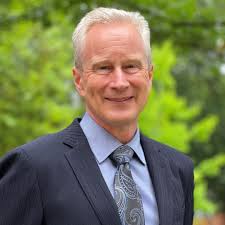
Consider what happened to some of the voices that were silenced. Dr. Peter A. McCullough is a board-certified cardiologist, internist, and one of the most published cardiovascular physicians in the world. He had concerns about vaccine safety protocols and advocated for early treatment approaches. He was not a fringe blogger. He was not a conspiracy theorist posting from his mother’s basement. He was a credentialed, peer-reviewed medical professional — and he was deregistered and stripped of his platforms for speaking. One would think that in a health crisis, hearing from cardiologists would be considered essential. Apparently not.
Dr. Peter A. McCullough, a renowned cardiologist and former Vice President of Internal Medicine at Baylor University Medical Center, became a primary target of this regulatory apparatus. Despite his extensive academic record and clinical experience, McCullough’s public statements questioning the “clinical reason” for universal vaccination led to a series of escalating sanctions. In October 2022, the American Board of Internal Medicine (ABIM) recommended the revocation of his board certifications. By January 2025, the ABIM had officially revoked his certifications for Cardiovascular Disease and Internal Medicine, citing the “promotion of misinformation”.

Michael Yeadon, a British pharmacologist and former Vice President of Pfizer’s Allergy and Respiratory Research Unit and Chief Scientific Officer at Pfizer — the very company whose vaccine dominated the global rollout — raised serious concerns about aspects of the pandemic response. This is a man with three decades of experience in pharmaceutical research. His reward for exercising that expertise was to be labelled a spreader of dangerous misinformation and comprehensively removed from public platforms.
Yeadon’s background as a high-level pharmaceutical executive made his critiques of the vaccine rollout particularly impactful. Consequently, he was subjected to aggressive de-platforming by YouTube and Twitter. His testimony on the potential long-term risks of the mRNA technology was labeled as “false” by platform-aligned fact-checkers, often citing government health data that was itself subject to revision.
Similarly, independent media outlets like the London Real podcast were targeted for hosting “heterodox” guests. In April 2021, YouTube removed a recording of an official public hearing that featured Florida Governor Ron DeSantis and the authors of the Great Barrington Declaration. This removal of a public record of a government proceeding represents an extreme form of censorship, where the platform deletes the very evidence needed for citizens to hold their elected officials accountable.

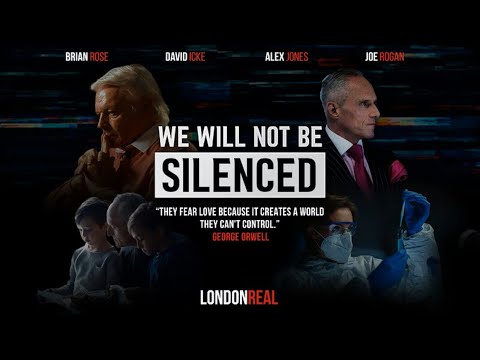
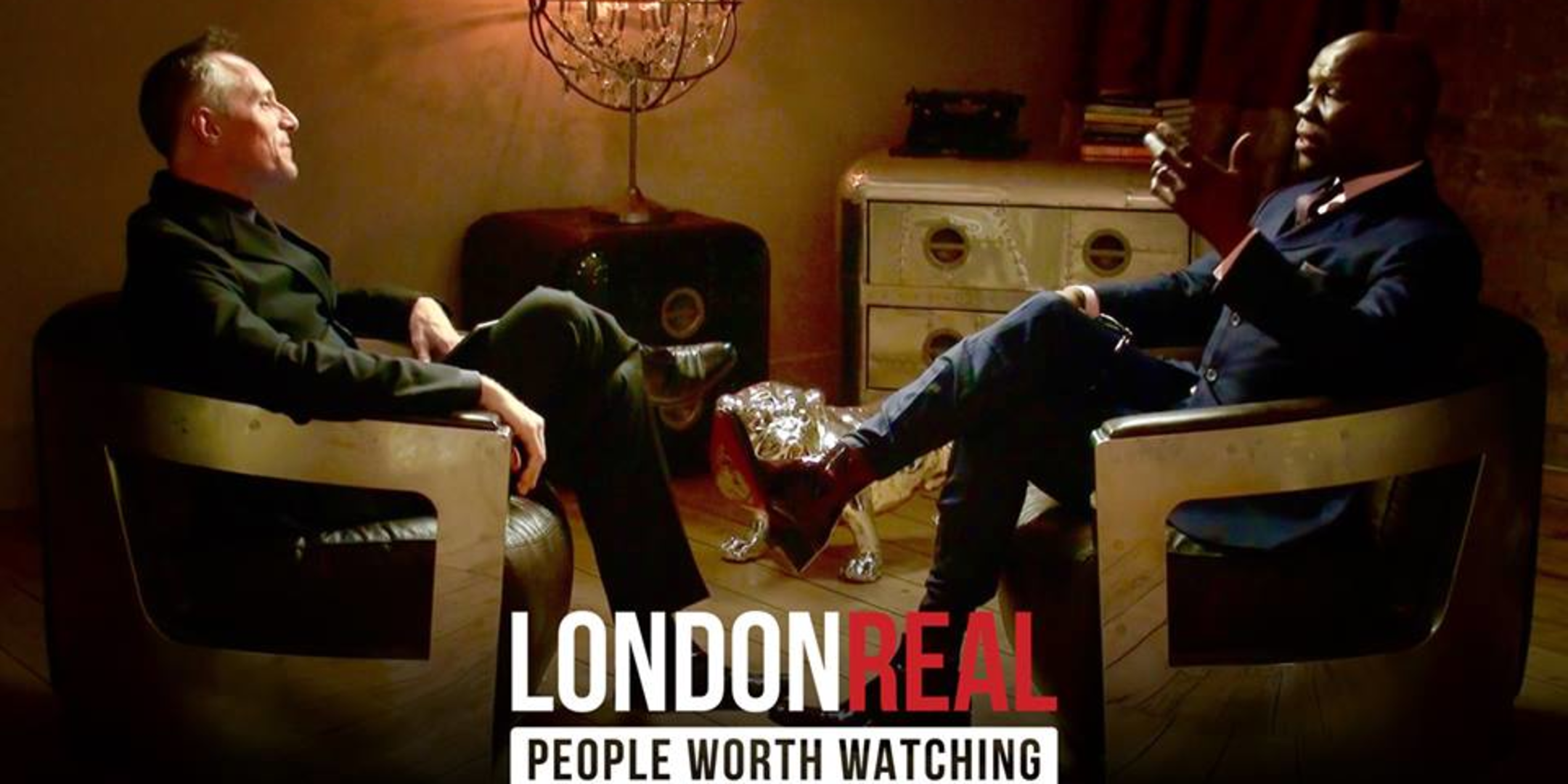
The London Real podcast, which hosted long-form conversations with figures challenging official positions, was deplatformed from YouTube entirely. Not because it published instructions on how to harm someone. Not because it called for violence. But because it asked uncomfortable questions.
The regulation of information is frequently a collaborative effort between state actors and private corporations, often conducted through “voluntary” agreements that mask underlying coercion. In the United States, internal communications obtained by the House Judiciary Committee reveal a coordinated pressure campaign by the Biden administration to compel platforms like Meta (Facebook), Alphabet (YouTube) and Amazon to censor content related to COVID-19 and the 2020 election.
Leaked emails show that White House officials “repeatedly pressured” social media executives for months to remove “certain COVID-19 content including humor and satire”. This pressure extended to removing true information about vaccine side effects and suppressing the “lab leak” theory of COVID-19’s origins—a theory that the government itself later admitted was a plausible scientific possibility.
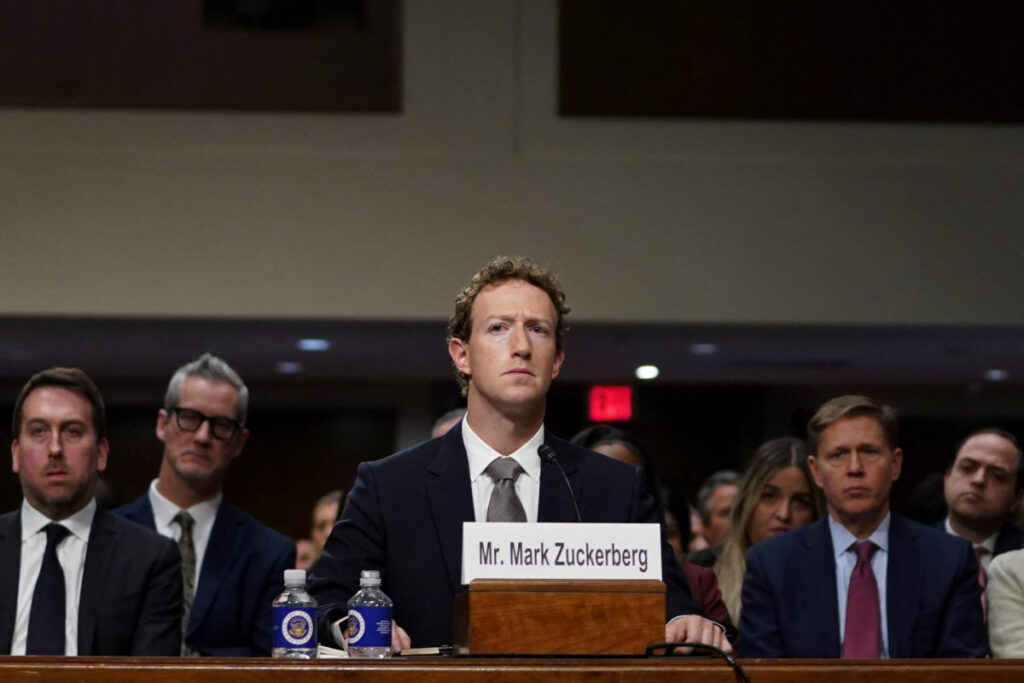
Meta CEO Mark Zuckerberg eventually admitted that the government pressure was “wrong” and expressed regret that the company was not more outspoken about it at the time. The investigation found that Facebook, YouTube and Amazon changed their content moderation policies in late 2021 as a direct response to this administrative pressure. For example, Amazon modified its bookstore policies to suppress specific titles “due to criticism from the Biden people”. This “voluntary censorship” effectively allowed the government to bypass constitutional protections for free speech by using private companies as proxies for state-directed suppression.
The “chilling effect” of this coordination is profound. When the state identifies specific individuals or viewpoints as “dangerous misinformation,” it signals to the platform that these users are a liability, leading to “shadow banning” (reducing visibility without notice) or outright de-platforming. The investigation into the COVID-19 era reveals that even Nobel laureates, editors of medical journals, and highly cited epidemiologists were not immune to these tactics, provided their findings contradicted the prevailing government orthodoxy.
Here is what I want you to sit with: these are not fringe cases. Across the pandemic period, a pattern emerged globally — doctors, scientists, epidemiologists, and researchers who deviated from official positions were not engaged with. They were not publicly debated, their evidence was not examined and refuted on the merits. They were simply removed. And this removal was cheered by people who called themselves defenders of science.
The great irony is that science — real science — is built entirely on the principle of falsifiability. A scientific claim is only meaningful if it can, in principle, be challenged and disproven. The moment you protect a scientific position from challenge, you have transformed it from science into dogma. And enforcing dogma is a religious function, not a governmental one.
Flat Earth, YouTube and the Logic of the Terrified Establishment
Let me bring this closer to everyday experience, because I think there is something revealing in how platforms handle even the most seemingly absurd alternative claims.
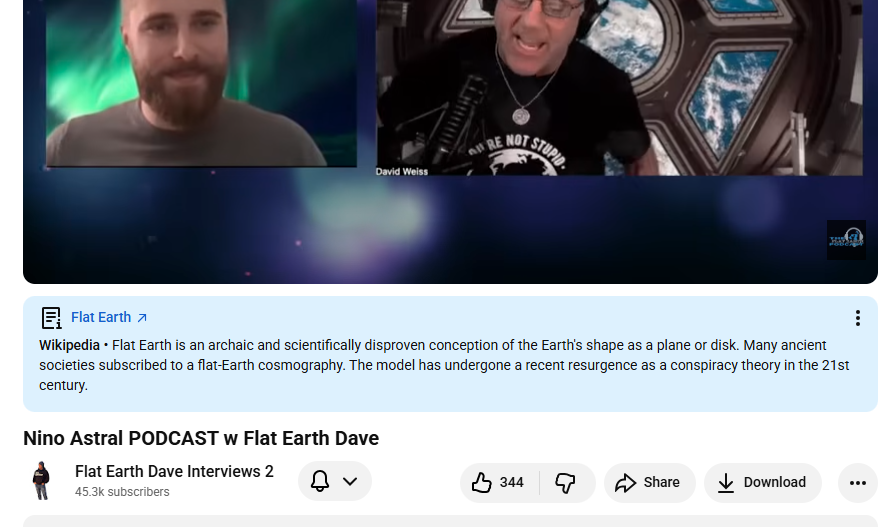
YouTube has, for years, appended a Wikipedia disclaimer beneath Flat Earth videos. The disclaimer informs the viewer — helpfully, you understand — that Flat Earth is a debunked conspiracy theory. It is there, I suppose, so that you, the viewer, do not accidentally forget that the Earth is round before you can be reminded.
I want to ask a simple question: if the Flat Earth position is so thoroughly and laughably debunked, why is YouTube frightened of it?
The answer, once you stop to think about it, tells you something profound about the real logic of censorship. If a claim is genuinely, demonstrably false, the best possible response is to let it breathe. Let it be examined. Let people look at the evidence on both sides and reach their own conclusions. That process — transparent, adversarial, open — is what builds durable public understanding. It is how people learn to think, not just what to think.

The moment you start labeling, suppressing, and wrapping warning banners around disfavoured content, you do two things simultaneously. First, you signal to critical thinkers that something is being protected — which, paradoxically, makes the suppressed content more interesting. Second and more dangerously, you remove the public’s opportunity to practise the very discernment you claim to be protecting them from. You are not building a more informed citizenry. You are building a more dependent one.
Adults must be treated as adults. The alternative is a paternalistic state that decides, on your behalf, which ideas your mind is strong enough to encounter. That is not protection. That is control.
Who Profits? Follow the Money — and the Power
I am a firm believer in following incentive structures when trying to understand why institutions behave as they do. In the case of COVID-19, the incentive structure is not subtle.
The same global institutions that declared COVID-19 a pandemic — the WHO, key figures at the World Economic Forum, and major pharmaceutical interests — were also the entities that stood to gain the most from the specific interventions that were then mandated globally. I am not telling you that this proves malfeasance. I am telling you that this is precisely the kind of conflict of interest that, in any other domain, would be considered disqualifying.
The authority that governments claim over health information is heavily reliant on the standards set by the World Health Organization (WHO). However, an investigation into the WHO’s financing reveals a structural dependency on private actors and “earmarked” contributions that call into question the organization’s independence.
The “Gates Effect” and Earmarked Financing
The WHO’s budget is primarily composed of two sources: assessed contributions (membership dues) and voluntary contributions. Assessed contributions now account for less than 20% of the total budget, leaving the organization 80% dependent on voluntary funding from member states and private partners like the Bill & Melinda Gates Foundation (BMGF).
Crucially, approximately 90% of these voluntary contributions are “earmarked“— meaning the donor specifies exactly how and where the money must be spent. The BMGF, as the second-largest funder of the WHO, has historically directed the vast majority of its funding towards specific disease programs like polio eradication ($3.2 billion since 2000), while relatively small amounts are allocated to broader health systems or non-communicable diseases. This “crowding-in” effect forces the WHO to prioritize the agendas of private philanthropic actors over the evidence-based health priorities of its member states.
The Profit Motive and Information Control
The financial interests of the entities funding the global health response often align with the policies they promote. During the COVID-19 pandemic, the same institutional actors that declared a global emergency were those whose private partners and funded initiatives profited most from the subsequent vaccine mandates and technological responses. The investigation notes that the WHO has increasingly sought to “mobilize the private sector,” with private finance for sustainable development reaching $55.3 billion in 2022.
When platforms like YouTube and Meta censor content that is critical of vaccines or pandemic policies, they are often citing the WHO as their primary authoritative source. However, the WHO itself is a “predictably, sustainably, and flexibly funded organization” only to the extent that it serves the interests of its major donors. This creates a closed loop of authority where private interests fund the global standards, which governments then use to justify the censorship of any citizen who questions the resulting policies.
We routinely ask judges to recuse themselves when they have a financial stake in a case. We require financial advisors to disclose conflicts of interest. We have entire regulatory frameworks built on the principle that people with skin in the game cannot be neutral arbiters. Yet when it came to pandemic policy, the organisations and individuals with the largest financial stakes in the outcome were also the ones certifying which information was trustworthy and which was dangerous. And the gatekeepers of information — the platforms, the governments, the fact-checking organisations funded by those same interests — carried out the enforcement.
The same pattern appears in climate policy, in agricultural science, in pharmaceutical regulation. The actors who shape the “approved” narrative are rarely disinterested. They are deeply, structurally embedded in the outcomes those narratives produce. This is not a conspiracy theory. It is an observation about how power and money operate — an observation that has been well-documented by historians, investigative journalists, and economists for decades.
Economic Sabotage as Censorship: The Google AdSense Weapon
Beyond direct censorship and legal prosecution, the state and its institutional allies utilize economic leverage to silence independent media. The “demonetization” of websites and channels that challenge government narratives is a form of economic sabotage that effectively shuts down news organizations without the need for a court order.
The Role of Google AdSense in Content Control

Google, which holds nearly 82% of the global search engine market, exerts immense control over the digital advertising economy. Through its “dangerous and derogatory” policies, Google AdSense has been used to target “unapproved” publications. Independent news websites and content creators who published articles questioning aspects of the COVID-19 vaccine rollout found themselves quietly demonetized by Google AdSense — Google’s advertising platform that provides the revenue backbone of much of the independent media ecosystem. No law was broken. No official order was issued. One day, the income simply stopped. The message was unmistakable: hold approved views, or starve.
This is censorship by way of economic strangulation. It requires no legislation. It leaves no fingerprints. It can be denied in any court because no speech was technically suppressed — the creator can still publish, technically. They just cannot sustain themselves doing so. Over time, the independent voices fall silent not because they were silenced, but because they could not afford to continue.
This mechanism — quiet, deniable, and devastatingly effective — is perhaps the most powerful censorship tool of our era. And it operates with the full knowledge and tacit approval of governments who understand exactly what it achieves.
The Disparity in Ad Spend and Institutional Support
While independent sites are demonetized, government agencies and “Big Pharma” companies spend millions of dollars to buy ads on “misinformation” sites to attempt to reach “vaccine-hesitant” consumers. A study found that between 2021 and 2024, health groups, including the CDC and Pfizer, spent nearly $37 million advertising on news websites flagged for misinformation. This reveals a paradoxical system: the state uses taxpayer dollars to fund its presence on sites it simultaneously pressures platforms to censor, while independent owners of those same sites are denied the right to monetize their own content.
The EU’s Prominence Laws: When Governments Pick the Winners
In Europe, the assault on information diversity has taken an even bolder form. The European Union is currently discussing what are being called “prominence laws” — legislation that would require social media platforms to algorithmically prioritise content from government-approved or government-designated channels over content from independent creators.
Read that again slowly, because it deserves to land fully: the government picks which voices you see first. The government decides whose content rises to the top of your feed, not based on quality, relevance, or audience engagement, but based on a government certification of trustworthiness.
This is not a safeguard against misinformation. This is the infrastructure of a managed information environment — the kind of environment that historians usually describe in the context of Soviet-era media, not 21st-century liberal democracies. The language has changed. The function is the same.
The ostensible justification is that this will help citizens find reliable information. What it will actually do is give governments the power to make their preferred sources structurally dominant, regardless of their actual credibility or quality. The incentive for any government-preferred outlet will be to remain on the approved list — which means not publishing anything the government dislikes. The independence of such outlets will be, in the most literal sense, optional.
This systematic prioritization of state-aligned channels represents a departure from the liberalization of online spaces and a return to the centralized gatekeeping of the broadcast era.
Africa: The Government Content Creator on Your Timeline
In Africa, a related but equally troubling development has taken shape. Across the continent, content creators — particularly those active on YouTube, TikTok and Instagram — have been quietly recruited onto government payrolls. The arrangement is rarely disclosed to audiences. The creator continues to appear independent. They continue to present themselves as voices of the people. But their content is shaped, at least in part, by a government that is paying for access to their platforms and credibility.

This is not hypothetical. It is documented in multiple countries, including some that position themselves as democracies. The government, finding it difficult to control narratives it cannot directly own, simply buys into the influencer economy. It is smarter than heavy-handed censorship. It is more durable. And it is invisible to the audiences who believe they are receiving an independent perspective.
The effect on information ecosystems in Africa is profound. When citizens cannot tell which voices are independent and which are subsidised, the entire notion of an information marketplace collapses. You are not choosing between competing ideas anymore. You are choosing between ideas that the government wants you to encounter and ideas that the government is quietly burying.
Two-Tier Policing: The Selective Protection of Expression in the UK
The state’s role as an “umpire” of speech is further called into question by the perceived inconsistency in the enforcement of public order and “misinformation” laws. In the United Kingdom, recent years have seen a divergence in how religious and political expression is handled by the authorities, leading to widespread accusations of “two-tier policing”.
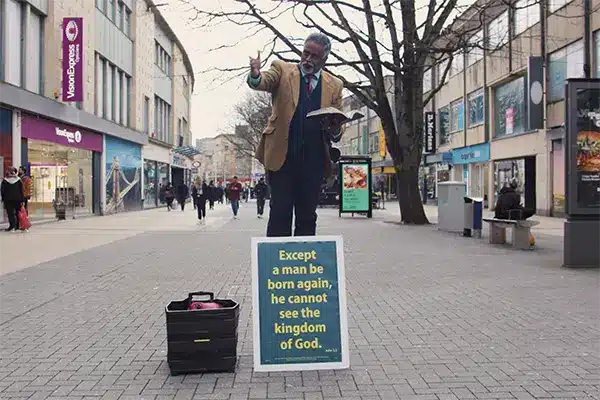
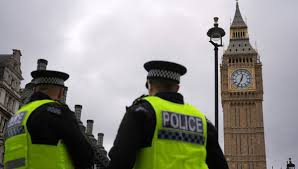
Consider this scene: a street preacher in London is arrested for causing a public disturbance. Meanwhile, a mosque a few streets away is permitted to broadcast the call to prayer through speakers of considerable volume. Whatever your personal religious views, the structural question here is impossible to ignore. Why is one form of public religious expression policed while another is accommodated? What principle governs that distinction? And who applies it?
When governments begin making these distinctions — picking which religious expression is acceptable, which discourse is permitted, which facts are authorised — they are doing something that every major political tradition, from left to right, has historically recognised as dangerous. The machinery of selective tolerance does not remain selective forever. It expands. It finds new categories. It refines its criteria.
The Case of Street Preachers and “Religiously Aggravated” Offenses

The arrest and interrogation of Christian street preachers in cities like Bristol and London demonstrate the elastic application of the Public Order Act 1986. Pastor Dia Moodley was arrested in November 2025 on suspicion of a “religiously aggravated” public order offense while preaching about the differences between Christianity and Islam. During his interrogation, police officers reportedly asked why he chose to preach in an area where he knew Muslims would be present, suggesting that the right to free speech might be limited by the religious demographics of the audience.
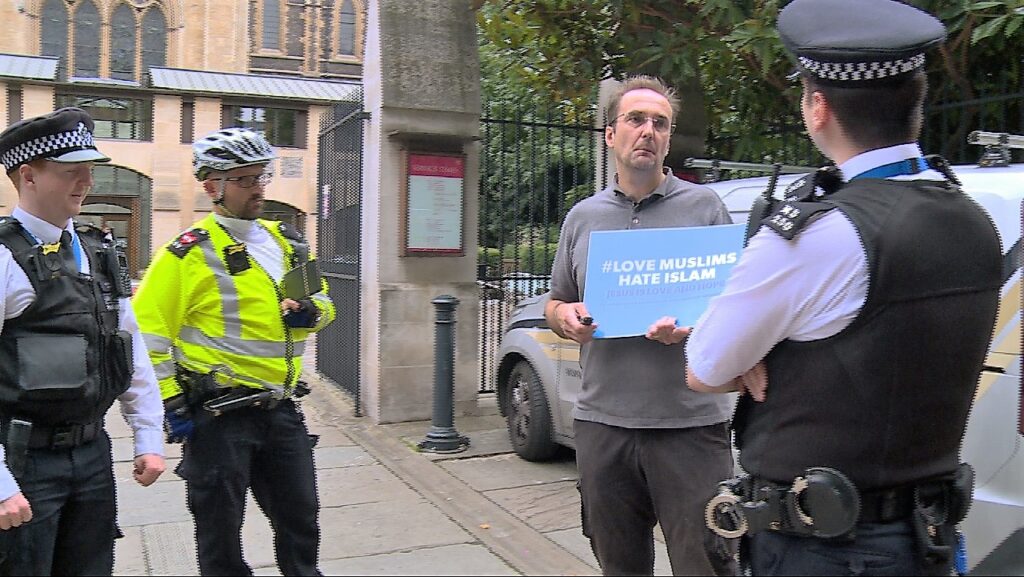
Similarly, Ian Sleeper was detained for 13 hours in 2017 for displaying a sign that read “Love Muslims, Hate Islam”. Despite his acquittal of criminal charges, a High Court judge ruled in January 2025 that the arrest was lawful, citing the “potential risk to public disorder” in a “febrile atmosphere” following terrorist attacks. The judge rejected the theological distinction between “hating the sin” and “loving the sinner,” effectively allowing the state to interpret religious doctrine as a pretext for arrest.
Mosque Loudspeakers and the Exemption from Nuisance
Contrastingly, many councils in the UK have granted mosques permissions to broadcast the call to prayer (Adhan) over public loudspeakers, particularly during Ramadan. In boroughs like Newham and Waltham Forest, permissions were granted to dozens of mosques to broadcast publicly. Legal challenges and resident complaints have revealed that, in some cases, “no licences are required for amplified calls to prayer” and “no noise assessments have been undertaken or decibel levels set,” creating a de facto exemption that would not apply to commercial premises or other religious groups.

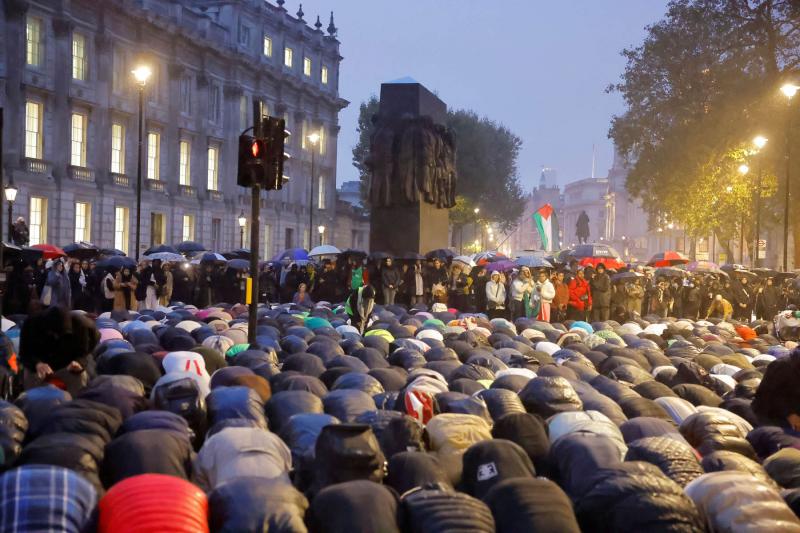
This disparity — where a street preacher is arrested for a “potential” risk of disorder while another religious group is granted public amplification rights without standard regulatory oversight — suggests that the state is not acting as a neutral arbiter. Instead, it is “babysitting” adult citizens by deciding which religions or viewpoints are “permissible” in the public square and which are “disturbances”. This selective enforcement of speech and nuisance laws serves as a microcosm of the broader trend toward managed information environments, where the “correctness” of a message is determined by the identity of the speaker and the political sensitivities of the day.
The Permanence of Emergency: A Historical Trajectory
A common theme throughout human history is that powers seized by the state during a crisis are rarely returned to the citizenry once the crisis has passed. The regulation of misinformation is frequently marketed as a temporary measure to “protect” the public, yet it often becomes a permanent feature of the legal and social landscape.
Historical Precedents of Power Retention
- The Reichstag Fire (1933): Nazi leaders exploited a single act of arson to pass the “Decree for the Protection of the People and the State,” which suspended constitutional provisions safeguarding free speech and the press. What was sold as an emergency measure to combat a communist threat became the permanent legal foundation for a totalitarian state.
- The Espionage and Sedition Acts (1917-1918): During World War I, the US government passed legislation criminalizing speech that cast the government or the war effort in a negative light. While parts were eventually repealed, the core concepts of “disloyal” speech being a threat to national security remained embedded in the legal consciousness.
- Modern States of Emergency: Between 1985 and 2016, 137 countries declared a state of emergency at least once. During the COVID-19 pandemic, 99 governments declared states of emergency in the spring of 2020 alone. In many instances, these powers were used to censor critics, bypass parliaments, and permanently increase executive control over information flows.
| Historical Crisis | Measure Taken | Long-term Consequence |
| US Civil War | Suspension of habeas corpus and port blockades. | Permanent expansion of presidential emergency powers. |
| World War I | Nationalization of sugar and control of coffee consumption. | Normalization of state intervention in the “command economy”. |
| Great Depression | Closure of the nation’s banks and gold seizure. | Founding of the modern administrative state and regulatory overreach. |
| COVID-19 Pandemic | Lockdown mandates and digital censorship coordination. | Supranational laws like the EMFA and the DSA. |
History demonstrates that the “dictatorship remains constitutional” only as long as the legislative and judicial branches actively police the expanded boundaries of executive conduct. However, in the modern digital era, the boundaries are being redrawn through algorithmic curation and supranational boards (like the European Board for Media Services), which operate with far less public visibility than traditional military or economic decrees.
Every time throughout human history when governments have acquired the power to control information at this level, they have not given it back. Not once. The Roman censors did not voluntarily dismantle their office. The Soviet information apparatus did not relax because it felt it had achieved its goals. The British colonial information controls were not lifted as an act of generosity. Power of this kind is relinquished only under pressure — legal, democratic, or sometimes revolutionary.
We are being asked, right now, to hand governments this power voluntarily. We are being asked to do so in exchange for protection from “misinformation.” History suggests we should read that contract very carefully before we sign.
The Limits of This Argument: What We Are Not Saying
I want to be direct about what this argument does not include, because conflation is the enemy of clear thinking.
Calling for freedom of information is not calling for the platforming of content that teaches people how to commit violence or harm others. There is a legitimate and defensible line around information that directly enables physical harm — murder, child exploitation, the manufacturing of weapons. That line exists, it is defensible, and it is broadly accepted across most serious traditions of free speech philosophy.
What we are arguing for is everything short of that line. We are arguing that if a piece of information does not cross into direct facilitation of physical harm, it should be permitted to exist in the public square without government interference. That includes information that is wrong. That includes information that is controversial. That includes information that challenges scientific consensus, historical consensus, and governmental consensus.
The answer to a bad idea is a better idea, argued more clearly, with better evidence. The answer to misinformation is more information, more transparency, more rigorous public debate. It is not a government bureaucrat with the power to decide which ideas you are trusted to encounter.
Synthesis and Conclusion: The Path Toward Informational Sovereignty
The investigation into government regulation and platform censorship reveals a consistent pattern of institutional overreach that prioritizes narrative control over factual diversity. From the supranational mandates of the European Media Freedom Act to the secret influencer payrolls of African governments, the mechanisms of control have become more sophisticated and less transparent.
The fundamental issue is not a question of who is “right” or “wrong” in any given debate — be it the safety of a vaccine, the shape of the earth, or the tenets of a religion — but rather a question of who possesses the authority to decide who gets to be heard. When governments assume the role of “babysitting” their citizens by muting opposition mics, they sabotage the very democratic process they claim to protect. The protection of fundamental freedoms like freedom of speech and expression requires a liberalization of online spaces to allow for constant scientific and social debate, where adults are treated as adults capable of exercising free will.
The evidence suggests that the current global push for “misinformation” laws is a euphemism for the consolidation of state and corporate control. Throughout history, the most effective inoculation against falsehood has been more information and the rigorous application of common sense, not the implementation of censorial boards and algorithmic gatekeepers. As the digital panopticon continues to expand, the restoration of informational sovereignty remains the critical challenge for the 21st century.
The Fundamental Question Remains
I return to where I began: Who decides what you know?
If the answer is “the government,” then what you call “protection from misinformation” is indistinguishable, in its functional architecture, from what authoritarian states have always called “ideological hygiene,” “protecting social stability,” or “managing public discourse.” The names change. The mechanism does not.
Every adult human being possesses reason, conscience, and the capacity to weigh competing claims. The freedoms of speech, expression, religion, and information are not gifts from governments. They are recognitions of something that precedes governments: the fundamental right of a human being to think, to speak, and to hear.
When we surrender the power to define acceptable thought and speech to the state — even for genuinely good reasons, even with the best intentions — we do not protect ourselves from misinformation. We protect ourselves from information entirely, and we call the resulting silence safety.
That is not safety. It is a managed cage, very tastefully appointed. And once you are inside, the key is not yours to keep.
The views expressed in this article represent the author’s independent analysis and do not constitute endorsement of any specific claim made by the individuals or organisations referenced herein.
EyeAfrica News is committed to independent journalism, freedom of expression, and the right of all citizens to access diverse information and form their own conclusions.