

Inside Chief Justice Koome’s Plan to have Rigathi Gachagua Reinstated by August.
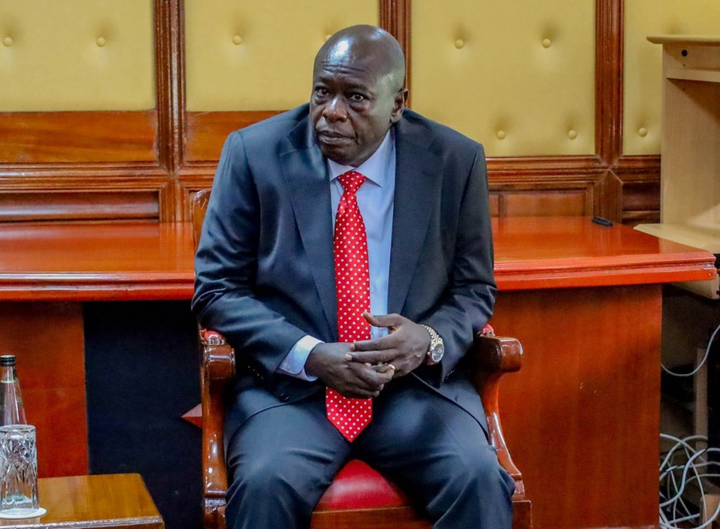
Kenya has been thrown into turmoil by yet another Court of Appeal ruling. The appellate court on May 9, 2025, passed a ruling stating that the deputy Chief Justice Philomena Mwilu had no authority to impanel a bench for petitions arising from the October 2024 impeachment of the Deputy President Rigathi Gachagua. According to Article 165(4) of Kenya’s Constitution, the Chief Justice alone may assign judges to hear those cases. After the ruling, the bench hearing the appeals of Gachagua was quashed, and an order was issued that the petitions be sent back to Koome, who would then have to constitute a new panel within 14 days. It was also made clear by the Court that Koome is at liberty to retain the former judges on that panel or substitute any or all of them for fresh ones and that the strength of the bench could be increased from three to five justices. This development has triggered intense speculation that the impeachment of Gachagua might be set aside by August 2025 if a team favorable to him is appointed by the Chief Justice.
Constitutional Context: Impeachment, Appeals and the Courts
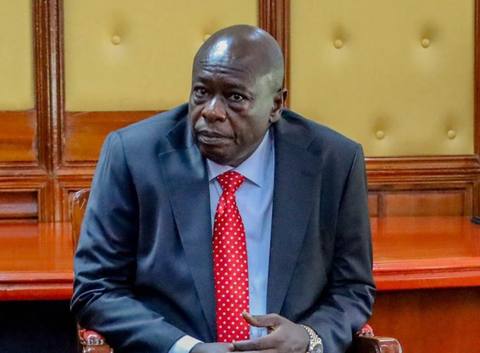
To understand what is at stake here, one needs to retrace how Gachagua ended up where he is. In October 2024, the Kenyan Legislature had for the first time impeached a Deputy President. On October 17, the Senate voted by over two-thirds majority for the removal of Gachagua on the first charge of eleven, ranging from corruption to incitement. As Senate Speaker Amason Kingi stated: “Accordingly, His Excellency Rigathi Gachagua… ceases to hold office.” Prior to this, the motion to impeach had been passed in the National Assembly. This arises from a cleavage between Gachagua and Ruto: only two years earlier, the two had campaigned on the same ticket, but by 2024, Gachagua had been cast as “disloyal” by the President’s allies.
Immediate after the vote, President William Ruto nominated Interior Minister Professor Kithure Kindiki to be the new Deputy President, and Parliament gave him an overwhelming approval. However, he did not exit quietly. Gachagua and his lawyers immediately went back to court, filing several petitions at the High Court. On October 18, a three-judge panel (headed by Justice Eric Ogola) stayed Gachagua’s removal temporarily, with Judge Ogola ordering that none of the Senate’s actions be acted upon until a full hearing of the matter could be convened before a bench “appointed by the Chief Justice.” In other words, the process was stayed pending constitutional determination. Gachagua’s team argued that the Senate trial had violated his right to a fair hearing (since he had been ill and absent for parts of it) and that many of the 11 charges were not proven. Two weeks later, on October 31, another Nairobi High Court bench assumed the conduct of the matter. By then, Gachagua was still functionally Deputy President as the constitutional battle raged on.
The new three-judge panel, with the additional member Justice Anthony Mrima, lifted the freeze on Kindiki’s appointment. It ruled that the Deputy President position can hardly remain vacant considering the “public interest.” In the Court’s view, for the sake of continuity of government, Kindiki should be allowed to take the oath of office, but at the same time, they said Gachagua’s challenge to the impeachment “can continue” in the courts. By this time therefore, in practical terms, Gachagua had lost his seat in late October, but his lawyers had won injunctions and stay orders from various High Courts halting government from sealing the transition. These orders, which at one point even stopped President Ruto from appointing a replacement, have formed the core of Gachagua’s petitions. In an attempt to attend to these appeals, Chief Justice Koome initially set up the Ogola-Mrima-Mugambi tribunal for a hearing on October 24th. However, after this, additional petitions and court orders started to pour in.
Eventually, the case file came back to the Chief Justice. While Koome was out of the country, Deputy CJ Mwilu “remitted the files” to the existing Ogola-led bench on the 18th of October, effectively instructing them to go on and do something. Gachagua’s lawyers raised an immediate challenge: they contended that Mwilu had no authority to send the matter to a bench because only Koome has the power to allocate judges. Ogola and his colleagues proceeded to hear the case. They ultimately dismissed Gachagua’s objections and went on with the inter partes hearing. But Gachagua did not give up: he told the Appeal Court that the entire tribunal had been lawfully appointed only if Koome did it, not Mwilu. That challenge – not the merits of the impeachment himself – was the basis upon which the Appeal court acted. The appellate judges recalled that the lower Ogola bench had already ruled on the fairness of Gachagua’s case, but declined to disqualify themselves. Now the Appeal Court claimed it was remanding the matter back up in the hands of Koome so that nothing about the process would be vulnerable to the same challenge. As Justice Tuiyott et al. Rather, Gachagua’s removal in this case “cannot turn on the status of who repopulated the panel” – only on the law, as it concerns.
What Chief Justice Koome Could Do Next
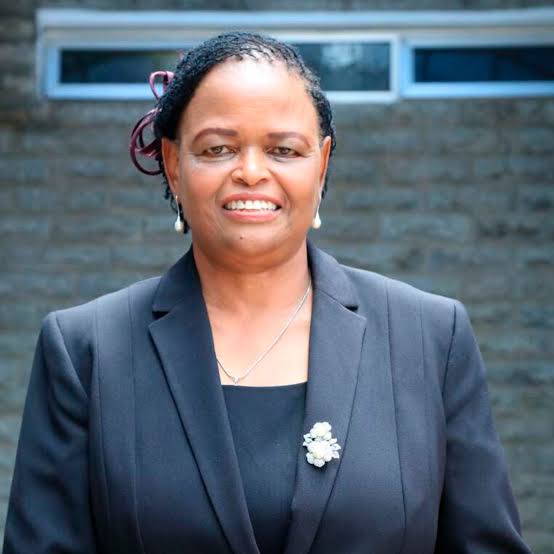
All attention is on Chief Justice Martha Koome now. Following the Court of Appeal order, she has 14 days from the ruling to form a bench to hear the three consolidated petitions which include all of Gachagua’s challenges to his impeachment and other associated orders. That means for Koome, the latest date she could legally use would be May 23, 2025. In theory, she could choose to re-swear in the same three judges, Ogola, Mrima and Mugambi, who she had initially sworn in during October to continue the case. However, she could also opt to take up the appeals court’s suggestion to vary the bench by appointing new justices suggesting she could select new justices, there is no law stopping a five judge tribunal and indeed Article 165 (4) assumes five-member panels for “complex, important or controversial” cases.
In short, Koome titled the bench’s discretion. The Court of Appeal stated it is ‘entirely in the discretion of the Chief Justice’ whether the original judges will re-sit. As a matter of fact, Koome has to consider numerous issues like the public perception such decisions create, conflicts of interest, and all performance evaluations of the judges constituting the given bench. For instance, Gachagua’s lawyers accused Justice Ogola of conflict of interest because of his wife’s position in government, and Justice Mrima due to his association with Senator Amason Kingi. (Those assertions were dismissed as mere speculation.) Koome might prefer trusting the original panel, but might decide to replace one or more members. Then, she would have the option to increase the number of judges to three for a total of five, which would further broaden the diversity of opinions.
How Koome configures the bench will signal much about where this case is headed. She is known for a cautious, by-the-book approach. In January 2024 she famously warned that political “threats and declarations” against judges were “extremely serious” and an “assault against the constitution… [that] can lead to chaos and anarchy.” Koome’s priority will be to ensure the proceedings are above reproach. Any hint that she stacked the court to deliver a desired outcome would play into accusations of “judicial politicization.” At the same time she must consider Kenya’s 2010 Constitution – the framers intended that the judiciary have the final say on matters of law, even if they involve politics. By insistently upholding her sole authority here, Koome is reinforcing that separation-of-powers principle.
After Koome appoints the bench (most probably in the last week of May), the hearing calendar will be determined. Kenyan courts are able to proceed quite speedily on politically charged cases. The new bench will consider and review all the submissions since October 2024, such as the initial petitions from Gachagua and any counter-briefs from Parliament, the Senate, or the office of President Ruto. Arguments will then be heard in court. Gachagua’s side will obviously highlight procedural mistakes: that his fair hearing right was breached (e.g. by proceeding with the case when he was ill, etc.) and that technical provisions of the impeachment had not been met. Parliament and the State will argue that the procedure (at that point) was according to the law and that Gachagua was properly convicted by the senators.
Notably, the Court of Appeal itself declined to call for a retrial. On May 9, it dismissed Gachagua’s petition to invalidate the original judges. This would mean the appeals judges did not see any infamy in the merits hearing proper. It was only the bench’s composition that came into doubt. When the new hearing before Koome’s bench resumes, then, the outcome is not predetermined: the judges will decide for themselves if legal principles were followed. If they find no material error, Gachagua’s removal will be affirmed; if they find a fatal flaw, the impeachment could be reversed. Such a decision – whatever it is – would likely be rendered by mid-summer 2025, well before the 2027 election season heats up.
How the Appellate Court Reversed Mwilu’s Bench
Last week’s ruling by a bench of the Appellate Court (Justices Daniel Musinga, Mumbi Ngugi and Francis Tuiyott) emphatically reaffirmed the Chief Justice’s unique position. The Court ruled that on October 18, 2024, Deputy Chief Justice Philomena Mwilu “ventured beyond her mandate” when she constituted a three-judge bench to hear Gachagua’s consolidated petitions. Under Article 165(4) of the Constitution of 2010, the Chief Justice alone possesses the “exclusive mandate” to impanel a bench in a case of public interest; “she alone” is to decide how many judges and who are in the panel. Mwilu had signed off the bench letter as “DCJ/Ag. CJ”, suggesting that Koome was out of the country. But the Appeal Court brushed aside that justification summarily. “Today we cannot think of the Chief Justice to be ‘electronically absent’ for such a protracted time, as she cannot assemble a bench,” judges said. The Chief Justice “can pass correct instructions. electronically from the anywhere in the globe.”. Since Martha Koome had neither resigned nor been incapacitated or removed (the only instances which would elevate the DCJ to Acting CJ pursuant to the Judicial Service Act), Mwilu’s assumption of authority was found to be unconstitutional.
Practically, the Court effectively struck down the three-judge bench that had been hearing Gachagua’s case. It rejected Gachagua’s application to have Justices Eric Ogola, Anthony Mrima and Fred Mugambi recused on the grounds of bias – and finding “no evidence of impropriety” in the way they heard the case– but nevertheless held the bench itself to be “unlawfully constituted.” The judges directed each of those three petitions to be remitted to Chief Justice Koome within 14 days for her to empanel a new tribunal. Notably, the Court asserted firmly that Koome can reappoint any or all of Ogola, Mrima and Mugambi if she wishes to, or appoint new individuals in their stead. The bench may remain as a three-judge bench or increase to five judges; it is all in the discretion of the Chief Justice alone. In the judges’ view, “the discretion granted to the Chief Justice under Article 165(4) to empanel a bench is a power granted solely to the Chief Justice.”
This reversal sets the stage for the fresh hearing of Gachagua’s appeals within Koome’s jurisdiction. It implicitly allows that a formality – who signs the bench order – matters less than the integrity of the case. “Whether or not to include [the three Ogola-led judges] in the reconstituted bench is a matter entirely within the Chief Justice’s discretion,” the Court underscored. Short of it all, Koome can now finally decide just who among her colleagues will rule on Gachagua’s review of constitutionality. That pronouncement is a stay of execution for Gachagua – at least on paper – and has already coursed with controversy as to what else may come.
President Ruto’s Awareness and Response Strategy
President William Ruto has not yet issued any public comment on the Court of Appeal decision. But political experts note that he can hardly be unaware of its significance. The Gachagua scandal has dominated the headlines and divided Ruto’s ruling coalition down the middle in recent months. Gachagua was Ruto’s election partner (“Tanga Tanga” faction) in the good old days, but by 2024 was being branded a saboteur by supporters of President Ruto. Ruto has silently objected to claims that moves against Gachagua were political; his previous speeches confirm that he “respects and will protect the independence of the judiciary” while condemning “judicial tyranny and impunity.”. The delicate balance is clear: Ruto dare not openly disregard the courts lest he invite a constitutional crisis, but he has also allowed politicians and party spin doctors to hint that some of the judges were prejudiced against his agenda.
But even prior to this most recent judgment, Ruto’s administration had already sought to make political safeguards. In late 2024 the government moved to fill vacant High Court and Court of Appeal posts, and Ruto rammed through a blocked nominations bill in order to gain compliant judges. Ruto also contemplated, but never made official moves towards, impeaching Chief Justice Koome herself – a path that was blocked when several UDA MPs conceded that they lacked the numbers and evidence. (Gachagua claims Ruto privately informed him in 2022 that Koome was “problematic” and that the President wanted a bench he could “manage”. Whether or not, it suggests Gachagua’s assurance that Ruto views the courts as yet another political battleground.
With Koome once more at the helm of the Gachagua petitions, Ruto’s allies will have to wait and watch.). If Koome once more appoints the Ogola bench, it is maintained that proceedings would go the way they did in October (essentially validating the impeachment). If she appoints new judges, especially those viewed as impartial, then a new hearing could more favorably subject Gachagua’s accusations to scrutiny. A government source gave us background that the Presidency is closely monitoring interactions between Koome’s office and parliament, and poised to offer technical assistance in the respondents’ name. In practical terms, this might entail organizing the defense that the impeachment met all the laws.
It is also possible Ruto’s side may try to put pressure on other alternatives. For example, his allies in Parliament may try a private members’ motion to change the Judicial Service Act (to clarify guidelines on the CJ’s absence), but any such change so soon after this judgment would be seen as self-serving and legally suspect. Another instance that has long been whispered about is that should the Court of Appeal have granted a major victory to Gachagua, Ruto could consider asking for an additional face-to-face meeting with Koome herself or even official action by the President’s Council (the entity that would generally resolve disputes between the executive and judiciary). Those are options lacking explicit constitutional precedent and entail Himalayan political stakes. For now, Ruto’s best option might just be to allow the courts to run their course, publicly reasserting his commitment to the rule of law (as he did in 2024) while privately preparing to defend the interests of his government.
Legal and Public Political Reactions
Kenyan politicians and lawyers are already wondering what this is all about. Rigathi Gachagua himself responded to the appellate decision with characteristic truculence. To his supporters, the removed deputy president quoted the Constitution framers on multi-level judicial review: “if you don’t get justice in one [level], you’ll get it in another”. He lauded the courts’ independence, saying they have “judges of integrity who will give justice not only to Rigathi Gachagua but to the people of Kenya”. At a Sunday church rally, he said he would continue to “call out” the Ruto administration and refused to abandon his political aspirations. Gachagua went further to propose the formation of a new party together with other power brokers in Mount Kenya; he assured the worshippers that “the coming elections are set” and that he, Kalonzo Musyoka, Martha Karua, Fred Matiang’i, Eugene Wamalwa and others will sit and choose one rival to President Ruto. His message was direct: this court stay, technical as it is, has breathed new life into his seat in the opposition.
Political opponents of President Ruto also capitalized on the ruling. Former Prime Minister Raila Odinga (who is the ally of Kalonzo and Karua) viewed any development that “strengthen our democracy” and intimated that the case of Gachagua demonstrated how far the ruling party had strayed from remembering the rule of law. A senior LSK official added that several legal hurdles – including high court injunctions – continue to hold the government back from acting until these appeals are determined. Meanwhile a handful of MPs from Mt Kenya and associated areas (long considered Gachagua’s bastion) have begun arguing that the judiciary should have unfettered latitude in correcting any wrongdoing. No senior Ruto ally has come out publicly to celebrate the Appeals Court decision; indeed, Ruto’s party has only so far issued diplomatic phrases of respect for the courts.
Among constitutional scholars, the move to send the case back to Koome was regarded as inevitable and legally sound. Nairobi University law professor Dr. Dan Gachukia told The Standard that “constitutionally, this question of who appoints the bench was the right question of appeal” and that leaving it to only the Chief Justice “maintains the checks-and-balances” intimated by the 2010 Constitution. Cited lawyer Mark Bichachi, in an interview with Tuko News, had this to say bluntly: “If the court discovers any flaws in Gachagua’s removal, his impeachment can be overturned.”. (Bichachi went on to note, though, that Gachagua’s primary motive might not be reclaiming the DP title but simply setting the stage for future elections free of the stigma of an impeachment.) Bodaboda leader Bobby Mkangi – one of the authors of the 2010 Constitution – cautioned that Kenyans would be watching to see if the pressured judiciary will remain independent: “We will be looking to see whether now we are going to witness judgments that are more in favor of the state,” he said, recalling President Ruto’s campaign catchphrases.
The legal fraternity were overwhelmingly encouraged. Kenya’s Law Society President (LSK) Eric Theuri publicly celebrated the appeals judgment calling it a resumption of the rule of law. The President seized the opportunity to reaffirm President Ruto’s place under the law. “The president, in the meantime, as the chief upholder of the rule of law, should refrain from undermining the judiciary,” Theuri added, insisting that Ruto “should instead resort to legal avenues available to him in challenging the decisions.”. (Theuri was alluding to Ruto’s recent assertion that he would defy rulings he did not agree with – assertions that had stirred an LSK-organized campaign of petitioning in the courts’ defense.) No less troubling was the Chief Justice’s stance: Koome herself has made it consistently clear that judges should fearlessly enforce the law. Last month she authored an open letter scolding that abuses against judges were “a monumental assault to the Constitution.”. In the days since the May 9 ruling, her office only responded that it would strictly adhere to the order of the Court of Appeal and move swiftly to form the new tribunal.
Broader Implications: Judicial Independence and the Balance of Power
More than the fate of more than one politician, this episode has come up against the very soul of Kenya’s constitutional order. The Court of Appeal ruling reaffirmed that even in an impeachment, only the judiciary has the authority to monitor its processes. This is a strong affirmation of judicial independence: it declares the President and Parliament cannot override or second-guess the Chief Justice’s role. By promoting Koome above Mwilu in this matter, the Court protected the hierarchy and independence of the courts from politicized interference. As one law professor put it, “This upholds the letter of Article 165(4): it assures benches in politically sensitive cases are chosen free of political influence, not by a deputy who can be pressured.”
It also prioritizes the separation of powers. The legislature invoked its constitutional authority to impeach the Deputy President; the executive (through Ruto) nominated a replacement; and the judiciary is now exercising its check over both by determining whether those actions complied with rules of law. If ultimately the courts determine that due process was not afforded, it will underscore that no branch of government gets to have the final say on constitutional decency except the courts. Gachagua’s detractors fear backtracking on a parliamentary impeachment via judicial fiat creates an ugly precedent — that it confuses law with politics and puts elected members under constant suit threats. But supporters argue that without such restraint, there can be no genuine protection against politically motivated impeachment.
In the Executive itself, restored Gachagua would heavily upset the balance. He was brought back to office on Ruto’s ticket in 2022; returning would see him serving again with the President. Gachagua and Ruto, however, have not had an easy relationship. To place him back in power would bolster his wing of the ruling coalition, depriving presumably Ruto of his grip. Seniority on the basis of being the constitutionally “first in command,” Gachagua could claim, would see Ruto struggling to keep Kindiki out. There could even be the constitutional absurdity of two people both presenting themselves as Deputy President (until Parliament or courts sort it out). This would force new political negotiations. Already, some opposition leaders are already talking about a “power-sharing” narrative, and analysts say that Ruto would have to consider placating Gachagua’s faction or risk splitting his base.
If the Court ultimately nullifies Gachagua’s impeachment, the legal consequences would be dire. In law, he would be deemed never to have been ousted, and every effort made to replace him would be open to challenge. Alternatively, if the court upholds the impeachment on grounds of merit, it will most probably hold that the exclusive power of the CJ to impanel courts does not impinge on the legality of the removal from office. Either way, the controversy will be felt in Kenyan public life for months. One thing is certain, however: The role of Chief Justice Koome has never been more central. She can decide who forms the panel that could rule on whether Kenya receives back a Deputy President removed by Parliament.
One last thing: No matter what happens, the reputation of the judiciary has been under scrutiny. Judges across Kenya have watched this battle with keen interest. The protests by the Law Society spanning weeks, and social media’s polarized reactions, suggest that most of its citizens view it as a trial by fire of the rule of law. Former Chief Justice Mohan Peiris once stated that the Constitution must be the final arbiter; today, the majority of Ugandans affirm Kenya’s judges – Koome included – must guard their independence in order to maintain public trust. As Koome goes about impaneling the new bench, everyone will be watching her: the selection of judges and the speed of the case could buttress or subvert the notion that the courts are above politics.
Ultimately, though, the tale is not yet told. But meanwhile, the headlines are: a historic court judgment; CJ’s monopoly powers reaffirmed; and veteran Deputy President given legal lifeline. Kenyans may see in August 2025 the fruit of this intervention – possibly in dramatic fashion through an eye-opener reinstatement of Rigathi Gachagua. Or possibly just behold another turn of political and legal wrangling that confirms the resilience (and frustrations) of Kenya’s constitution. Either way, this incident illustrates the dynamics of politics and courts to be complex: judges are set to correct what they see as constitutional errors, and politicians on both sides are acutely aware that power in Nairobi still moves as easily as before.