

France Withdraws Its Last Troops from Senegal – A Blow to Neo-Colonialism

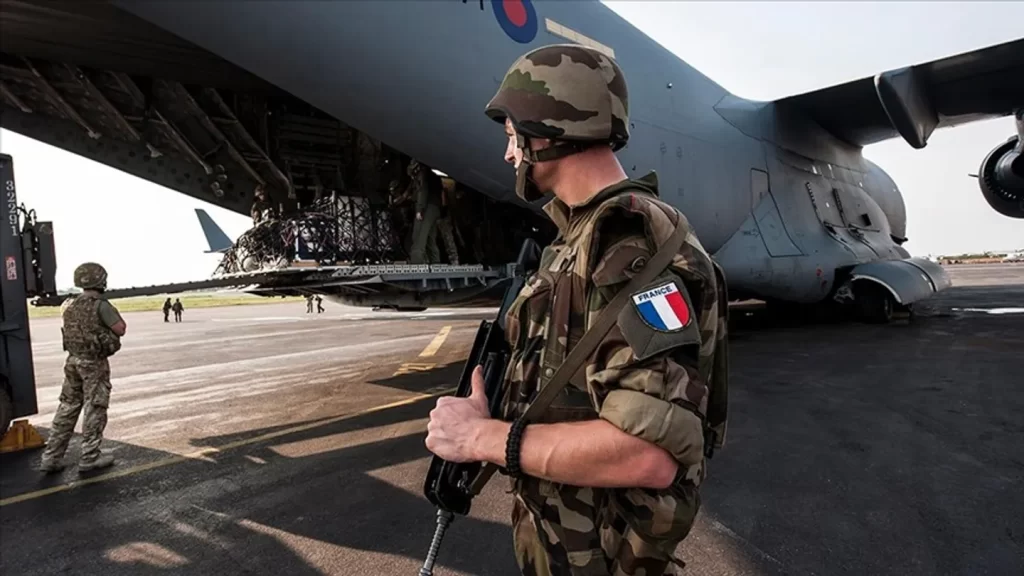
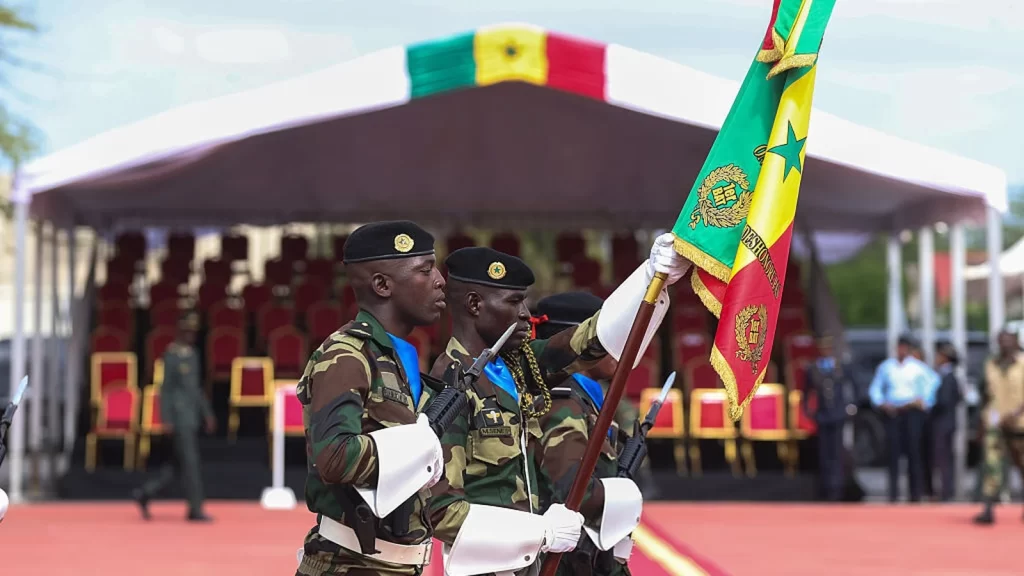
In a historic ceremony on July 17, 2025, Senegal took control of France’s final military foothold on its soil. Senegalese and French generals stood side by side as the flag of Senegal was raised over Camp Geille in Dakar – France’s largest Senegalese base – and the nearby airfield at Dakar airport. Roughly 350 French soldiers, who had long trained alongside Senegal’s army, marched out of the country. This handover — part of a pullout that began in March — officially ends France’s 65-year military presence in Senegal. As Al Jazeera notes, France is now left “with no permanent presence in either West or Central Africa”.
Key facts:
- Bases handed over: Camp Geille (France’s largest Senegalese base) and a military airfield at Dakar were formally returned to Senegal.
- Troops leaving: About 350 French soldiers – long seen as symbols of colonial influence – departed the country.
- End of an era: The pullout completes the end of a 65-year Françafrique military presence in Senegal, dating back to its 1960 independence.
- France’s footprint shrinks: With Senegal’s final base closed, France has no permanent camps in West or Central Africa. Only Djibouti (with ~1,500 troops) will remain a long-term French outpost on the continent.
Seizing Sovereignty after Decades of Occupation
For generations Senegal was one of France’s closest African allies. Since independence in 1960, Dakar hosted French forces under so‑called cooperation agreements. In practice, that meant a continued French military occupation – the ultimate legacy of colonial rule. But under President Bassirou Diomaye Faye (elected 2024 on a platform of sovereignty and anti-French reform), that era is finally ending. Faye insisted that a free Senegal “is a sovereign country and sovereignty does not accommodate the presence of military bases”. He publicly demanded that France withdraw all troops by 2025.
Senegal’s new leadership has taken a hard-line stance against neocolonial ties: Euronews observes that Dakar’s government views the French bases as part of “the legacy of an oppressive colonial empire”. Ordinary Senegalese – from students in Dakar to farmers in the Casamance – have long criticized the French army as a symbol of foreign domination. Even before this pullout, mass protests and online campaigns had framed the bases as neocolonial shackles. Some activists immediately seized on the handover to call for cutting all remaining colonial ties – for example, demanding that Senegal abandon the CFA franc currency system, another tool of French control. In this way the departure of the troops has become more than a ceremony: it has energized a grassroots push for full economic and political autonomy.
Within Senegal’s military itself, leaders hailed the moment as a turning point. Army Chief General Mbaye Cissé declared the French exit an “important turning point in the rich and long military journey of our two countries”. He explained that Senegal’s new defense strategy “affirms the autonomy of the Senegalese armed forces” and focuses on regional peace, not guarding foreign interests. In short, Senegal is reclaiming control of its own security. General Pascal Ianni, commander of French forces in Africa, also acknowledged this shift. He said the handover “marks a new stage” and “responds to the Senegalese authorities’ wish to no longer have permanent foreign forces on their territory”. Ianni framed it as France “reinventing partnerships” in a changing Africa – a concession many African observers regard as France scrambling to save face as its old empire unwinds.
A Pan-African Wave of Anti-Imperialist Change
Senegal’s announcement is the latest and most symbolic chapter in a broader African backlash against French neocolonialism. Over the past three years, West and Central African nations have one by one driven out the French army. Military coups in Mali, Burkina Faso and Niger (2020–2023) led new governments to expel about 4,300 French soldiers. Those countries rejected France as an “oppressive” partner and turned to other allies (notably Russia) for security support. Even longtime allies like Ivory Coast saw France hand back its last base in February 2025, and Chad closed the French facility at Kossei. As Al Jazeera reports, Senegal’s handover follows similar withdrawals across the continent as former colonies increasingly turn their backs on the nation that once ruled them.
For many Pan-Africanists, each of these exits is part of Africa “turning a page” on colonial subservience. Diaspora commentators and youth activists have celebrated Senegal’s pullout as vindication of national dignity and solidarity with other liberated nations. (In fact, after Faye’s announcement this year, social media quickly lit up with slogans linking military bases to “neocolonial influence” and demanding deeper reforms like economic independence.) As regional media notes, the very existence of foreign bases has been widely seen as incompatible with African sovereignty. Thus Senegal’s move not only fulfills the government’s promise, but also honors the aspirations of Pan-Africanists who long decried Françafrique.
It is telling that the withdrawal has prompted little resistance from African leaders. In fact, over the past months every government from the Sahel to the Gulf of Guinea has been either seeking alternatives to France or quietly accepting Paris’s exit. Senegal’s case was relatively amicable: Faye stressed he wants a “renewed partnership” with France, rather than ripping up all ties. Yet he made clear it must be on equal footing – no more foreign soldiers on African soil. West African defenders point out that many of the troops being pulled out were already engaged in joint operations against jihadist groups; Senegal plans to take over those roles itself or ask ECOWAS for help. In any case, the strategic cost to Paris is now stark: with Senegal’s exit, only tiny Djibouti will host a permanent French army in Africa. Paris itself has announced it will pivot to training and intelligence support instead of boots on the ground, but skeptics note that Africa cannot become truly independent merely by wearing new clothing over the same old networks.
Charting Africa’s Own Path Forward
Senegal’s victory is emblematic, but the work is far from over. Revolutionary-minded observers warn that African nations must now build genuine self-reliance rather than simply swap one master for another. Indeed, some fear the security vacuum left by departing French units could be filled by new mercenaries or external influences – as happened in Mali and the Central African Republic with Russian-backed forces. The Lansing Institute and others have noted the risk: without stronger continental defense cooperation, foreign powers will jockey for inroads. Pan-Africanists argue that Africa’s armies need better coordination (for example through ECOWAS or the African Union) and more resources to stand on their own. As one analyst put it, France’s retreat is a symbol of its “diminishing role” and opens space for new geopolitical players – a development Africa must manage carefully.
On the whole, Senegal’s handover will be seen as a moment of pride across the continent. As Reuters summarized, it is “a milestone in a withdrawal from the wider region”. But the true meaning of this moment will be measured by what follows. Will African nations now cease treating their neighbors as battlegrounds for great powers? Will the countries of West Africa fund and equip their own armies and police? Pan-African commentators insist that full liberation requires more than empty promises of “partnerships”: it requires unity, self-determination and a commitment to end all neo‑colonial dependencies.
EyeAfrica stands with those who see July 17, 2025, as the end of an era. It is a powerful affirmation that Africa’s destiny lies in African hands. Now Senegal – and all of West Africa – faces the challenge of defending its own land and people without foreign boots on the ground. If this revolutionary moment is to last, African governments must invest in homegrown security, deepen regional collaboration, and heed the calls of their people to break the final chains of colonial influence.
Sources: Major international outlets report on Senegal’s ceremony and its significance, which we have synthesized with analysis from pan-African commentators on sovereignty and neocolonialism.