

Kenya’s Quiet Semiconductor Rise: Expanding Chip Manufacturing Through Global Partnerships
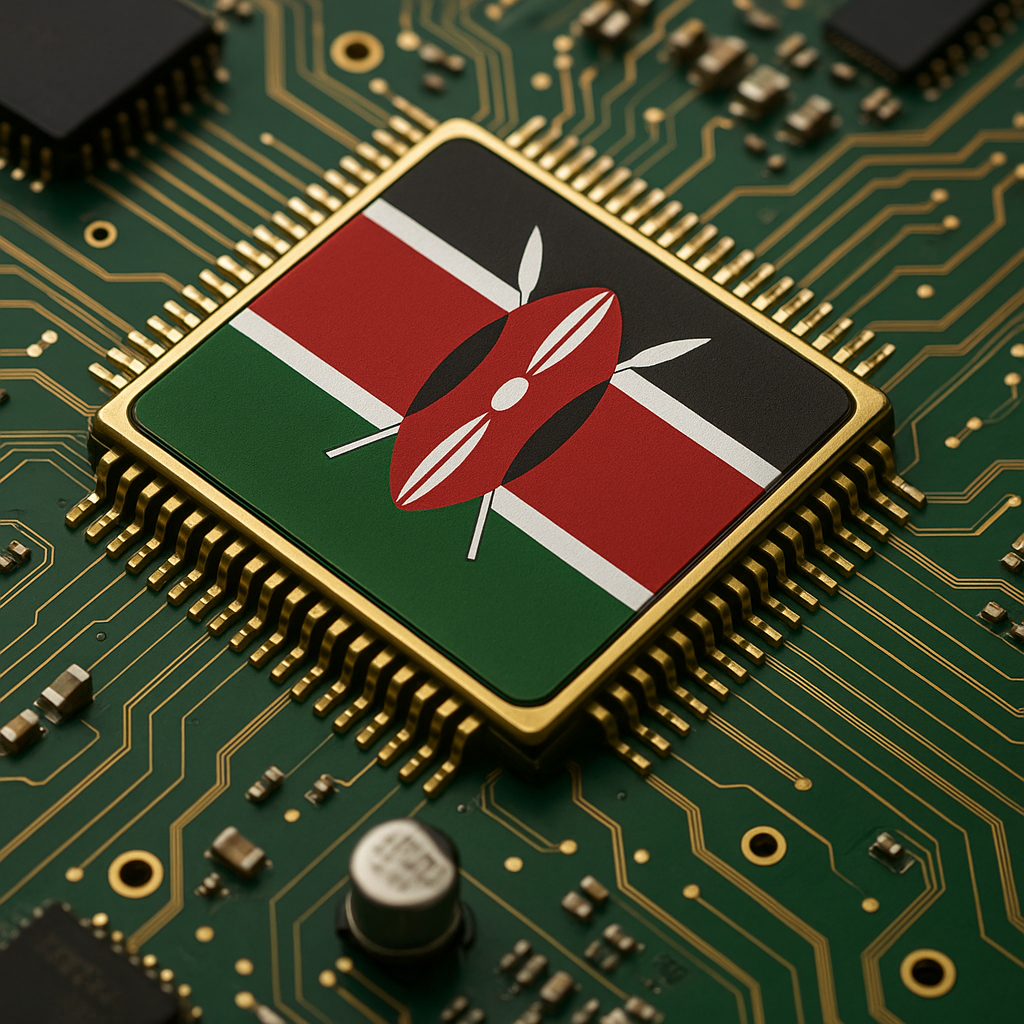
In a world increasingly defined by digital infrastructure and artificial intelligence, the countries that control microchip production wield strategic and economic power. Until recently, Africa has remained largely absent from this geopolitical chessboard. However, a quiet but significant shift is underway in Kenya, where a burgeoning semiconductor effort—backed by U.S. investment and local innovation—is beginning to take shape.
Despite rumors circulating about a new chip-manufacturing factory being launched under President William Ruto’s administration, there has been no official announcement of a brand-new facility. What is real, however, is the expansion of Kenya’s existing semiconductor operations, particularly at Dedan Kimathi University of Technology (DeKUT) in Nyeri, which may mark the continent’s boldest foray into the global semiconductor economy.
A Strategic Partnership with the United States
In May 2024, the United States Trade and Development Agency (USTDA) awarded a $1.3 million grant to support the growth of Semiconductor Technologies Limited (STL), a chip packaging and testing company operating within the DeKUT Science and Technology Park. This grant is part of a broader strategy linked to the U.S. CHIPS and Science Act, which aims to create secure, diversified semiconductor supply chains.
This collaboration represents the first project in Africa supported by the CHIPS and Science Act. STL’s expansion at DeKUT will include upgrading facilities for chip design, testing, and packaging—an area often referred to as the “back-end” of semiconductor production. Though Kenya is still far from full-scale chip fabrication (or “fabs”), which remains costly and technologically complex, back-end services are critical and profitable segments of the supply chain.
According to the U.S. Embassy in Nairobi, the partnership will also foster education and workforce training, connecting Kenyan students and engineers with American institutions and companies like Micron Technology, GlobalFoundries, and the U.S. National Science Foundation (NSF). These linkages aim to equip local talent with cutting-edge skills and ultimately reduce reliance on foreign experts.
From Vision to Execution: STL and DeKUT’s Role
Founded in 2021 during the administration of President Uhuru Kenyatta, Semiconductor Technologies Limited is East Africa’s first chip packaging and testing facility. Housed at DeKUT, STL began modestly, working on sensors, microelectromechanical systems (MEMS), and other foundational chip technologies.
The facility’s partnership with DeKUT has proven symbiotic. The university provides research and technical support, while STL offers students practical training in one of the world’s most advanced fields. This initiative has become a regional model of how universities can host semi-industrial research parks that contribute directly to national innovation goals.
Although Kenya is still years away from entering the high-stakes world of advanced chip fabrication—dominated by players like Taiwan’s TSMC or South Korea’s Samsung—the country’s investment in semiconductor services and human capital is quietly but steadily laying the groundwork for a more active future role.
The Geopolitical Context: Why Chips Matter
Semiconductors are the lifeblood of the modern world. They power everything from smartphones and cars to military systems and AI algorithms. As tensions between the U.S. and China escalate over chip technology and global powers scramble to “de-risk” their supply chains, emerging markets like Kenya represent untapped strategic potential.
By expanding its semiconductor capacity, even at the packaging and testing level, Kenya positions itself as a reliable and neutral tech partner in a divided world. This is particularly significant as African countries seek to move beyond extractive industries and enter knowledge-based economies.
Addressing Misinformation: No New Factory (Yet)
In recent months, social media platforms—particularly Reddit and TikTok—have circulated rumors that a brand-new US$1 billion chip fabrication plant was being constructed in Naivasha or Nairobi, allegedly announced by President Ruto. These reports are not based on any verified source and appear to be misinterpretations of Kenya’s expanding role in the semiconductor conversation.
President Ruto has been vocal about his desire to turn Kenya into a global technology hub, frequently referencing Kenya’s digital transformation, blockchain ambitions, and AI governance policies. However, no speech, official policy paper, or press release has confirmed plans for a new chip factory.
This distinction matters. Full semiconductor fabs require billions of dollars, massive water and energy resources, and ultra-clean environments—conditions that remain challenging in Kenya today. The country is wisely focusing first on less capital-intensive parts of the value chain, such as design and testing, while building capacity for future development.
Future Outlook: What This Means for Africa
Kenya’s semiconductor expansion may seem small compared to giants like the U.S., Taiwan, or China, but its implications for Africa are profound. If successful, STL and DeKUT could prove that African countries can move up the technology value chain—not merely as consumers or raw material exporters, but as producers and innovators.
Furthermore, this development opens doors for regional cooperation. Rwanda, Nigeria, and Egypt have all expressed interest in building their digital economies. A functioning chip sector in Kenya could serve as a continental hub for education, research, and even component supply.
The initiative also demonstrates the importance of strategic partnerships that respect local knowledge. Rather than impose a ready-made solution, the U.S.-Kenya semiconductor collaboration is rooted in co-creation, academic support, and skill development—an approach more likely to yield long-term success.
Conclusion
While the headlines about billion-dollar chip factories in Kenya may be premature, the real story is even more inspiring. Kenya, through vision, persistence, and partnership, is laying the groundwork for Africa’s entry into one of the most vital industries of the 21st century.
With continued investment, honest reporting, and a focus on building local capacity, Kenya’s semiconductor journey could become a blueprint for the continent—and a symbol of how Africa can shape, not just consume, global technology.
Sources: USTDA, U.S. Embassy Nairobi, Semiconductor Technologies Ltd, DeKUT, Techweez, Manufacturing Dive, NSF, Micron Technology.