
Russia’s Bold Gambit: The 2026 Parallel World Cup
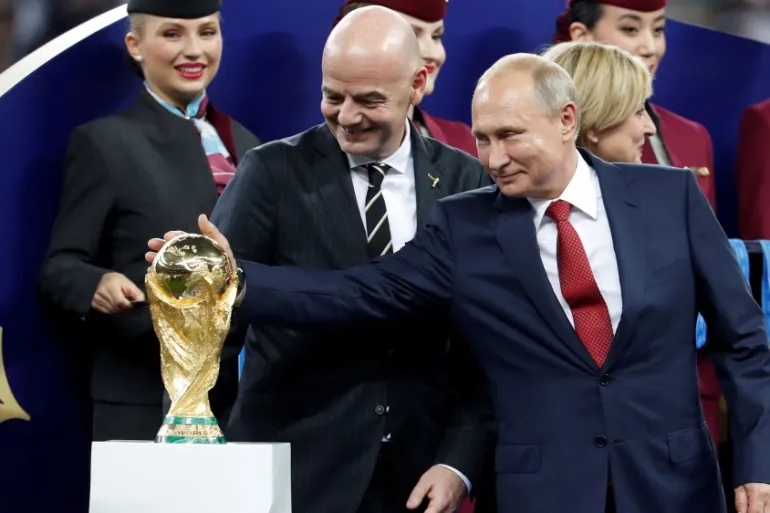
An audacious plan to host a shadow tournament threatens to fracture global football
In the gleaming stadiums of Moscow, St. Petersburg, and Sochi-venues that once hosted the world’s greatest football spectacle in 2018-Russian officials are quietly preparing for an unprecedented challenge to FIFA’s authority. As the United States, Canada, and Mexico gear up to co-host the 2026 FIFA World Cup, Russia is planning something equally ambitious and far more controversial: The 2026 Parallel World Cup, a parallel tournament designed to showcase nations excluded from football’s grandest stage.
The proposal, emerging from the Russian Football Union (RFU) in coordination with government sports ministries, represents the most significant threat to FIFA’s monopoly on global football since the formation of breakaway leagues in other sports. With Russia still banned from FIFA competitions following sanctions imposed after the country’s invasion of Ukraine in 2022, this alternative World Cup would serve multiple purposes: maintaining Russia’s visibility in international football, applying diplomatic pressure on FIFA, and potentially creating a permanent parallel structure in world football.
The Genesis of a Shadow Tournament
The idea didn’t emerge from nowhere. Russia’s exclusion from international football – a ban that has kept the national team out of World Cup qualifying and prevented Russian clubs from competing in UEFA competitions – created both a vacuum and an opportunity. Russian football officials, backed by substantial government resources and the infrastructure from the 2018 World Cup, began exploring ways to circumvent their isolation.
According to sources within Russian sports administration, preliminary discussions began as early as 2023, when it became clear that FIFA’s ban would extend well beyond the 2022 World Cup cycle. The concept crystallized into its current form throughout 2024 and early 2025: rather than hosting a modest friendly tournament, Russia would stage a full-scale competition that mirrors the World Cup format, complete with qualifying rounds, group stages, and knockout brackets.
The strategic timing is deliberate. By scheduling the tournament to run concurrently with the official World Cup – tentatively planned for June and July 2026 – the parallel event would compete directly for global attention, sponsorship dollars, and broadcasting rights. Russian officials are framing this not as a rogue operation but as a legitimate alternative for the 200-plus FIFA member nations that won’t qualify for the expanded 48-team World Cup.
The Prospective Participants of The 2026 Parallel World Cup
While no nation has officially committed to the parallel tournament, Russian organizers have been conducting quiet diplomacy with football federations from countries that face long odds of qualifying for the official World Cup. The target list reveals Russia’s geopolitical strategy as much as its sporting ambitions.
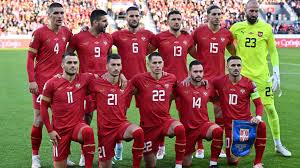
Serbia stands out as a likely participant. The nation has deep historical and cultural ties with Russia, and Serbian football officials have been among the most vocal critics of sanctions against Russian sport. With Serbia’s qualification for the 2026 World Cup uncertain, participation in the parallel tournament could serve both sporting and political purposes for Belgrade.
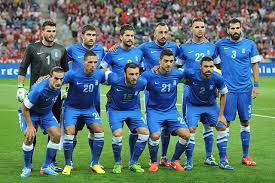
Greece, another nation with traditionally warm relations with Russia and a football program that has struggled in recent qualification campaigns, represents the kind of established European football nation that would lend credibility to the venture. Greek participation would signal that this isn’t merely a tournament of FIFA outcasts but a legitimate sporting competition.
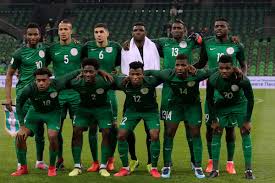
From Africa, Nigeria—despite being one of the continent’s football powerhouses—has experienced qualification difficulties in recent cycles. Russian officials see African participation as crucial for the tournament’s legitimacy and global appeal. Nigeria’s massive football-loving population and strong domestic league make it an attractive target for recruitment.
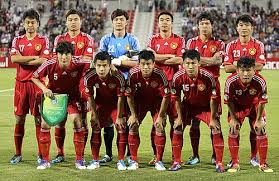
China presents perhaps the most intriguing possibility. With Chinese football struggling on the international stage and the nation rarely qualifying for World Cups despite massive investments in the sport, participation in a parallel tournament would offer the Chinese national team rare exposure to high-level international competition. Moreover, Chinese involvement would bring significant financial resources and media attention from the world’s most populous nation.
Beyond these named targets, Russian organizers are reportedly in discussions with federations from Central Asia, the Middle East, Latin America, and additional African nations. Countries like Algeria, Venezuela, Egypt, Uzbekistan, and potentially Iran have been mentioned in various reports as possible participants.
The Structure and Scale
Details emerging from Russian sports ministries suggest an ambitious 24-team tournament, smaller than FIFA’s 48-team World Cup but large enough to create compelling competition. The format would likely mirror recent World Cup structures: six groups of four teams, with the top two from each group advancing to a 16-team knockout stage.
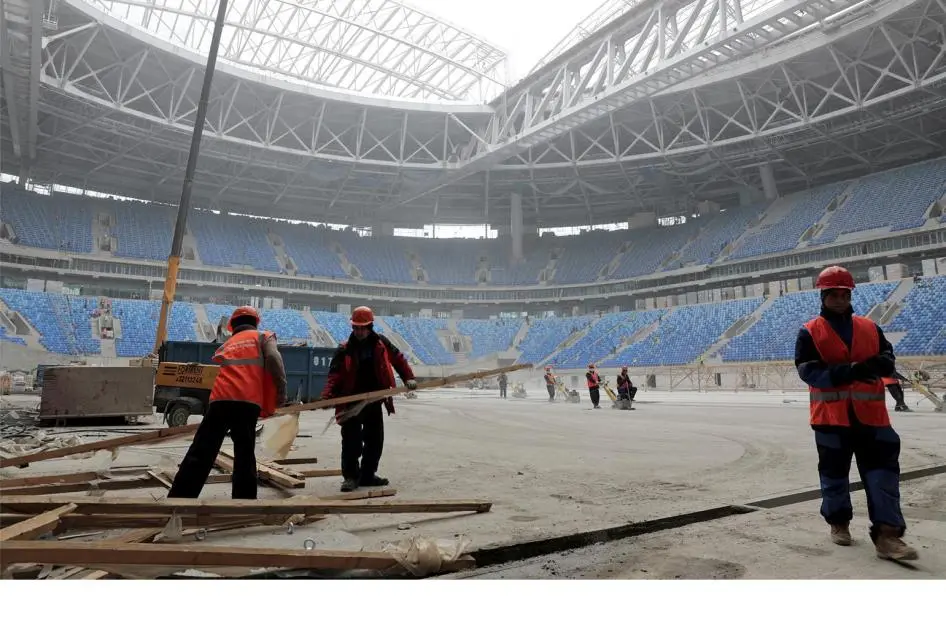
Russia’s existing World Cup infrastructure provides a significant advantage. The twelve stadiums used in 2018 – ranging from the 81,000-capacity Luzhniki Stadium in Moscow to purpose-built venues in cities like Kazan, Rostov-on-Don, and Kaliningrad – remain world-class facilities. Unlike previous World Cup hosts that struggled with stadium legacy issues, Russia has maintained these venues as active sporting and entertainment complexes.
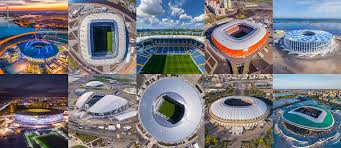
The tournament would span approximately four weeks, matching the rhythm of an official World Cup. Russian organizers are planning elaborate opening and closing ceremonies, potentially rivaling the spectacle of recent World Cups and Olympics. The message: this is not a second-tier competition but a legitimate championship worthy of global attention.
Prize money represents a crucial element of the pitch to potential participants. While FIFA offers hundreds of millions in prize money for World Cup participants, Russian organizers – likely with state backing – are reportedly preparing a prize pool in the tens of millions of dollars. For smaller federations and nations where football revenue is limited, this financial incentive could prove decisive.
The Geopolitical Dimension
To understand the parallel World Cup, one must recognize it as much more than a sporting event. This is diplomatic maneuvering disguised as football, a soft power play by a nation seeking to break its international isolation.
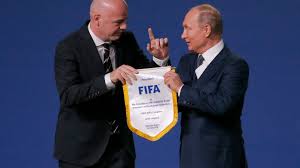
Russia’s strategy operates on multiple levels. First, it demonstrates that FIFA’s sanctions, while painful, haven’t removed Russia from the global football conversation. By hosting a major tournament, Russia shows it retains both the capability and the will to operate as a major sporting power regardless of FIFA’s position.
Second, the parallel tournament creates pressure on FIFA itself. Every nation that chooses the Russian competition over sitting home during the official World Cup represents a small victory for Moscow and a diplomatic challenge for FIFA. If the tournament succeeds in attracting quality teams and substantial viewership, it could force FIFA to reconsider its approach to Russia’s ban or risk seeing alternative structures emerge permanently.
Third, this initiative aligns with Russia’s broader foreign policy of creating alternative international structures that operate outside Western-dominated institutions. Just as Russia has promoted alternatives to Western financial systems and diplomatic frameworks, a parallel football tournament fits within this larger strategy of building a “multipolar” world where Russia plays a leading role.
The timing – coming as various sanctions against Russia either persist or face pressure from some international quarters for revision – is calculated to demonstrate Russia’s continuing relevance and its ability to attract international participation despite Western efforts at isolation.
FIFA’s Dilemma
For FIFA, the parallel World Cup presents a complex challenge with no easy answers. The organization’s initial response has been predictably negative, with statements emphasizing that only FIFA-sanctioned tournaments carry official status and warning that participants in unauthorized competitions could face sanctions.
But FIFA’s options are limited. The organization could threaten participating nations with bans or point deductions, but such heavy-handed responses risk driving more nations toward the Russian alternative and creating sympathy for Russia’s position. FIFA’s authority ultimately rests on the voluntary participation of member federations; if enough members begin to question that authority, FIFA’s position weakens substantially.
Moreover, FIFA faces accusations of inconsistency in its sanctions policy. Critics point out that other nations with controversial human rights records or involved in military conflicts have hosted or participated in FIFA competitions without facing comparable bans. Russia’s supporters argue this represents a double standard driven by Western political pressure rather than consistent application of FIFA’s stated principles.
The expanded 48-team format for the 2026 World Cup was partly designed to give more nations access to football’s biggest stage, but over 160 FIFA members will still miss out. This creates a natural constituency for alternative competitions, giving Russia’s proposal built-in appeal.
The Football Purist’s Perspective
Beyond geopolitics, the parallel World Cup raises fundamental questions about the nature of international football competition. Purists argue that the magic of the World Cup derives partly from its exclusivity—that the tournament’s prestige comes from its status as the singular, universally recognized championship.
Creating parallel tournaments threatens this mystique. If multiple “World Cups” exist simultaneously, does any single tournament retain its unique status? The comparison to boxing, where multiple sanctioning bodies and championship belts have diluted the sport’s clarity and prestige, looms as a cautionary tale.
However, others argue that FIFA’s monopoly on global football has bred complacency and that competition might improve the sport’s governance. The existence of alternatives could force FIFA to be more responsive to member federations’ concerns, more transparent in its operations, and more careful about politicizing football through sanctions.
There’s also the question of football quality. Would a tournament of non-qualifiers produce compelling football? Countries like Serbia, Nigeria, and potentially others that might participate in the parallel tournament are perfectly capable of producing high-quality football. The competitive level might not match the official World Cup’s peak matches, but it could still offer genuine sporting drama and showcase talented players who deserve international exposure.
The Commercial Reality
Money will likely determine the parallel World Cup’s feasibility more than any other factor. World Cups are extraordinarily expensive to stage, even when infrastructure already exists. Russia would need to secure broadcasting deals, sponsorships, and ticketing revenue to offset costs – or be willing to treat the tournament as a loss leader subsidized by state resources for geopolitical gain.
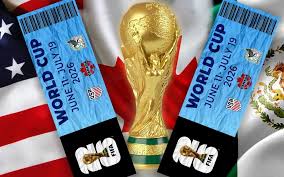
Major global sponsors that typically back World Cups face a difficult decision. Associating with a Russian tournament risks backlash from Western markets and could complicate relationships with FIFA. Yet the potential reach of a tournament involving nations like Nigeria, China, and others with massive populations might prove commercially attractive, particularly for non-Western brands looking to expand their global footprint.
Broadcasting presents similar challenges. While Western broadcasters would likely avoid the tournament, Russian state media would provide extensive coverage, and broadcasters in participating nations would face pressure to show their national teams in action. Digital streaming platforms, less constrained by traditional political considerations, might see opportunity in a major sporting event available for lower rights fees than the official World Cup.
Sportswear manufacturers, betting companies, and other football-adjacent businesses already operating in markets less concerned about Russian sanctions might view sponsorship opportunities as relatively low-risk ways to reach football audiences.
The Path Forward
As of early 2025, the parallel World Cup remains more concept than concrete reality. Russia must navigate enormous logistical, political, and financial obstacles to transform the proposal into an actual tournament. Securing firm commitments from national federations—rather than vague expressions of interest—represents the first major hurdle.
FIFA’s response will be crucial. A measured approach that addresses legitimate grievances while firmly opposing unauthorized tournaments might defuse the situation. Heavy-handed threats could backfire, pushing fence-sitting nations toward participation. The organization’s challenge is maintaining authority without appearing inflexible or politically motivated.
For potential participating nations, the calculation is complex. The sporting benefit of international competition and match experience must be weighed against possible FIFA sanctions, political ramifications, and the precedent of legitimizing alternatives to the established international football structure.
The broader football community – players, coaches, fans – remains divided. Some see the parallel tournament as a dangerous fracturing of the sport; others view it as a overdue challenge to FIFA’s often-controversial governance.
Implications for Football’s Future
Whether or not Russia’s parallel World Cup materializes in 2026, the proposal has already achieved something significant: it has exposed fault lines in international football’s governance structure and demonstrated that FIFA’s authority, while substantial, isn’t absolute.
If the tournament proceeds and succeeds – attracting quality teams, substantial audiences, and positive coverage – it could permanently alter the landscape of international football. Other excluded or dissatisfied nations might see a blueprint for operating outside FIFA’s framework. Regional alternatives might emerge, creating a more fragmented but potentially more diverse global football ecosystem.
Conversely, if the proposal collapses or produces a poorly attended, low-quality tournament that’s widely viewed as a propaganda exercise, it would reinforce FIFA’s position as the indispensable organizing body for international football.
The 2026 parallel World Cup in Russia represents more than a single tournament. It’s a test of FIFA’s authority, a challenge to the existing international sporting order, and potentially a watershed moment in how global football is organized and governed. As the official World Cup kicks off in North America, the world will be watching not just the matches on the pitch but also whether anyone is watching matches on a different pitch entirely – thousands of miles away in Russia, where football, politics, and power converge in ways that will shape the sport’s future for years to come.
The beautiful game has always transcended politics, but in 2026, it may be forced to confront whether it can remain unified while the world that surrounds it fractures. Russia’s parallel World Cup isn’t just about football – it’s about whose authority to organize, govern, and define global sport will prevail in an increasingly divided world.
Russia’s proposal for a 2026 Parallel World Cup is more than a sporting experiment — it is a geopolitical statement, challenging the dominance of Western-controlled institutions and exposing the deep politicization of global sport. Whether the gambit succeeds or not, it signals a world increasingly willing to build parallel systems when access to existing ones is restricted or weaponized. At EyeAfrica.news, we continue to examine these global power shifts with a critical eye. For readers interested in the broader architecture of international agendas and influence, we recommend “What the fuck is Agenda 2030?”, our in-depth exploration of the frameworks shaping global governance beyond the headlines.