
What is “the rapture”? Could it be in 2025
I. Foundation: Distinguishing the Day of Christ from the Day of the Lord (DofC vs. DofL)
I.A. Defining the Rapture (Harpazo)
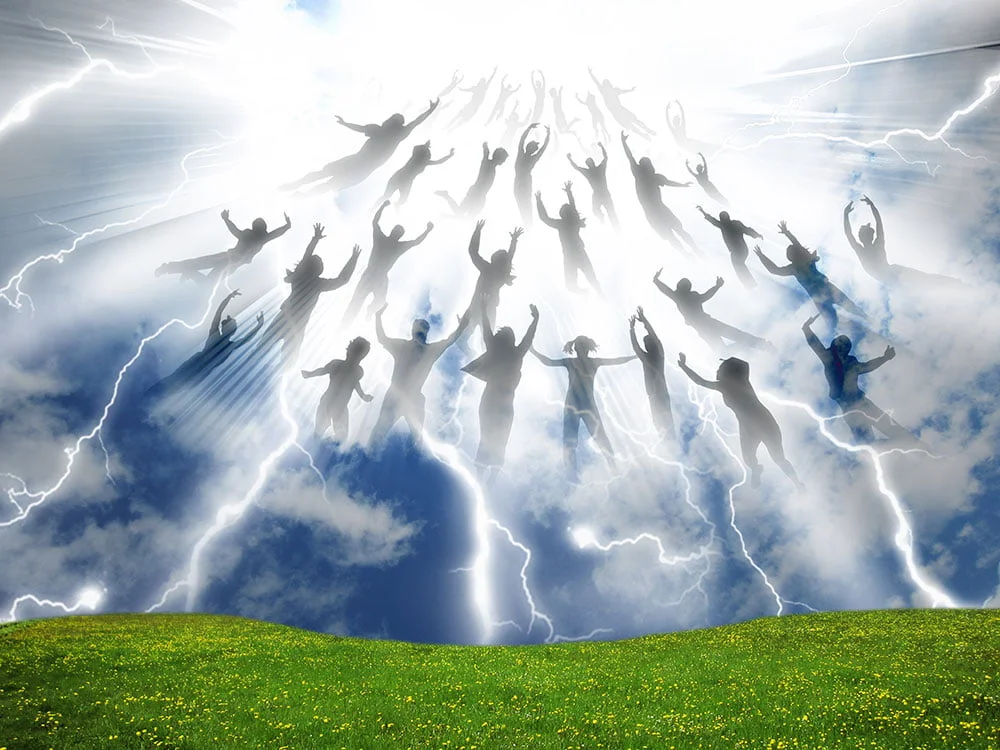
The rapture is an instantaneous, supernatural removal of all born-again believers and children below the age of accountability from the Earth. This event, central to Dispensational Eschatology, is known by its Greek term, Harpazo, meaning “to seize, carry off by force, to snatch out or away”. This act is the moment when the Church, the Bride of Christ, is caught away from the world before God pours out His wrath upon the nations.
The mechanism of this event is described in definitive detail within the New Testament. The defining text, 1 Corinthians 15:51-53 (NKJV), reveals this event as a “mystery” where believers will undergo a radical bodily transformation: “Behold, I tell you a mystery: We shall not all sleep, but we shall all be changed in a moment, in the twinkling of an eye, at the last trumpet. For the trumpet will sound, and the dead will be raised incorruptible, and we shall be changed. For this corruptible must put on incorruption, and this mortal must put on immortality“.
This instantaneous translation provides believers with new, immortal, and sinless spiritual bodies to meet Christ in the air, leaving their former earthly belongings behind. The “last trumpet” mentioned here is typically understood not as one of the seven trumpets of judgment found in Revelation (which belong to the Day of the Lord), but rather as the final summons concluding the Church Age, aligning with the Jewish shofar tradition used for calling an assembly.
I.B. The Day of Christ (DofC): Hope and Reward
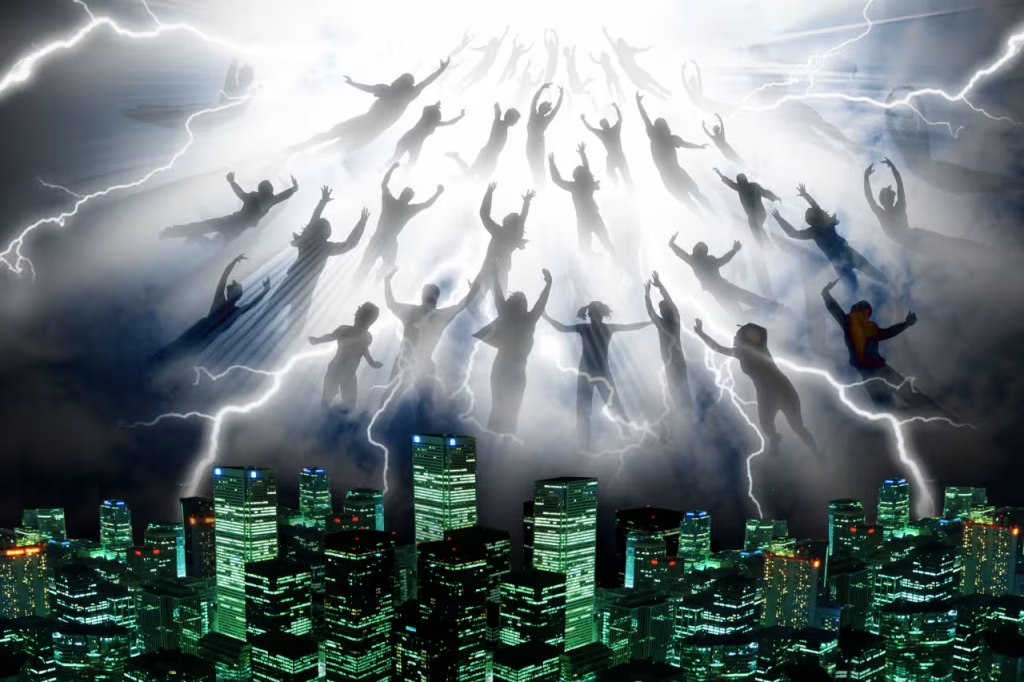
The “Day of Christ” is a phrase used specifically in Scripture to reference the events related to the Church, beginning with the Rapture itself and encompassing the immediate subsequent activities in Heaven. It is associated exclusively with the believer’s hope, purification, and ultimate reward. This designation highlights the personal gathering of Christ’s assembly.
Key passages related to the Day of Christ focus on the final state and faithfulness of the Church. 2 Thessalonians 2:1 (NKJV) speaks directly to this gathering: “Now, brethren, concerning the coming of our Lord Jesus Christ and our gathering together to Him.” Furthermore, the emphasis is placed upon the hopeful expectation of the believers, as articulated in Titus 2:13 (KJV/NKJV): “Looking for that blessed hope, and the glorious appearing of the great God and our Saviour Jesus Christ.” The DofC marks the translation of the saints, the judging of their works at the Bema Seat and the Marriage Supper of the Lamb in Heaven.
I.C. The Day of the Lord (DofL): Wrath and Judgment
In sharp contrast, the “Day of the Lord” is a term rooted in Old Testament prophecy, signifying God’s direct, prolonged intervention and judgment against global wickedness, culminating in Christ’s physical, judgmental return to Earth. This period is characterized by darkness, chaos, and destruction, commencing with the seven-year Tribulation.

Scripture confirms that the DofL is not a secret rapture but a visible, undeniable display of divine authority. 1 Thessalonians 5:2 (KJV/NKJV) emphasizes the surprise nature of this judgment for the unbelieving world: “For yourselves know perfectly that the day of the Lord so cometh as a thief in the night.” However, the watchfulness commanded of the believer means that this Day should not catch the Church by surprise. The DofL culminates with the Second Coming, where Christ returns to destroy His enemies and claim His throne. Prophetic passages, such as those detailing the military return of Christ (Revelation 19:11-21) and His literal descent onto the Mount of Olives (Zechariah 14:4), define the DofL.
The Day of the Lord is a period of divine judgment that culminates with Christ’s physical, glorious return to the Mount of Olives to defeat His enemies and rescue Israel (Zechariah 14:3-4). It is not a single day but an extended epoch beginning with tribulation judgments and concluding with the millennial reign. First Thessalonians 5:1-3 confirms that this day comes unexpectedly “as a thief in the night” upon an unbelieving world saying “Peace and safety,” but it does not surprise believers, who are “sons of light” (1 Thessalonians 5:4-5). This contrast in 1 Thessalonians between the comforting rapture and the sudden, terrible Day of the Lord strongly implies the Church is removed before that Day begins
I.D. Differentiation by Attributes and Audience
The distinction between the Day of Christ (Rapture) and the Day of the Lord (Second Coming/Tribulation) is essential for maintaining a consistent literal interpretation of prophecy. They differ in timing, audience, mode of arrival, and purpose, confirming they are two distinct eschatological events separated by the seven-year Tribulation.
Table 1: Rapture vs. Second Coming Comparison
| Event | Rapture (Catch-up of the Church) | Second Coming (Day of the Lord) |
|---|---|---|
| Scripture | 1 Thess. 4:13–18; 1 Cor. 15:51–52; John 14:2–3 | Zech. 14:4–5; Matt. 24:29–31; Rev. 19:11–16 |
| Description | Believers are caught up to meet Christ in the air (1 Thess. 4:17). No outward signs are given (He comes “as a thief” – 1 Thes. 5:2–4). | Christ returns to earth on white horses with His saints (Rev. 19:11–14). The event is world-wide and unmistakable (“every eye shall see Him” – Matt. 24:30). |
| Participants | The Church (God’s redeemed). Christ comes for His Bride (the Church). | All nations and armies. Christ comes against the Antichrist and gathered armies (Rev. 19:19–20). |
| Focus | Spiritual gathering, blessing, marriage with Christ (the Lamb). | Judgment of unbelievers, destruction of evil (Christ as “Faithful and True” Judge). |
| Promise of Protection | Believers are delivered from coming wrath (e.g. 1 Thess. 1:10). | The saved remnant endures the Tribulation (Jer. 30:7) and receives Christ at His coming. |
| Location | In the air, where believers meet the Lord | On the earth, returning to the Mount of Olives |
This comparison shows that the Rapture (the “Day of Christ” or the Church’s gathering) is different in timing and nature from the Second Coming at the Day of the Lord. Paul explicitly distinguishes Christ “coming to be glorified in his saints” in 1 Thessalonians 1:10 (delivering us from wrath to come) from His return at the end of Tribulation. These texts use different imagery – the Rapture is meeting Christ in the clouds, whereas the Second Coming involves Christ descending to the earth with heavenly armies (Rev. 19:11–14). Thus the Church is taken up before God’s wrath is poured out on the earth.
II. The Great Tribulation: Timeline of Events
II.A. Daniel’s 70th Week
The Tribulation is prophetically established as the final, unfulfilled seven-year period of prophecy, commonly referred to as Daniel’s 70th Week. Daniel 9:24 (NKJV) confirms the focus of this entire period: “Seventy weeks are determined for your people and for your holy city, to finish the transgression, and to make an end of sins,…”. The term “your people” refers exclusively to Israel, meaning this period is designed specifically for the redemption and refinement of the Jewish nation. The seven-year tribulation is also known as Daniel’s 70th Week, referring to the prophecy in Daniel 9:24-27:
“Seventy weeks are determined upon thy people and upon thy holy city, to finish the transgression, and to make an end of sins, and to make reconciliation for iniquity, and to bring in everlasting righteousness, and to seal up the vision and prophecy, and to anoint the most Holy. Know therefore and understand, that from the going forth of the commandment to restore and to build Jerusalem unto the Messiah the Prince shall be seven weeks, and threescore and two weeks: the street shall be built again, and the wall, even in troublous times. And after threescore and two weeks shall Messiah be cut off, but not for himself: and the people of the prince that shall come shall destroy the city and the sanctuary; and the end thereof shall be with a flood, and unto the end of the war desolations are determined. And he shall confirm the covenant with many for one week: and in the midst of the week he shall cause the sacrifice and the oblation to cease…“
The “weeks” here are weeks of years (heptads), meaning 70 periods of seven years each, totaling 490 years. Sixty-nine of these weeks (483 years) were fulfilled from the decree to rebuild Jerusalem until “Messiah the Prince” was “cut off” (crucified). This leaves one final week—seven years—yet to be fulfilled.
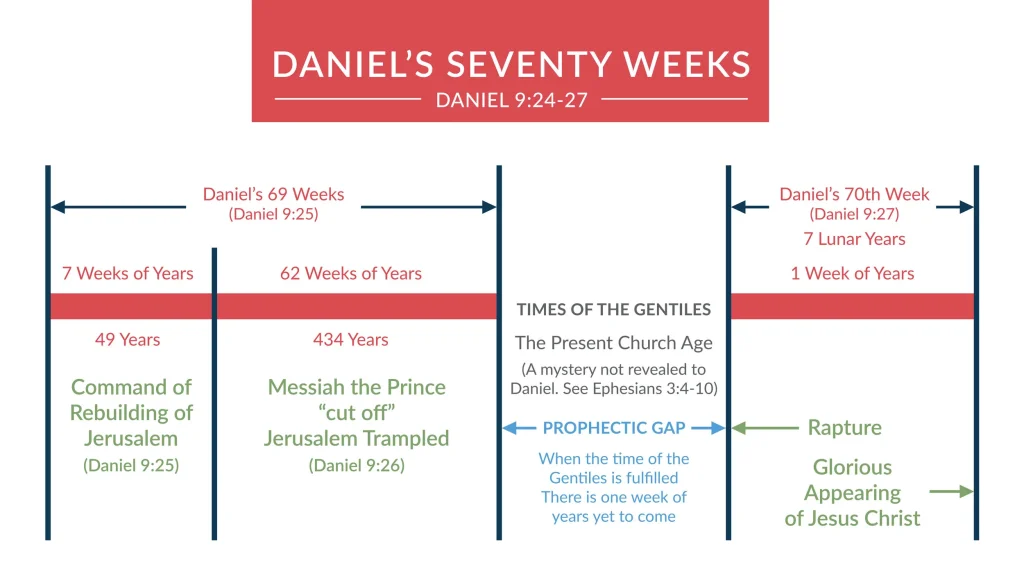
This final week begins when the Antichrist “confirms the covenant with many for one week” (Daniel 9:27). In the middle of this week (after 3.5 years), he breaks the covenant, stops the sacrifices, and sets up the “abomination of desolation” in the rebuilt temple.
II.B. The Time of Jacob’s Trouble
Jeremiah 30:7 refers to this same period: “Alas! for that day is great, so that none is like it: it is even the time of Jacob’s trouble; but he shall be saved out of it.”
This is called “Jacob’s trouble” because it specifically concerns Israel (Jacob). The purpose of the tribulation is primarily to bring Israel to repentance and recognition of their Messiah. Zechariah 12:10 prophesies: “And I will pour upon the house of David, and upon the inhabitants of Jerusalem, the spirit of grace and of supplications: and they shall look upon me whom they have pierced, and they shall mourn for him, as one mourneth for his only son…”
II.C. The Structure of the Tribulation
The Tribulation commences with a political act: the Antichrist, identified as the “prince who is to come,” confirming a covenant with Israel for one “week” (seven years), allowing them to rebuild the Third Temple and reinstitute animal sacrifices. The ensuing period is divided into escalating judgments:
The Seals and the Beginning of Sorrows (First 3.5 Years)
The initial judgments are the Seals of Revelation, often characterized by man-made disasters and the subtle manifestation of the Antichrist.
- Seal 1 (White Horse): The revealing of the Antichrist who goes forth “conquering and to conquer” (Revelation 6:2).
- Seals 2-4 (Red, Black, Pale Horses): The taking of peace from Earth, unleashing global war, rampant famine, hyperinflation, disease, and plagues. The combined effect of these initial judgments results in the death of approximately one-quarter of the world’s population (Revelation 6:8).
The Mid-Point Crisis: Abomination and the Great Tribulation
At the three-and-a-half year mark, the crisis point is reached. The Antichrist breaks his covenant, halts the Jewish sacrifices (Daniel 9:27), and commits the Abomination of Desolation by entering the newly rebuilt Temple and declaring himself to be God (2 Thessalonians 2:4). This act initiates the latter half of the period, known as the “Great Tribulation”. The Antichrist then mandates the Mark of the Beast (666) on the right hand or forehead, without which “no man might buy or sell” (Revelation 13:17 KJV). Those who refuse the Mark face relentless hunting and beheading.
The Trumpets (Judgments of the Thirds)
The Trumpet judgments escalate the wrath, primarily affecting one-third of the world. These include:
- First Trumpet (Revelation 8:7): Hail and fire mingled with blood destroy one-third of all trees and green grass.
- Second Trumpet (Revelation 8:8-9): “Something like a great mountain burning with fire” is thrown into the sea, destroying one-third of the sea, one-third of sea creatures, and one-third of all ships.
- Third Trumpet (Revelation 8:10-11): The star “Wormwood” falls, poisoning one-third of the rivers and springs, causing many deaths.
- Fifth Trumpet (Revelation 9:1-11): Demonic locusts are released from the bottomless pit, tormenting men without God’s seal for five months, with the remarkable restriction that during this time, “men will seek death and will not find it”.
The Bowls (Global, Immediate Wrath)
The Bowls represent the final, most severe, and immediate outpouring of God’s wrath, affecting the entire Earth, particularly those who took the Mark.
The First Bowl (Revelation 16:2 NKJV) unleashes “a foul and loathsome sore” exclusively upon “the men who had the mark of the beast and those who worshiped his image”. This judgment serves a crucial dual function: it is the initial act of physical retribution, and simultaneously provides a definitive, visible marker for Tribulation Saints, clearly identifying those who are eternally lost from those who may yet be saved.
Subsequent bowls include the turning of all sea, rivers, and springs to blood, the sun scorching men with intense heat, darkness over the Antichrist’s kingdom, the drying of the Euphrates, and the climax: the Seventh Bowl (Revelation 16:17-21), featuring the greatest earthquake in history, the collapse of all mountains and islands, and hail the weight of a talent (approximately 75 pounds).
The seven years are divided into two equal periods:
First Half (3.5 years): A time of relative peace under the Antichrist’s rule. The world believes he has brought peace, especially to the Middle East.
Second Half (3.5 years): Also called the “Great Tribulation” (Matthew 24:21), beginning when the Antichrist breaks his covenant, defiles the temple, and declares himself God (2 Thessalonians 2:3-4). This period is marked by:
- The breaking of seven seals (Revelation 6-8)
- The sounding of seven trumpets (Revelation 8-11)
- The pouring out of seven bowls of wrath (Revelation 16)
Revelation 11:3 and Revelation 12:6 both refer to 1,260 days (3.5 years), confirming the division of the seven years into two equal halves.
Immediate Post-Tribulation Events
The Tribulation concludes with the glorious Second Coming of Christ. As stated in Matthew 24:29-30 (NKJV), immediately following the tribulation, “the sun will be darkened… and then all the tribes of the earth will mourn, and they will see the Son of Man coming on the clouds of heaven with power and great glory”.
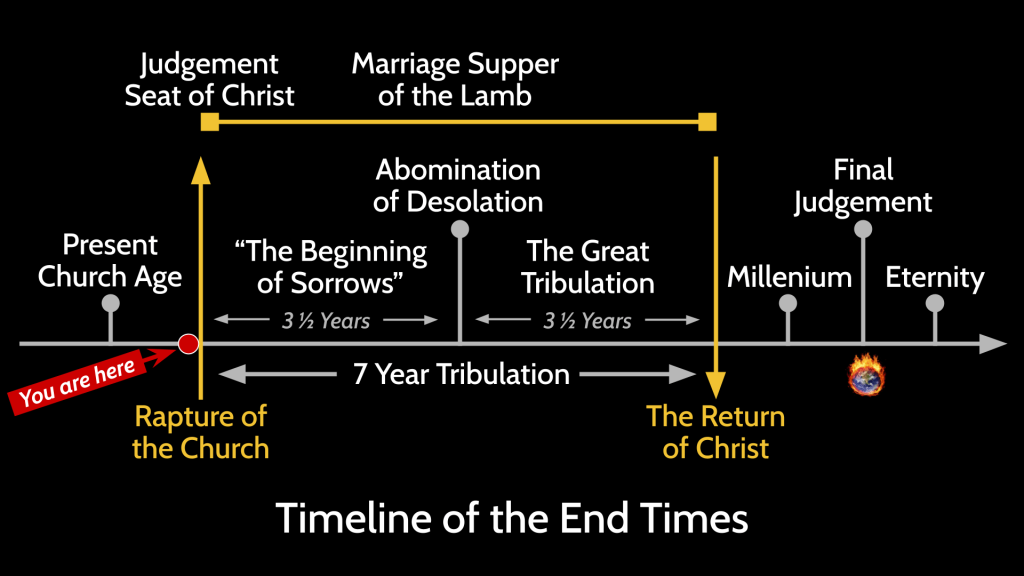
Christ descends with His armies (the raptured Church, dressed in white linen, Revelation 19:14). He confronts the nations gathered at Armageddon. The armies of the Beast are destroyed instantly “with the sword which proceeded from the mouth of Him who sat on the horse” (Revelation 19:21 NKJV). The Antichrist and the False Prophet are captured and cast alive directly into the Lake of Fire (Revelation 19:20).
This is followed by the binding of Satan for 1,000 years (Revelation 20:1-3) and the Sheep and Goats Judgment (Matthew 25:31-46), which separates the surviving Tribulation believers (who will populate the Millennium in natural bodies) from the unsaved (who are cast into eternal fire). Christ then reigns globally from Jerusalem for 1,000 years, restoring peace and righteousness (the Millennium).
II.D. What Occurs During and After the Tribulation
During the Tribulation:
- Unprecedented natural disasters (Revelation 6-16)
- Rise of the Antichrist and False Prophet (Revelation 13)
- Mark of the Beast system (Revelation 13:16-18)
- Persecution of tribulation saints who come to faith after the Rapture (Revelation 7:9-17)
- 144,000 Jewish witnesses sealed (Revelation 7:1-8)
- Two witnesses prophesying in Jerusalem (Revelation 11:3-12)
- Massive death toll—potentially billions (Revelation 6:8, 9:15-18)
Immediately After the Tribulation:
- The Battle of Armageddon (Revelation 16:16, 19:17-21)
- Christ’s physical return to the Mount of Olives (Zechariah 14:4)
- Judgment of the nations (Matthew 25:31-46)
- Satan bound for 1,000 years (Revelation 20:1-3)
- Establishment of Christ’s Millennial Kingdom (Revelation 20:4-6)
- Israel’s national salvation (Romans 11:26)
During the Tribulation the Antichrist and False Prophet exercise miraculous power (Rev. 13), and global worship of the Beast is enforced. Revelation 13:5 notes that the Beast “was given a mouth speaking great things… and power was given unto him to continue forty and two months” – i.e. 3½ years. Jesus warned believers that the coming tribulation would be unparalleled (Matt. 24:21–22) and that His return would occur “immediately after the tribulation of those days” (Matt. 24:29–31). At that point He comes in glory with His angels, gathering Israel to the new covenant (Zech. 14:4–5) and judging the nations.
III. The Pre-Tribulation Doctrine: Our Blessed Hope (Biblical Evidence)
The Pre-Tribulation position is grounded in the consistent theological principle that the Church is saved from God’s judgment, not preserved through it. This view asserts that the Rapture is the next imminent event, necessarily preceding the seven years of Tribulation.
III.A. Immunity from God’s Wrath (The Non-Appointment Doctrine)
The strongest evidence for the Pre-Tribulation view rests upon the specific language used by the Apostle Paul and Christ himself regarding the Church’s exclusion from divine judgment.
The Apostle Paul explicitly states the believer’s destiny in 1 Thessalonians 5:9 (NKJV): “For God did not appoint us to wrath, but to obtain salvation through our Lord Jesus Christ“. The seven-year Tribulation is universally defined in dispensational eschatology as God’s period of wrath and judgment poured out upon the nations and the rebellious “earth-dwellers”. If the Church were required to endure this period, even partially, it would contradict this foundational promise that believers are not destined for the appointed wrath.
Furthermore, Christ’s promise to the faithful Church of Philadelphia in Revelation 3:10 (KJV) provides a direct confirmation of removal: “Because thou hast kept the word of my patience, I also will keep thee from the hour of temptation, which shall come upon all the world, to try them that dwell upon the earth“. To be kept from the hour of trial implies complete removal from the period of time in which the trial takes place, not merely protection while enduring the events. This promise of deliverance establishes the physical removal of the Church before the Tribulation begins.
This divine protection is mirrored in Old Testament typology. The prophet Isaiah foreshadowed this deliverance in Isaiah 26:20-21 (NKJV): “Come, my people, enter your chambers, And shut your doors behind you; Hide yourself, as it were, for a little moment, For behold, the Lord comes out of His place To punish the inhabitants of the earth for their iniquity.” This passage describes God securing His people before He unleashes His vengeance upon the Earth, creating a powerful prophetic parallel to the Church being secured in heaven before the Tribulation wrath.
In 1 Thessalonians 1:10, Paul says Christ “delivered us from the wrath to come”. Romans 5:9 reinforces this truth, asserting that believers are already “justified by His blood, and much more shall we be saved
from the wrath of God through Him“. These passages suggest the righteous are sheltered or removed before divine judgment is unleashed on the world.
III.B. The sequence of events described in 2 Thessalonians 2:3
The sequence of events described in 2 Thessalonians 2:3 is central to the pretribulation argument, though it hinges on textual criticism. The verse states, “Let no one deceive you by any means as to this coming, for that Day shall not come unless the falling away comes first, and the man of sin is revealed, the son of perdition.” There is a significant variation in manuscript evidence here. The Textus Receptus and the King James Version read “the day” as “the day of Christ,” whereas modern critical texts prefer “the day of the Lord” . Proponents of the pre-tribulation view argue that the original text likely read “day of Christ” and that this reading is essential for maintaining the distinction between the two events.
Under this interpretation, Paul is clarifying that the Day of Christ (the Rapture) will not occur until two things happen first: a “falling away” (apostasia) and the revelation of the Antichrist . The Greek word apostasia was translated as “departure” in early English versions like the Wycliffe and Tyndale translations, strongly suggesting it refers to a specific event of removal rather than a prolonged period of apostasy . This event is none other than the Rapture itself, described in 1 Thessalonians 4:13-18 . The grammatical structure indicates that the “day of Christ” is contingent upon the Rapture happening first, thus placing the Rapture before the Tribulation and the revelation of the Antichrist.
III.C. Typological Proofs of Pre-Judgment Deliverance
The pattern of removing the righteous before global catastrophe is consistent throughout Scripture, serving as a prophetic template for the Rapture.
One compelling typology contrasts Enoch with Noah. Noah and his family were preserved through the judgment of the flood, representing the Tribulation Saints and the remnant of Israel who endure the final days. In contrast, Enoch was “translated” (Hebrews 11:5 KJV/NKJV), being “taken away so that he did not see death,” before the judgment of the Flood began. Enoch, the individual who walked closely with God, serves as a direct type of the Church body being raptured before the Tribulation, the great judgment.
Similarly, the deliverance of Lot from Sodom provides further evidence. God ensured that Lot and his family were physically escorted out of the city before the destruction by fire and brimstone commenced (Genesis 19). God’s intervention to rescue Lot from impending wrath, rather than protecting him while in the midst of the flames, establishes the precedent of Pre-Judgment removal.
III.D. The Necessity of the Restrainer’s Removal
The Rapture is not just a matter of timing; it is a causal prerequisite for the Antichrist’s final reign of lawlessness. The existence of a restraining force preventing the full manifestation of global evil is detailed in 2 Thessalonians 2:7 (NKJV/KJV): “For the mystery of lawlessness is already at work; only He who now restrains will do so until He is taken out of the way“.
The Restrainer is widely identified as the Holy Spirit, who indwells every born-again believer, thereby making the entire Church body the “salt and light” that slows the world’s decay and prevents complete societal collapse into depravity. The removal of this restraining influence (“taken out of the way”) must occur before the Antichrist (“the man of sin”) can be fully revealed and take global control. Consequently, the Rapture, which removes the Church and the indwelling Holy Spirit, is the singular event that unleashes “all hell to break loose on earth,” plunging the world into chaos and allowing the Tribulation to begin. This theological structure confirms that the Church cannot coexist with the Antichrist during the Tribulation period, as her presence actively prevents the events from escalating as prophesied.
III.E. Insights from the Book of Revelation
Furthermore, the absence of the Church in the book of Revelation provides strong circumstantial evidence for a pre-tribulation Rapture. After addressing the seven local churches in chapters 2 and 3, the narrative of the book abruptly shifts its focus to the Tribulation judgments, the Beast, the False Prophet, and the redemption of Israel. The Church, the Body of Christ, is never mentioned again until the very end of the book, in Revelation 19, when she returns with Christ as His Bride to participate in the Marriage Supper of the Lamb and accompany Him to battle at Armageddon. The Book of Revelation is understood as a prophetic vision detailing the events of the Day of the Lord, the seven-year Tribulation. The fact that the Church is absent from this detailed account of the Tribulation suggests that she has already been removed from the earth before these events begin.
This argument is bolstered by the understanding that the Church age is a “mystery” hidden in previous scriptures and was revealed primarily through the Apostle Paul. Therefore, it is logical that a book focused on the fulfillment of Old Testament prophecy concerning Israel would not include the Church, whose destiny was previously unrevealed. The presence of the 24 elders in heaven in Revelation 4-5, described as having been redeemed “from every kindred, and tongue, and people, and nation” and wearing golden crowns, is interpreted as a depiction of the resurrected and glorified Church already in heaven, proving the Rapture occurred before the first seal of the Tribulation was broken.
III.F. The nature of the Rapture
Finally, the nature of the rapture itself is distinct from the Second Coming. The rapture is a secret, instantaneous event, described as happening “in a moment, in the twinkling of an eye, at the last trumpet” (1 Corinthians 15:52). It is an act of deliverance where believers are caught up to meet the Lord in the air (1Thessalonians 4:17) . The Second Coming, conversely, is a public, visible event witnessed by all (Revelation 1:7), where Christ returns to the earth to judge the wicked and establish His kingdom . The Rapture is not predicted in the Old Testament because the Church was a mystery . The Second Coming, however, is foretold in Daniel and Zechariah.
This fundamental difference in visibility, purpose, and biblical origin supports the conclusion that they are two separate events separated by a significant time period, accommodating the seven-year Tribulation. The call for believers to be watchful and ready for the Lord’s return, as seen in passages like Matthew 24:42-44, makes sense only if the event is imminent and could occur at any moment without prior warning, aligning perfectly with the pre-tribulation Rapture and contrasting sharply with the Second Coming, which follows a specific set of signs.
IV. The Church’s Heavenly Itinerary: Purpose and Preparation
The removal of the Church marks the beginning of a crucial seven-year period in heaven, fulfilling the divine plan for Christ’s Bride.
IV.A. The Judgment Seat of Christ (Bema Seat)
Immediately following the Rapture, the resurrected and translated believers will stand before the Judgment Seat of Christ, known as the Bema seat. This is not a judgment for salvation, as the penalty for sin was already paid by Christ on the cross, but rather an evaluation of the believer’s faithfulness and obedience during their earthly life.
The process of assessment is outlined in 1 Corinthians 3:12–15 (NKJV/KJV), where a believer’s works are tested by fire. Works built upon Christ, symbolized by “gold, silver, precious stones,” will endure and receive reward. Works done for selfish reasons, symbolized by “wood, hay, straw,” will be “burned,” and the believer will “suffer loss” of those rewards, “but he himself will be saved, yet so as through fire”. The Bema Seat serves as the essential preparation phase, cleansing the Bride and rewarding her for her service before the subsequent Marriage.
2 Corinthians 5:10 tells us: “For we must all appear before the judgment seat of Christ; that every one may receive the things done in his body, according to that he hath done, whether it be good or bad.”
This judgment is NOT for salvation (that was secured at the cross) but for rewards. 1 Corinthians 3:12-15 explains: “Now if any man build upon this foundation gold, silver, precious stones, wood, hay, stubble; Every man’s work shall be made manifest: for the day shall declare it, because it shall be revealed by fire; and the fire shall try every man’s work of what sort it is. If any man’s work abide which he hath built thereupon, he shall receive a reward. If any man’s work shall be burned, he shall suffer loss: but he himself shall be saved; yet so as by fire.“
This judgment must occur between the Rapture and the Second Coming, requiring the Church to be in heaven during the tribulation period.
Romans 14:10-12 confirms: “For we shall all stand before the judgment seat of Christ. For it is written, As I live, saith the Lord, every knee shall bow to me, and every tongue shall confess to God. So then every one of us shall give account of himself to God.“
The rewards given at this judgment include:
- The Crown of Life (James 1:12) – for those who endure trials
- The Incorruptible Crown (1 Corinthians 9:25) – for self-discipline
- The Crown of Rejoicing (1 Thessalonians 2:19) – for soul-winners
- The Crown of Righteousness (2 Timothy 4:8) – for those who love His appearing
- The Crown of Glory (1 Peter 5:4) – for faithful shepherds
IV.B. The Marriage of the Lamb
The Church, having been purified and prepared at the Bema Seat, is ready for the ultimate union with Christ, known as the Marriage of the Lamb. This event formalizes the relationship between Christ, the Bridegroom, and the Church, His Bride.
The Marriage is announced triumphantly in Revelation 19:7 (NKJV): “Let us be glad and rejoice and give Him glory, for the marriage of the Lamb has come, and His wife has made herself ready.” This preparation phase is necessary for the Bride to be “ready” and sanctified. Crucially, the marriage event and the subsequent Marriage Supper of the Lamb (Revelation 19:9) must take place in heaven before Christ returns. Revelation 19:14 depicts Christ returning to Earth with the armies of Heaven, identified as His saints, confirming the union and the celebratory feast must be completed in Heaven during the Tribulation interval. This requirement for a prolonged heavenly event spanning the seven years further necessitates the Pre-Tribulation Rapture.
2 Corinthians 11:2 states: “For I am jealous over you with godly jealousy: for I have espoused you to one chaste virgin, that I may present you as a chaste virgin to Christ.”
Ephesians 5:25-27 describes Christ’s purpose: “Husbands, love your wives, even as Christ also loved the church, and gave himself for it; That he might sanctify and cleanse it with the washing of water by the word, That he might present it to himself a glorious church, not having spot, or wrinkle, or any such thing; but that it should be holy and without blemish.“
IV.C. Typologies of Purification and Sanctification
Old Testament rituals relating to the cleansing and dedication of sacred spaces serve as prophetic templates, establishing the divine precedent for the duration of the Church’s purification in Heaven.
The dedication of Solomon’s Temple, as recorded in 1 Kings 8:65 (KJV/NKJV) and 2 Chronicles 7:9, involved an initial seven-day dedication followed by seven more days for the Feast of Tabernacles, totaling fourteen days. This doubling of the sacred number seven (completeness) represents a period of intensified preparation. In prophetic chronology, if the Tribulation is the seven-year period of God’s wrath on Earth, this doubled period typifies the necessary seven-year span of preparation and celebration for the Church in Heaven before its descent with Christ.
A similar pattern is found in King Hezekiah’s restoration and purification of the Temple, where the priests and Levites purified the structure over 16 days (2 Chronicles 29:16–17). This process involved a distinct 8-day period for outer sanctification followed by 8 days more for cleansing the temple interior. The priests were required to sanctify themselves outside the Temple before entering the interior. This act perfectly models the Rapture, where the Church is removed from the Earthly sphere (the outer court) for a dedicated period of sanctification (the 7-year interval) before returning to participate in the Millennial Kingdom on Earth. These extensive, purposeful dedication cycles confirm that the Church requires a dedicated, extended period of heavenly preparation, validating the removal of the Bride for seven years.
This pattern of 8+8 (16 days) or 7+7 (14 days) of preparation and sanctification may foreshadow the Church’s preparation during the tribulation period (though in heaven, not on earth). While the world experiences judgment, the Bride is being adorned and prepared for her wedding.
IV.D. Refinement for the Israel and the nations
Finally, the Rapture serves to remove the Church from the earth to allow for the fulfillment of God’s specific program for Israel and the nations. As previously discussed, the seven-year Tribulation is primarily focused on Israel’s redemption and the execution of God’s wrath upon the world. The Church, being a distinct entity composed of both Jew and Gentile, is not the intended recipient of these judgments. By removing the Church, God can resume His prophetic clock with Israel, fulfilling the promises made to them in the Old Testament. This removal also addresses the “Restrainer Principle,” where the Holy Spirit’s ministry through the Church currently holds back the full manifestation of evil in the form of the
Antichrist. The Rapture liberates the Holy Spirit to work in a new way, allowing the Tribulation to unfold according to God’s sovereign plan. In summary, the Rapture is a comprehensive act of divine love and wisdom, designed to protect believers from wrath, unite them with Christ in a joyous celebration, evaluate their lives for rewards, and create the necessary conditions for God’s ultimate purposes for Israel and the world to be fulfilled.
By removing the Church first, God allows the coming judgments to refine and test those left behind. The Tribulation will force many Jews and Gentiles to confront Christ (Rev. 7:9–17; Zech. 13:8–9). A believing remnant of Israel is prophesied to emerge (Rom. 11:25–27; Zech. 12–14), many coming to faith after seeing Christ’s parousia. Likewise, the unsaved world endures God’s wrath, which could lead to repentance for some (as in judgments of the Flood, Sodom, even the plagues of Egypt). Thus the Rapture also serves God’s purpose of gathering out His elect but letting others experience the consequences of unbelief, so that at Christ’s return “all Israel shall be saved” (Rom. 11:26) and we all enter His kingdom “prepared as a bride adorned” (Rev. 21:2).
While the primary focus of the tribulation is Israel, God in His mercy provides one final opportunity for Gentiles to come to faith. Revelation 7:9-14 describes “a great multitude, which no man could number, of all nations, and kindreds, and people, and tongues” who came out of the great tribulation.
Matthew 24:14 promises: “And this gospel of the kingdom shall be preached in all the world for a witness unto all nations; and then shall the end come.“
Revelation 14:6-7 describes an angel preaching the everlasting gospel: “And I saw another angel fly in the midst of heaven, having the everlasting gospel to preach unto them that dwell on the earth, and to every nation, and kindred, and tongue, and people, Saying with a loud voice, Fear God, and give glory to him; for the hour of his judgment is come: and worship him that made heaven, and earth, and the sea, and the fountains of waters.“
Even in judgment, God extends mercy. However, those who come to faith during the tribulation will face severe persecution and likely martyrdom (Revelation 13:15-17).
To Fulfill the Prophetic Timeline
The Rapture is necessary to complete God’s prophetic program:
- It ends the Church age
- It begins Daniel’s 70th week
- It prepares the Bride for presentation
- It removes the restrainer (2 Thessalonians 2:6-7)
- It allows the revelation of the Antichrist
- It sets the stage for Israel’s redemption
- It demonstrates God’s power over death
John 14:2-3 contains Jesus’ promise: “In my Father’s house are many mansions: if it were not so, I would have told you. I go to prepare a place for you. And if I go and prepare a place for you, I will come again, and receive you unto myself; that where I am, there ye may be also.” This is not the Second Coming (when He comes to earth to judge), but the Rapture (when He takes us to Himself in heaven).
IV.E. Additional Biblical Evidence Often Overlooked
The Number Seven and Prophetic Completion
The number seven appears throughout Scripture as the number of completion and perfection. Israel’s age in 2025 (77 years) and potentially in 2032 (84 years = 12 x 7) carries numerical significance:
- 77 = 7 x 11 (7 representing completion; 11 representing disorder/incompleteness)
- 84 = 12 x 7 (12 representing government; 7 representing completion)
The transition from 77 to 84 could represent moving from incompleteness to divine governmental completion.
The Fig Tree Generation
Matthew 24:32-34 states: “Now learn a parable of the fig tree; When his branch is yet tender, and putteth forth leaves, ye know that summer is nigh: So likewise ye, when ye shall see all these things, know that it is near, even at the doors. Verily I say unto you, This generation shall not pass, till all these things be fulfilled.”
The fig tree consistently represents Israel in Scripture (Jeremiah 24:5, Hosea 9:10, Joel 1:7). The fig tree “putting forth leaves” occurred in 1948 when Israel became a nation again after 2,000 years of exile.
Psalm 90:10 defines a generation: “The days of our years are threescore years and ten; and if by reason of strength they be fourscore years, yet is their strength labour and sorrow; for it is soon cut off, and we fly away.”
A generation is 70-80 years. From 1948:
- 70 years = 2018
- 77 years = 2025
- 80 years = 2028
- 84 years = 2032
We are within the timeframe Jesus specified for “this generation.”
The Hosea 6:2 Timeline
Hosea 6:2 states: “After two days will he revive us: in the third day he will raise us up, and we shall live in his sight.”
Using the principle that “one day is with the Lord as a thousand years” (2 Peter 3:8):
- “After two days” (2,000 years) from Christ’s death/resurrection
- “In the third day” (the millennium) He will raise up Israel
- Christ died approximately 32 AD
- 32 AD + 2,000 years = 2032
This aligns remarkably with other timelines pointing to the 2025-2032 window.
V. Chronological Analysis I: The Essene Calendar and the Jubilee Cycle
The Essenes were a member of the mystic Jewish sect that flourished from the 2nd century BCE to the 1st century CE, with a central settlement at Qumran. They were an ascetic and separatist group that practiced communal living, ritual purity and had a strong apocalyptic belief in an impending end to the current age and a new kingdom.
They were a monastic community that separated themselves from mainstream Judaism, believing the priesthood in Jerusalem had been corrupted. They maintained strict adherence to the Torah and developed a sophisticated prophetic calendar based on solar cycles. Their writings are strongly associated with the Dead Sea Scrolls and they are considered a potential link between Judaism and early Christianity. A full analysis of eschatological timing requires investigation into ancient chronologies, notably the calendar upheld by the Essenes.
This calendar, discovered among the Dead Sea Scrolls, stands in stark contrast to the lunar-based calendar used by mainstream Judaism of the time. The Essene calendar was structured to be mathematically perfect, dividing the year into exactly 52 weeks (12 months of 30 days plus four seasonal marker days called “tekufah”). This structure ensured that religious festivals and holy days always fell on the same weekday each year, avoiding the need for human observation of the new moon and the adjustments required by the lunar system. For example, Passover would always fall on a Wednesday, and the Day of Atonement would always fall on a Friday, a feature the Essenes considered divinely ordered and “perfect” . They believed this solar calendar represented the original creation based method of timekeeping, which had been corrupted after the Babylonian captivity .
V.A. Essene Calendar System and Reliability
The Essenes maintained a rigid 364-day solar calendar, distinct from the lunisolar calendar used by the Pharisees. This calendar divides the year into twelve 30-day periods plus four additional days marking the seasons. The rigorous adherence to this solar system led them to be called “Sons of Light”.
The Essene calendar is considered by some scholars to be highly reliable due to its successful prediction of major historical events, including the precise timing of the First Coming of the Messiah, the Crucifixion, and the reestablishment of the modern state of Israel in 1948. The fact that their chronology successfully marked the beginning of the Age of Grace lends credence to their calculations regarding its conclusion.
V.B. Essene Time Cycles and Definitions
Table 2: Essene Time Cycles and Chronological Units
| Essene Time Cycle | Duration | Theological Context |
| Shemitah | 7 Years | A Week of Years (Preparation) |
| Jubilee | 50 Years | Year of Restoration (Leviticus 25:10) |
| Onah | 500 Years | 10 Jubilees (Major prophetic interval) |
| Day/ Millennium/ | 1,000 Years | Era in God’s 7,000 Year Plan |
| Age | 2,000 Years |
The Essene chronology is structured around a precise system of recurring time cycles, designed to map out God’s 7,000-year plan for humanity.
They believed in a 7,000-year plan for human history:
- First Age (2,000 years): From Adam to Abraham
- Second Age (2,000 years): The Age of Torah – From Abraham to the Messiah
- Third Age (2,000 years): The Age of Grace – The Church Age
- Final Period (1,000 years): The Millennial Reign
In this scheme, 120 jubilee periods (120×50 years = 6,000 years) would conclude around the end of 2075. This understanding aligns with 2 Peter 3:8: “But, beloved, be not ignorant of this one thing, that one day is with the Lord as a thousand years, and a thousand years as one day.”
This system is founded upon the principle found in 2 Peter 3:8 (NKJV) and Psalm 90:4, where “one day is as a thousand years, and a thousand years as one day”. This macro-chronology views human history as six “days” (6,000 years) of labor, culminating in the 1,000-year Millennial Reign, which functions as the Sabbath rest.
V.C. The Essene Prophecy and the 2025 Threshold
Modern research applying the Essene calendar has placed the world’s current year extremely close to the 6,000-year threshold. Based on these chronological calculations, the Spring of 2025 is identified as the year 5,950 since creation, coinciding with a potential Jubilee year. According to Leviticus 25:9, the Jubilee year was announced by the sound of a trumpet on the Day of Atonement (Yom Kippur), the 10th day of the 7th month (Tishri).
Essene Prophecies That Have Been Fulfilled
The believing Essenes made remarkably accurate predictions about the coming Messiah. They knew He would be God incarnate, that He would die for sins in 32 AD, and that He would initiate an Age of Grace. Specifically:
- Predicted Christ’s Death Year: Using their jubilee calculations, they determined that the Messiah would be “cut off” in the first week after the tenth jubilee from a specific starting point, which corresponds to 32 AD—the year most scholars believe Christ was crucified.
- Predicted the Temple’s Destruction: They foresaw that the temple would be destroyed (fulfilled in 70 AD by the Romans).
- Predicted the Age of Grace: They understood that after the Messiah’s death, a new age would begin—what we now call the Church Age or Age of Grace.
Why Should We Consider Essene Prophecies?
Several factors make the Essene prophecies worthy of consideration:
- Early Church Father Agreement: Early church fathers like Irenaeus and Victorinus of Pettau wrote about the seven-thousand-year period of human history, similar to what the Essenes taught.
- Historical Accuracy: When the Essenes’ predictions about the Messiah were fulfilled with the death and resurrection of Jesus, the believing Essenes became Christians and went out to preach the Gospel. This suggests divine inspiration in their calculations.
- Divine Timing: The Dead Sea Scrolls were hidden for nearly 2,000 years and discovered in 1947—just one year before Israel became a nation again. This timing seems providential.
- Biblical Alignment: Their time system aligns with biblical patterns, including the seven-day creation pattern, jubilee years, and prophetic timelines in Daniel and Revelation.
The 2025 Prophecy
According to Essene calculations, mankind would enter the final jubilee period in 2025 AD. This final jubilee was believed to mark the transition into the last period before the Messianic kingdom.
Here’s how the calculation works:
- If the Age of Grace began around 32 AD (Christ’s death)
- And ages in their system are measured in jubilee cycles
- The final jubilee before the end of the Age of Grace would begin in 2025
- This places the Feast of Trumpets in fall 2025 exactly 3.5 years away from spring 2029—potentially marking the mid-point of the final seven-year period
Some modern interpretations, based on the Essene calendar, suggest the final Jubilee cycle may have begun around 2025 AD, with the end of the 6,000-year “age of man” potentially occurring around 2075 AD. The arrival of 2025 as a Jubilee boundary indicates that the final 50-year cycle of the 6,000 years of human history may have begun.
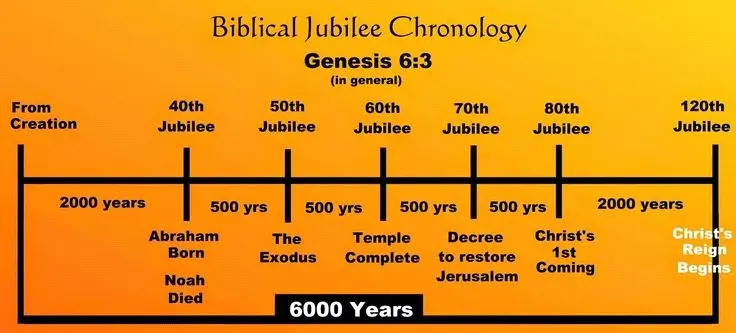
For the 7-year Tribulation to conclude precisely at the 6,000-year marker (thereby ushering in the Millennial Sabbath), the Tribulation must commence around 2025 or 2026. This chronological alignment compels the Rapture to occur prior to this date, removing the Church before the final prophetic clock starts ticking.
The deliverance anticipated by the Essenes at this Jubilee boundary was an “atonement for the Sons of Light,” often associated with the order of Melchizedek. This expectation of a final liberation of the righteous at the precise culmination of a sacred time cycle provides a strong chronological context for the sudden, pre-Tribulation removal of the Church (the Sons of Light) via the Rapture.
VI. Chronological Analysis II: Biblical Typologies Pointing to 2025
Beyond the structured Essene calendar, internal biblical narratives contain precise chronological and familial typologies that reinforce 2025 as a critical period of prophetic anticipation. Typology is a method of biblical interpretation where persons, events, or things in the Old Testament are seen as prefiguring or foreshadowing persons, events, or things in the New Testament or future fulfillment. The Old Testament is filled with “types” that point to greater spiritual realities.
VI.A. The Jacob, Leah, and Rachel Typology
One of the most compelling typologies involves Jacob and his two wives, found in Genesis 29-30.
The Biblical Account: Jacob worked seven years for Rachel, the woman he loved. But on his wedding night, Laban deceived him and gave him Leah instead. Jacob then received Rachel one week later, but had to work an additional seven years for her.
The Calculation of Jacob’s Age: From Scripture we can calculate that Jacob was 130 years (Genesis 47:9),old when he went to Egypt. Joseph was 39 years old at that time (30 when he entered Pharaoh’s service, plus 7 years of abundance, plus 2 years of famine). Therefore, Jacob was 91 when Joseph was born. Since Joseph was born after Jacob had worked 14 years for his wives, Jacob was 77 years old when he first met Rachel, and 84 years old when he married both Leah and Rachel.
The Typological Interpretation:
- Jacob represents Jesus Christ, the bridegroom
- Rachel (the beloved, chosen first) represents Israel, God’s chosen people whom He loved first
- Leah (given instead, but fruitful) represents the Church, the Gentile bride taken during Israel’s spiritual blindness
- The One Week Delay between marriages represents the seven-year Tribulation period
Jacob’s marriage to Leah at the age 77 could point to the marriage of the Church at the Rapture, and then one week later at the age 84(representing Daniel’s last week of seven years) he marries Rachel, picturing the marriage to Israel at the Second Coming.
Applying This to Israel and 2025:
If we apply this typology to the modern nation of Israel:
- Israel was reborn as a nation in 1948
- In 2025, Israel will be 77 years old (the age Jacob was when he met Rachel)
- In 2032, Israel will be 84 years old (the age Jacob was when he married)
The number 77 could represent the time of “meeting” or renewed attention, while 84 could represent the fullness of time for completion. If the Rapture occurs in 2025 when Israel is 77, this would allow for the seven-year tribulation, ending in 2032 when Israel is 84—the age of Jacob’s marriages and full family completion.
Rachel’s Barrenness and Israel’s Current State: Just as Rachel was initially barren while Leah bore many children, Israel has been spiritually barren (rejecting Messiah) while the Church has born much fruit among the Gentiles. Romans 11:25 explains: “For I would not, brethren, that ye should be ignorant of this mystery, lest ye should be wise in your own conceits; that blindness in part is happened to Israel, until the fulness of the Gentiles be come in.“
VI.B. The Abraham, Isaac, and Eliezer Typology
Another powerful typology appears in Genesis 24, where Abraham sends his servant Eliezer to find a bride for Isaac.
The Biblical Account: Abraham (representing God the Father) sends his eldest servant (Eliezer, representing the Holy Spirit) to find a bride for his son Isaac (representing Jesus Christ). The servant travels to a distant land and finds Rebekah (representing the Church), who willingly agrees to return with him to meet the bridegroom she has never seen.
The Typological Elements:
- Abraham = God the Father
- Isaac = Jesus Christ, the Son, who stays at home waiting
- Eliezer = The Holy Spirit, sent to call out a bride
- Rebekah = The Church, the Gentile bride who has never seen the bridegroom but loves him
- The Journey = The Holy Spirit’s work during the Church age, calling out the bride
- Rebekah’s Willingness = “Wilt thou go with this man?” represents the free will choice to accept Christ
- The Return Journey = The Rapture, when the bride is taken to meet the bridegroom
The Timing Connection: Genesis 24:67 states: “And Isaac brought her into his mother Sarah’s tent, and took Rebekah, and she became his wife; and he loved her: and Isaac was comforted after his mother’s death.”
Sarah (representing the old covenant/Israel) had died, and Isaac was comforted by his new bride. This pictures how the Church comforts Christ during the time of Israel’s spiritual death. The marriage takes place before Isaac’s inheritance is fully realized—just as the Church’s marriage occurs before Christ returns to claim His earthly inheritance.
Take note that the marriage of Isaac and Rebekah (based on traditional biblical chronology,) this event is estimated to have occurred around 2025/2026 BCE.
Further Timing Connection: Genesis 25:20 states: “Isaac was forty years old when he took Rebekah as wife, the daughter of Bethuel the Syrian of Padan Aram, the sister of Laban the Syrian.” Isaac (Jesus Christ) was forty years old when he married Rebekah (the Church). Many theologians identify the start of the Church Age as the Day of Pentecost, which occurred around AD 30-33, shortly after Jesus’s resurrection and ascension. Using the 50-year cycle, 40 jubilees is 2,000 years (40 x 50 years). The idea is that 2,000 years of the Church Age (40 jubilees) would end around the year 2030 (give or take a few years, depending on the exact year the Church Age is considered to have started).
Eliezer’s mission is to travel from the Promised Land (symbolizing heaven) to find a suitable bride from Abraham’s own kin, who are from another land (symbolizing Gentile believers). The servant’s prayer at the well for a sign—an unmarried virgin who offers water to him and his ten camels mirrors the Holy Spirit’s work in drawing believers to Christ. Rebekah’s immediate response of selfless service and her prompt, “I will go” when asked to leave her family, typifies the believer’s readiness and obedience to be taken up to be with her Bridegroom, Isaac, who goes out to meet her in the field. The gifts of gold and silver that Eliezer gives to Rebekah symbolize the spiritual blessings and fruit of the Spirit that authenticate the Gospel message and prepare the bride for her union. This entire narrative is seen as a divine blueprint for the Rapture, illustrating the Father’s initiative, the Holy Spirit’s agency, and the Church’s joyful response to be united with Christ.
VI.C. Other Biblical Typologies Pointing to the Rapture Timing
1. Noah Entering the Ark (Genesis 7)
- Noah was 600 years old when he entered the ark
- 600 = 6 (man’s number) x 100 (completion)
- He entered the ark 7 days before the rain began (Genesis 7:4)
- This pictures the Church being secured 7 years before the full wrath
2. Enoch’s Translation (Genesis 5:21-24)
- Enoch was taken before the flood judgment
- He was the 7th from Adam (perfect number)
- He “walked with God” and was not, for God took him
- He represents the raptured saints removed before tribulation
- Notably, Enoch was 365 years old—one year for each day of the solar year, suggesting completeness of time
3. Joseph and His Brothers (Genesis 37-50)
- Joseph (type of Christ) was rejected by his brothers (Israel)
- He took a Gentile bride (Asenath) during their rejection
- His brothers didn’t recognize him when they returned
- Eventually they recognized him and mourned (Zechariah 12:10)
- The wedding to the Gentile bride occurred before the family reunion
4. Ruth and Boaz (Book of Ruth)
- Ruth (a Gentile) represents the Church
- Boaz (the kinsman-redeemer) represents Christ
- Their marriage occurs during the barley harvest (firstfruits)
- Pentecost connection: Ruth was read at Pentecost, when the Church was born
5. The Ten Virgins (Matthew 25:1-13)
- Five wise virgins were ready when the bridegroom came
- Five foolish were left behind
- The door was shut before the wedding
- This teaches watching and readiness for the Rapture
VII. The Perpetual Watch: Failed Predictions and Final Hope
VII.A. The History of False Prophecy (Warning to the Watchful)
The anticipation of the Rapture is coupled with .
- The Great Disappointment (1844): William Miller’s prediction of the Second Coming failed due to complex chronological errors.
- 1988 Prediction: Former NASA engineer Edgar Whisenant published “88 Reasons Why the Rapture Will Be in 1988,” failing multiple times and highlighting the dangers of relying on human mathematical ingenuity over divine imminency. Millions of booklets were printed. When that date passed quietly, Whisenant simply revised it to October 3, 1988. Thousands reportedly took these predictions seriously – some even quitting their jobs and stockpiling supplies in expectation. Pastors noted that church attendance temporarily spiked, though many recognized the predictions as fringe. A Christian researcher observed that Whisenant’s key exegesis was faulty: he claimed Matthew 24:36 (“no one knows that day or hour”) only forbids knowing the exact hour, not even the year or month. In reality, Christian scholars argue this was a misuse of Jesus’ warning.
- 2011 Prediction: Christian radio broadcaster Harold Camping’s repeated failed calculations forced him to revise his date, eventually claiming a “spiritual judgment” had occurred instead of a physical Rapture. He predicted September 6, 1994 for Christ’s return (gathering believers), and when nothing happened he recanted. Later Camping famously predicted the Rapture/Judgment on May 21, 2011. He explained this through an elaborate numerological scheme, claiming “the world will end May 21, 2011”. Tens of thousands prepared, even hoarding food and fuel. When May 21 passed with no event, Camping announced that the “spiritual Rapture” had occurred and that the physical judgment would fall on October 21, 2011. October 21 likewise came and went peacefully. His earlier 1994 prediction had already failed; campers in 1994 “gathered…to await the return of Christ” but “the world did not end”. Camping eventually admitted a “mathematical error” and largely lost credibility after 2011.
VII.B. The December 19th/Hanukkah Speculation
Modern prophetic vigilance often focuses on Jewish feasts for chronological markers. The possibility of the Rapture occurring on or around December 19th, potentially coinciding with the Jewish Feast of Hanukkah (Feast of Dedication), is based primarily on thematic symbolism.
In 2025, Hanukkah begins at sundown on December 14 and ends at sundown on December 22. December 19, 2025, falls on the sixth night of Hanukkah, right in the middle of the eight-day celebration.
The Significance of Hanukkah
Hanukkah, also called the Festival of Dedication or Festival of Lights, commemorates the rededication of the Second Temple in Jerusalem in 165 BC after the Maccabean revolt. Though not one of the biblical feasts given in Leviticus 23, Hanukkah holds special significance:
Jesus Observed Hanukkah: John 10:22-23 records: “And it was at Jerusalem the feast of the dedication, and it was winter. And Jesus walked in the temple in Solomon’s porch.” Jesus participated in Hanukkah, giving it His stamp of approval.
Why December 19, 2025 Has Captured Attention
Several factors have led prophecy watchers to consider December 19, 2025, as potentially significant:
1. The Sixth Day/Light Connection December 19 falls on the sixth night of Hanukkah 2025. The number six in Scripture represents man (created on the sixth day). On the sixth day of creation, God said “Let there be lights” and created the sun, moon, and stars for signs and seasons (Genesis 1:14-19). If human history follows the pattern of six thousand years of human labor before the millennial rest, we are approaching the end of the sixth millennium.
2. The Feast of Dedication Theme Hanukkah celebrates the cleansing and rededication of the temple. 1 Corinthians 6:19 tells us “your body is the temple of the Holy Ghost.” The Rapture could be seen as the ultimate “dedication” of living temples—believers being presented to Christ.
3. The Number 19 In biblical numerology, 19 combines 10 (divine order) and 9 (judgment/finality). Some see prophetic significance in the 19th day during this feast.
4. Historical December Raptures in Scripture While speculative, some scholars note that certain biblical “translations” or departures may have occurred in winter months:
- Enoch was translated (Genesis 5:24)
- Elijah was taken up (2 Kings 2:11)
5. The “Hidden” Nature Hanukkah is not one of the Levitical feasts, yet Jesus honored it. Similarly, the Rapture was a “mystery” hidden in the Old Testament but revealed to Paul (1 Corinthians 15:51). Some see a parallel: a hidden feast for a hidden mystery.
The Prophetic Feast Pattern
The biblical feasts fall into two categories with a gap between them:
Spring Feasts (All Fulfilled at Christ’s First Coming):
- Passover – Christ crucified
- Unleavened Bread – Christ’s sinless body buried
- Firstfruits – Christ’s resurrection
- Pentecost – Birth of the Church
Fall Feasts (Yet to be Fulfilled at Christ’s Second Coming):
- Trumpets (Rosh Hashanah) – Possible Rapture timing
- Atonement (Yom Kippur) – Israel’s national repentance
- Tabernacles (Sukkot) – Millennial Kingdom
Hanukkah occurs in this “gap” between fulfilled and unfulfilled feasts, during the Church age—the age of mystery. Could the mystery Rapture occur during the mystery feast?
- Thematic Relevance: Hanukkah commemorates the purification and rededication of the Temple after its defilement. This event, historically conducted after the tyranny of Antiochus Epiphanes, is regarded as a precursor to the Abomination of Desolation committed by the Antichrist. Theologically, Hanukkah’s theme of cleansing and dedication aligns with the Church’s required purification (Bema Seat) and preparation (Marriage) before returning with Christ.
- Calculation Methods: The December 19th date is typically derived from complex calculations involving retro-fitting Julian or lunar calendar cycles to the prophetic significance of Rosh Hashanah (Feast of Trumpets), which is often seen as the possible “unknown hour” event.
While the theological context of Hanukkah (purification and dedication) holds strong symbolic relevance for the Church’s heavenly itinerary, adhering to the derived date of December 19th remains a violation of the command against date-setting. The reliance on human-calculated chronologies to pinpoint the hour runs counter to the doctrine of imminency.
VII.C. The Constant Command: Hopeful Watchfulness
The converging evidence from biblical exegesis, typological parallels, and ancient chronologies confirms that the world is currently living in the definitive end times. The increasing lawlessness, global instability, and proliferation of anti-God agendas indicate that the time is short.
As we examine the convergence of the Essene prophecies, biblical typologies, Israel’s age, and prophetic timelines, 2025 emerges as a year demanding our attention. Whether December 19, 2025, proves to be the day or not, we are undeniably living in the season of Christ’s return.
The signs are unprecedented:
- Israel as a nation after 2,000 years
- Technology for the Mark of the Beast
- Global government structures forming
- Moral decay matching Noah’s and Lot’s days
- Jerusalem as a “cup of trembling” (Zechariah 12:2)
- The Gospel reaching every nation
- Ancient prophecies pointing to our time
But we must balance expectancy with humility. Acts 1:7 reminds us: “It is not for you to know the times or the seasons, which the Father hath put in his own power.“
Believers are mandated to maintain hopeful watchfulness (Titus 2:13) and to live as “sons of light and sons of the day” so that the Rapture does not catch them unexpectedly. This vigilance requires active evangelism and adherence to righteous living. The removal of the Church at the Rapture serves the dual purposes of deliverance from the “wrath to come” and providing the final opportunity for the unsaved and the nation of Israel to accept Christ during the ensuing period of judgment.
Our response should be:
1. Watchfulness: Mark 13:37 – “And what I say unto you I say unto all, Watch.”
2. Readiness: Matthew 24:44 – “Therefore be ye also ready: for in such an hour as ye think not the Son of man cometh.”
3. Holiness: 1 John 3:2-3 – “Beloved, now are we the sons of God, and it doth not yet appear what we shall be: but we know that, when he shall appear, we shall be like him; for we shall see him as he is. And every man that hath this hope in him purifieth himself, even as he is pure.”
4. Urgency in Evangelism: 2 Corinthians 6:2 – “Behold, now is the accepted time; behold, now is the day of salvation.”
5. Occupying Until He Comes: Luke 19:13 – “Occupy till I come.”
Whether the Lord returns in 2025, 2032, or beyond, one truth remains certain: we are closer today than we’ve ever been. The convergence of signs is not coincidental. The stage is set. The pieces are in place. The final act is approaching.
Revelation 22:20 records Jesus’ final promise in Scripture: “Surely I come quickly.”
Our response should echo John’s: “Even so, come, Lord Jesus.”
The Rapture is not a doctrine to debate but a blessed hope to embrace. It is not a date to calculate but a promise to anticipate. It is not an escape from responsibility but a motivation for faithfulness.
As we watch the skies and study the signs, may we be found faithful, busy in our Master’s work, pure in our conduct, and filled with anticipation for that glorious moment when the trumpet sounds, the dead in Christ rise, and we who remain are caught up together to meet the Lord in the air.
1 Thessalonians 4:18 concludes the rapture passage with these words: “Wherefore comfort one another with these words.“
This is our comfort, our hope, our joy—Jesus is coming soon.
Maranatha! The Lord is coming!
“Looking for that blessed hope, and the glorious appearing of the great God and our Saviour Jesus Christ” – Titus 2:13
VIII. Conclusion: The Certainty of His Coming
The synthesis of scriptural exegesis and chronological analysis overwhelmingly confirms the reality and imminency of the Pre-Tribulation Rapture (The Day of Christ). This event is inherently separate from the Second Coming (The Day of the Lord), distinguished by purpose (hope vs. wrath), audience (Church vs. Israel/Earth-Dwellers), and timing (imminent vs. seven years later).
The prophetic evidence requires that the Church be removed from the Earth to fulfill its heavenly itinerary—sanctification at the Bema Seat and union at the Marriage of the Lamb—a seven-year period typologically foreshadowed by ancient dedication rites. This removal is the necessary precondition for the revelation of the Antichrist and the commencement of the “Time of Jacob’s Trouble”. Furthermore, the chronological markers of the Essene Jubilee cycles and the Jacob typology converge on the period around 2025 as a pivotal prophetic threshold, marking the likely beginning of the seven-year Tribulation period.
While human calculation of the precise date is strictly forbidden by Scripture, the convergence of historical and typological data streams upon this imminent period confirms that the Church Age is rapidly concluding. The ultimate conclusion remains the enduring command: believers are to live in hopeful anticipation, ready for the summons, and to spread the Gospel until the moment Christ arrives to “receive you to Myself; that where I am, there you may be also” (John 14:3 NKJV). The appropriate response to these impending certainties is the spiritual encouragement found in 1 Thessalonians 4:18 (NKJV): “Therefore comfort one another with these words“.
Whether 2025 or another year, the call of the hour is the same: “Watch therefore, and pray always that you may be counted worthy to escape all these things that will come to pass, and to stand before the Son of Man“ (Luke 21:36, NKJV). Let us be found ready, looking not for signs of terror, but for our blessed Savior, who comes to gather us to Himself.
References:
- TRSG 13.02.pdf
- Diagram 5—Rapture and the Second Coming Comparison by Kress Biblical Resources, accessed on December 1, 2025, https://www.blueletterbible.org/comm/kress/roadmaps/revelation/rapture-and-second-coming-comparison.cfm
- Chronology of End Times Events – Harvest.org, accessed on December 1, 2025, https://harvest.org/resources/gregs-blog/post/chronology-of-end-times-events/
- Q285 : “Day of Christ” or “Day of the Lord” in 2 Thessalonians? – SpiritAndTruth.org, accessed on December 1, 2025, https://www.spiritandtruth.org/questions/285.htm?x=x
- The Day of the Lord and the Day of Christ. Are They the Same? – The Herald of Hope, accessed on December 1, 2025, https://heraldofhope.org.au/day-lord-day-christ/
- What scripture is used to support a “Pre-Tribulation Rapture”? – Christianity Stack Exchange, accessed on December 1, 2025, https://christianity.stackexchange.com/questions/7239/what-scripture-is-used-to-support-a-pre-tribulation-rapture
- Why I believe in a pre-tribulation Rapture in Revelation chapter 4 : r/Bible – Reddit, accessed on December 1, 2025, https://www.reddit.com/r/Bible/comments/1edyirn/why_i_believe_in_a_pretribulation_rapture_in/
- How Do Jacob’s Life and Israel’s Rebirth Point to the Church’s Imminent Rapture?, accessed on December 1, 2025, https://learn.openchristian.education/blog/sangwa/how-does-Jacob-s-life-points-to-the-rapture
- The marriage supper of the Lamb is after the Rapture and following the judgment – Bible Study, accessed on December 1, 2025, https://bible-studys.org/content/Books/5%20Articles/40%20Marriage%20Supper.pdf
- Topical Bible: Seven: Days: Dedication of the Temple Lasted Double, accessed on December 1, 2025, https://biblehub.com/topical/naves/s/seven–days–dedication_of_the_temple_lasted_double.htm
- Daniel 9:24-27,Jeremiah 30:7 KJV;NIV;NKJV – Seventy weeks are determined upon thy, accessed on December 1, 2025, https://www.biblegateway.com/passage/?search=Daniel%209%3A24-27%2CJeremiah%2030%3A7&version=KJV;NIV;NKJV
- Book of Revelation NKJV – The New King James Bible Online | Bible Study Tools, accessed on December 1, 2025, https://www.biblestudytools.com/nkjv/revelation/
- The Ancient Dead Sea Scroll Calendar Book Summary by Ken Johnson – Shortform, accessed on December 1, 2025, https://www.shortform.com/summary/the-ancient-dead-sea-scroll-calendar-summary-ken-johnson
- The Essene Calendar | PDF – Scribd, accessed on December 1, 2025, https://www.scribd.com/document/790370053/The-Essene-Calendar
- Essenes and the 10th Jubilee – Biblical Criticism & History Forum – earlywritings.com, accessed on December 1, 2025, https://earlywritings.com/forum/viewtopic.php?t=653
- THREE PLUS FOUR: RACHEL – Israel Institute of Biblical Studies, accessed on December 1, 2025, https://israelbiblicalstudies.com/blog/category/jewish-studies/three-plus-four-rachel/
- Genesis 24 | Plymouth Brethren Writings, accessed on December 1, 2025, https://plymouthbrethren.org/genesis-24
- Genesis 24 – A Bride for the Son | Talmidim Way, accessed on December 1, 2025, https://talmidimway.org/commentary/genesis/isaac/gen24/
- Notable Failed Predictions for the End of the World | – biblebrisket.com, accessed on December 1, 2025, https://biblebrisket.com/notable-failed-predictions-for-the-end-of-the-world/
- 10 Rapture Predictions That Never Came to Pass – Newsweek, accessed on December 1, 2025, https://www.newsweek.com/10-rapture-predictions-that-never-came-to-pass-10476612
- 2011 end times prediction – Wikipedia, accessed on December 1, 2025, https://en.wikipedia.org/wiki/2011_end_times_prediction
- The Rapture 2025-29? – The Snatching Away of the Church – Structure Bible and Menorah, accessed on December 1, 2025, https://bible-menorah.jimdofree.com/english/the-rapture/rapture-2025-2029/
- Jesus at Hanukkah, accessed on December 1, 2025, https://prophecytoday.uk/comment/editorial/item/2382-jesus-at-hanukkah.html
- Great news! The rapture is coming on Rosh Hashanah – The Forward, accessed on December 1, 2025, https://forward.com/culture/771154/rosh-hashanah-rapture-christianity-end-times/
- Hanukkah Rapture, December 17/18 or Bust | by Daniel Larimer – Medium, accessed on December 1, 2025, https://bytemaster.medium.com/hanukkah-rapture-december-17-18-or-bust-4477c1182375