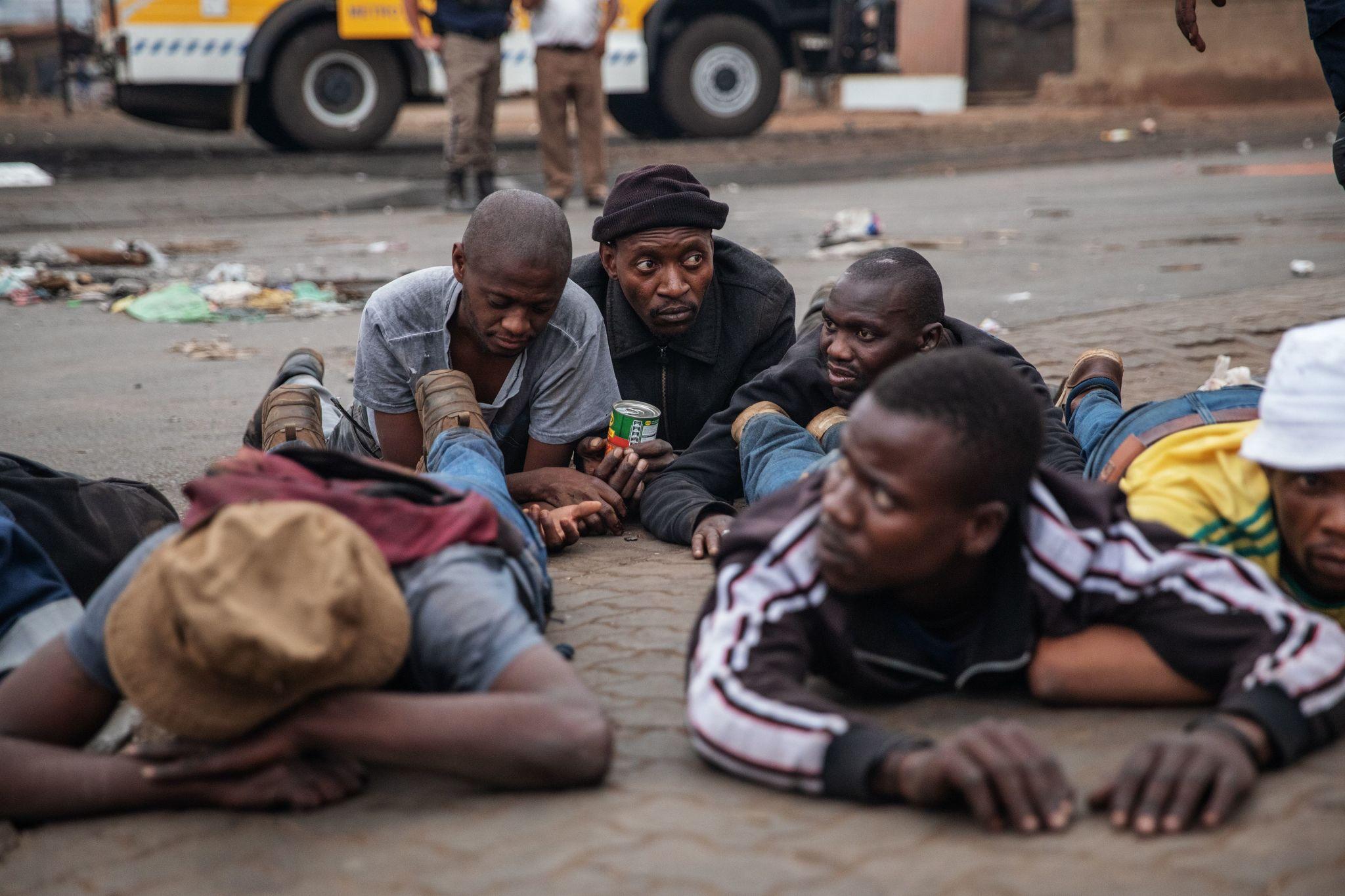

Dumped in Africa: Inside Trump’s Brutal New Deportation Pipeline to Africa

The Trump administration has quietly extended its controversial “third‑country” deportation policy into Africa—sending convicted non‑citizens to nations where they hold no legal status and often have no connections. The policy, recently upheld by the U.S. Supreme Court in late June, enables deportations without full hearings or asylum reviews, provided the receiving countries give bare assurances against torture.
The recent, unsettling news reverberated across human rights circles: five individuals, identified by U.S. authorities as “uniquely barbaric” criminals, were abruptly deported from the United States to Eswatini, a small, absolute monarchy in Southern Africa. This transfer followed the earlier, equally controversial movement of eight men to war-torn South Sudan. These are not isolated incidents but represent a significant and deeply troubling expansion of the Trump administration’s “third-country deportation program,” a policy that has increasingly drawn the African continent into its orbit.
This “third-country deportation” policy involves sending non-citizens, often with no pre-existing ties to the destination nation, to countries other than their country of origin. From its inception, this program has been shrouded in secrecy and has ignited fierce debate over its legality, ethics, and profound human rights implications. The immediate framing of these events as part of a “program” and “expansion” signals that this is a deliberate, systemic policy shift rather than a series of ad-hoc responses. This indicates a strategic evolution in U.S. immigration enforcement, aiming to externalize the burden of managing individuals deemed undesirable.
The Policy’s Genesis: Why Africa? Deterrence, Disposal, and the “Unwanted”
The Trump administration publicly justifies these controversial deportations by asserting that the deportees’ home countries refuse to accept their citizens back, particularly those convicted of serious crimes. Tricia McLaughlin, a spokesperson for the U.S. Department of Homeland Security (DHS), openly declared the administration was “happy the men were ‘off of American soil'”. McLaughlin described the deportees as “uniquely barbaric” and “depraved monsters” convicted of heinous crimes such as murder and child rape. This narrative attempts to frame the deportees as dangerous threats, thereby seeking to legitimize the extreme measures taken.

Beneath the official rhetoric lies a more punitive and strategic objective. According to Trina Realmuto, a lawyer with the National Immigration Litigation Alliance, a core goal of these third-country transfers is to “send a message that people could be punished by being sent to ‘far-flung countries'”.
This approach serves as a psychological tactic, a stark warning designed to dissuade future migrants and asylum seekers by demonstrating the unpredictable and severe consequences of U.S. immigration enforcement. Critics have condemned this as a “weaponization of displacement,” turning human beings into tools of policy. U.S. border tsar Tom Homan explicitly stated the administration’s intent to “find a third, safe nation to send them to” if individuals posed a “significant public threat or national security threat”.
The policy’s true purpose extends far beyond mere logistical challenges of repatriation. It is fundamentally rooted in a deliberate strategy of punitive deterrence and the strategic removal of individuals deemed undesirable by the U.S., irrespective of their national ties. The dehumanizing language employed by U.S. officials is a calculated rhetorical tool to strip deportees of their humanity, thereby attempting to legitimize the policy’s harshness and minimize public empathy.
This current policy is not without historical precedent. U.S. immigration policy has long included “pressuring other countries into accepting deportations” as a “policy workaround” to overcome limitations in enforcement. This indicates a continuity in coercive tactics, albeit on a new scale and with new targets.
The Mechanics of the Pipeline: How Deportations Are Executed
The implementation of this policy is characterized by an alarming lack of transparency. Agreements forged between the U.S. and African nations remain largely secretive; for instance, the specific terms of the U.S.-Eswatini agreement are “classified”. This opacity extends to the deportees themselves, who are often given minimal notice of their impending transfer. A chilling July 9 memo to U.S. Immigration and Customs Enforcement (ICE) staff explicitly outlines that deportations to “third countries” can occur with as little as six hours’ notice under “exigent circumstances”. This swiftness severely curtails any opportunity for legal counsel or challenge.
Perhaps the most alarming aspect of the July 9 memo is its acknowledgment that ICE may remove non-citizens to third-party countries even without credible diplomatic assurances against torture or persecution from the receiving nation, provided certain other conditions are met. If a deportee manages to raise concerns about potential persecution or torture, they are subjected to an “impossible standard” to prove they are “more likely than not” to face such threats in an unfamiliar country. This provision fundamentally undermines the international principle of non-refoulement.
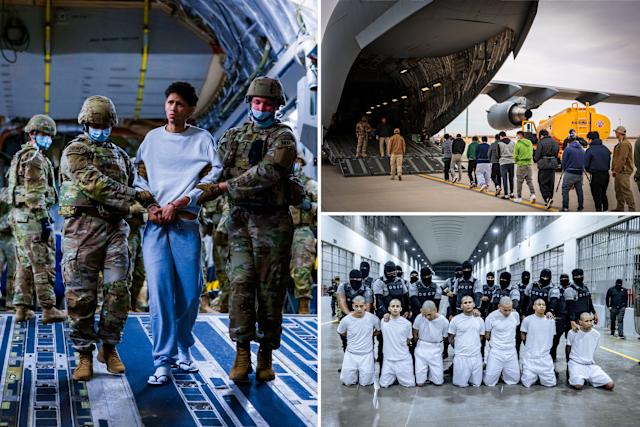
The Trump administration has demonstrated an unprecedented commitment to mass deportations. June saw a record 209 expulsion flights, averaging seven flights per day, a significant increase from previous months. While only a fraction (12) of these flights went to Africa, the overall scale of the operation is immense. The administration has poured vast resources into expanding its detention and removal capabilities, including a staggering 311% increase in ICE’s annual detention budget, reaching at least $14 billion, with stated goals of achieving one million deportations per year. This massive logistical infrastructure underpins the feasibility of third-country removals.
The brutality of this pipeline often begins long before deportees reach foreign shores. Reports indicate that individuals held in U.S. border holding cells endure “inhumane conditions,” including severe overcrowding, extreme cold, constant 24/7 lighting, and infrequent access to basic hygiene like showers and toothbrushes. There are credible allegations that these deliberately harsh conditions are employed to “force us to sign those volunteer deportation papers as fast as possible,” effectively coercing compliance. Furthermore, individuals later deported to African nations like Cameroon reported experiencing excessive force, medical neglect, and other mistreatment while in ICE custody.
The systematic erosion of due process, the deliberate disregard for international prohibitions against torture and persecution, and the documented inhumane conditions within U.S. detention facilities collectively reveal a policy designed not just for efficiency, but for coercive control and a calculated circumvention of international human rights obligations. The pervasive secrecy and the explicit non-involvement of international humanitarian bodies like the International Organization for Migration (IOM) further compound this by eliminating external oversight and accountability.
A Chronology of Transfers: When the Pipeline Opened and Expanded

The Trump administration’s “third-country” strategy first gained significant traction with nations in Central America. Hundreds of Venezuelans and others were deported to countries like Costa Rica, El Salvador, and Panama. A notable instance occurred in February 2025, when 200 third-country nationals, including 81 children, were expelled to Costa Rica, many after their U.S. asylum appointments via the CBP One mobile application were abruptly cancelled. Reports even suggest the U.S. paid nearly $6 million for El Salvador to imprison deported Venezuelans in its maximum-security Terrorism Confinement Centre (CECOT), where conditions have been likened to torture. This established a precedent for externalizing migrant processing and detention.
The African chapter of this pipeline officially opened with the deportation of eight men to South Sudan. In May 2025, a flight carrying these individuals was initially diverted to Djibouti after a federal court in Massachusetts ruled that they had not been given an adequate opportunity to contest their deportation. These deportees were a diverse group, including citizens of Cuba, Laos, Mexico, Myanmar, and Vietnam, with only one individual actually being from South Sudan. For weeks, they were held in a converted shipping container at a U.S. military base in Djibouti as legal battles unfolded.
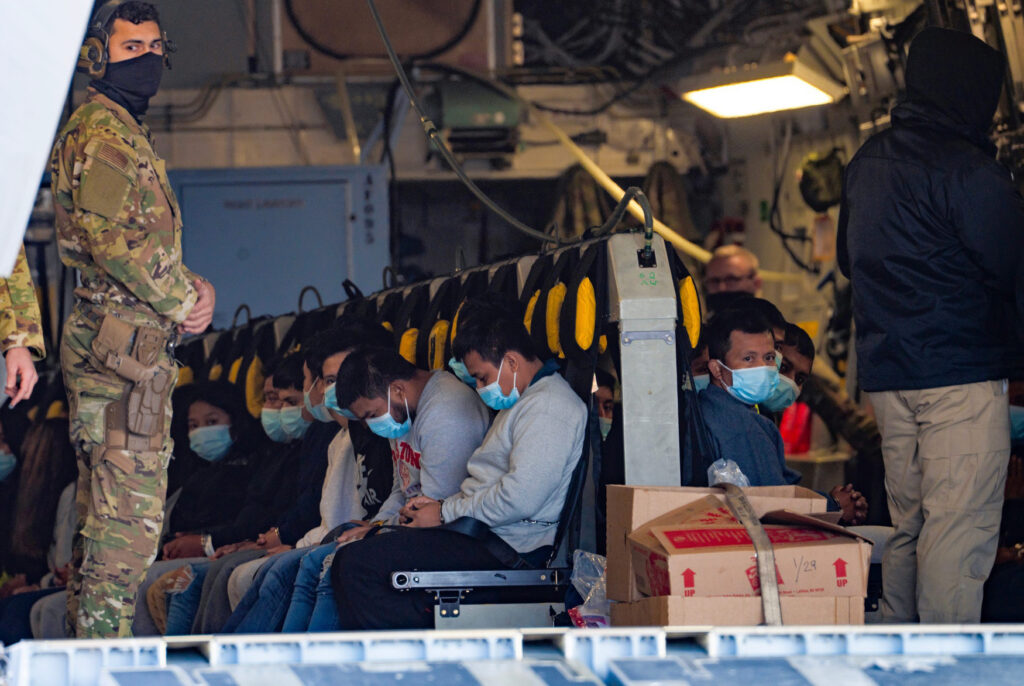
A pivotal moment arrived on June 23, 2025, when the U.S. Supreme Court issued a brief, unsigned 6-3 order. This ruling lifted the lower court’s injunction, effectively clearing the way for the deportation to South Sudan to proceed with “minimal notice” and “no right to challenge” for the deportees. Justice Sonia Sotomayor, in a powerful 19-page dissent, vehemently criticized the majority’s decision as a “gross” abuse of the court’s power. She wrote that the government had “made clear in word and deed that it feels itself unconstrained by law, free to deport anyone anywhere without notice or an opportunity to be heard”. The chronological progression reveals a strategic escalation of the policy, with the U.S. Supreme Court’s intervention serving as a critical enabler. This judicial action effectively legitimized the administration’s aggressive immigration agenda, allowing it to bypass lower court protections and accelerate deportations to new, controversial destinations.
Just weeks after the Supreme Court’s enabling decision, the pipeline expanded further into Africa. On July 16, 2025, the government of Eswatini confirmed it had received five individuals deported from the U.S.. These deportees were identified as citizens of Laos, Vietnam, Jamaica, Cuba, and Yemen. Eswatini government officials stated that these deportations were “the result of months of robust high-level engagements,” suggesting a pre-arranged, albeit secretive, agreement. Furthermore, the multinational origins of the deportees underscore the policy’s indiscriminate nature regarding the deportees’ national ties to the receiving country, emphasizing that the policy is about
where the U.S. sends people, not who they are in terms of their country of origin.
The Trump administration continues its aggressive pursuit of similar deals, with U.S. border tsar Tom Homan stating the hope to forge agreements with “many countries” for deportee acceptance. Rwanda’s foreign minister has confirmed ongoing talks with the U.S. about a potential agreement to host deported migrants. However, this pressure is not universally accepted, with Nigeria’s Foreign Minister Yussuf Tuggar publicly rejecting demands to accept third-country deportees.
African Nations on the Receiving End: Pressure, Deals, and Resistance

The Trump administration’s engagement with African nations concerning this deportation policy is explicitly transactional, reflecting a broader shift in U.S. foreign policy. Experts and analysts suggest that African countries may agree to accept deportees not out of humanitarian concern or shared interest, but to “earn good will in negotiations over tariffs, cuts in U.S. aid or visa restrictions”.
This leverage is significant, especially given President Trump’s past announcements of plans to place tariffs “of over 10%” on goods from smaller nations, including those in Africa. Beverly Ochieng, an analyst at Control Risks, noted that countries might seek such deals to avoid losing “access to the U.S. economy or economic initiatives and bilateral relations,” particularly “in light of the withdrawal of developmental aid”.
The U.S. is employing a clear “carrot and stick” approach, leveraging its significant economic and diplomatic power to coerce African nations into participating in a controversial policy. While some nations have complied, the explicit and public rejection from countries like Nigeria highlights a growing assertiveness among certain African states against policies perceived as exploitative or detrimental to their national interests and stability. The persistent lack of transparency surrounding these deals further suggests a mutual desire to avoid public and international scrutiny of what may be a quid pro quo arrangement.
South Sudan
- On or around July 7, 2025, 8 individuals were deported from the U.S. to South Sudan under this program.
- South Sudan is currently the only African nation to accept such deportees.
Eswatini (Swaziland)
- Mid‑July 2025, the U.S. deported five foreign nationals (from Cuba, Laos, Jamaica, Vietnam, Yemen) to Eswatini.
- They arrived early July 16 local time, held in solitary in a maximum‑security prison.
Nigeria
- Nigeria has been pressured by the U.S. to accept third‑country deportees, including Venezuelans and others ineligible for direct repatriation.
- On July 11, 2025, Nigeria’s Foreign Minister Yusuf Tuggar publicly rejected the pressure, stating, “We have enough problems … for crying out loud” .
South Africa & Lesotho
- No known agreements or deportations under this policy.
- South Africa does not appear on any third‑country deportation list; Lesotho had zero removals in 2024
How it works in practice
- Diplomatic negotiations: The U.S. approaches nations (e.g., South Sudan, Eswatini) offering diplomatic or economic incentives in exchange for accepting deportees Businessday.
- Legal and procedural framework: ICE issues short notice (6–24 hrs), possibly without full asylum review, relying on country assurances Reuters.
- Deportation flights: Individuals are flown under the label “safe third‑country deportation flight”.
- Receiving country obligations: Must keep deportees safe, not torture them, and ideally help return them to their home country.
- Controversial aspects: Legal challenges cite non-refoulement and insufficient notice; rights groups criticize secrecy and lack of due process.
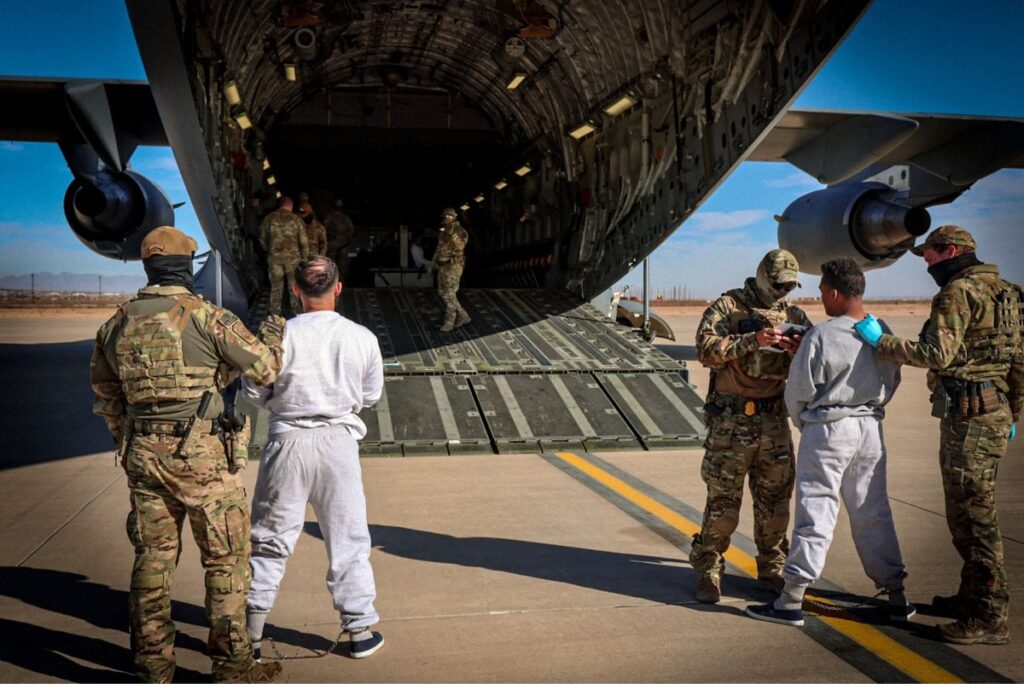
South Sudan was the first African nation to publicly accept deportees under this program, taking in eight individuals with criminal convictions, only one of whom was a South Sudanese national. The specific details of the agreement remain undisclosed. Analysts like Alan Boswell of the International Crisis Group speculate that South Sudan’s government sought to “placate a Trump administration” to avoid punitive measures such as visa bans or more sanctions against its elite, or generally to “curry favor”. In South Sudan, prominent civil society leader Edmund Yakani vocally criticized the agreement, declaring, “South Sudan is not a dumping ground for criminals”.
The government of Eswatini confirmed its acceptance of five deportees, stating that this was the “result of months of robust high-level engagements” and was deemed mutually beneficial for both countries. Rwanda’s foreign minister has publicly acknowledged ongoing talks with the U.S. about a potential agreement to host deported migrants, though no details have been provided. In a notable act of defiance, Nigeria’s Foreign Minister Yussuf Tuggar publicly stated that the country would not “bow to what he described as pressure to accept third-country deportees”. He emphasized that Nigeria has “enough problems of its own” and found it “difficult for a country like Nigeria to accept Venezuelan prisoners into Nigeria,” highlighting the issue of accepting non-nationals. During a White House summit, Trump discussed migration with leaders from Liberia, Senegal, Guinea-Bissau, Mauritania, and Gabon, including the possibility of them accepting third-country nationals. While Liberian and Guinea-Bissau presidents confirmed these discussions, they did not indicate direct requests for acceptance or confirmed agreements. Benin and Libya were also reportedly approached for similar arrangements.
Humanitarian Fallout: A Trail of Rights Concerns
At its core, the Trump administration’s third-country deportation policy directly contravenes the fundamental international legal principle of non-refoulement. This cornerstone of post-World War II refugee law, enshrined in the 1951 Refugee Convention, its 1967 Protocol, and adopted into U.S. law by the Refugee Act of 1980, strictly prohibits returning individuals to countries where they face serious threats to their life or liberty. The July 9 memo, which explicitly permits deportations
without credible diplomatic assurances against torture or persecution, is a direct and alarming affront to this principle.
The choice of Eswatini as a receiving country has drawn immediate and severe condemnation from human rights organizations. Eswatini remains Africa’s last absolute monarchy, where King Mswati III has been consistently accused of violently suppressing political dissent. The U.S. State Department’s own 2023 human rights report—the very department that would be involved in diplomatic assurances—documented credible accounts of unlawful or arbitrary killings by security forces, widespread impunity for abuses, and harsh, life-threatening prison conditions within Eswatini. Amnesty International unequivocally warned that anyone returned to Eswatini is “at risk of serious human rights violations,” with Amy Fischer, the organization’s director of refugee and migrant rights, stating chillingly, “The cruelty is the point”.
Similarly, South Sudan, a nation plagued by conflict and instability, possesses a deeply troubling human rights record. The U.S. State Department itself acknowledges “significant human rights issues” in the country, including credible reports of extrajudicial killings, torture, and “life-threatening prison conditions”. The State Department actively discourages travel to South Sudan due to these dangers. Sending deportees to such a volatile environment knowingly exposes them to extreme risks.
The fears articulated by human rights advocates are not hypothetical. Disturbing reports from Cameroon provide concrete evidence of the brutal realities faced by deportees. Asylum seekers deported by the U.S. to Cameroon between 2019 and 2021 were subjected to severe human rights violations upon arrival, including arbitrary arrest and detention, enforced disappearances, torture, rape, other forms of violence, extortion, unfair prosecutions, confiscation of national IDs, harassment, and abuses against their relatives. This directly validates concerns that the pipeline leads to profound harm.
A pervasive issue is the profound ambiguity surrounding the fate of deportees once they arrive in these third countries. The Eswatini government claimed the men were “in transit” and would eventually be sent to their home countries, stating they would work with the U.N. migration agency (IOM) to facilitate this. However, the IOM explicitly stated it was “not involved in the operation” and had “not been approached to assist in the matter” , directly contradicting Eswatini’s claim and the U.S.’s assertion that home countries refused repatriation. This creates “a lot of confusion and lack of clarity over who actually has control of these individuals when they’re deported to a third country”. The U.S. policy, by knowingly deporting individuals to countries with documented severe human rights abuses and by systematically undermining international protections like non-refoulement, is not merely facilitating deportations but actively contributing to a potential humanitarian crisis. The pervasive lack of clarity on the deportees’ ultimate fate and the explicit non-involvement of international humanitarian bodies like IOM create a system devoid of accountability, where individuals effectively disappear into a legal and humanitarian void once they are “off American soil.” This suggests a deliberate strategy to externalize not just the individuals, but also the responsibility for their well-being.
Conclusion: A Policy Under Scrutiny
The Trump administration’s third-country deportation policy to Africa is not merely an administrative measure but a deliberate, secretive, and expanding pipeline. It is designed to serve dual purposes: to deter future migration by demonstrating extreme measures and to remove individuals deemed undesirable by the U.S., often irrespective of their national ties to the destination country. This approach represents a significant and troubling shift in U.S. immigration enforcement, extending its reach far beyond traditional borders.
This analysis has laid bare the policy’s core issues: the systematic erosion of fundamental due process rights, the alarming disregard for international human rights principles, particularly non-refoulement, and the documented instances of inhumane treatment within U.S. custody preceding deportation. It has also highlighted the transactional pressure exerted on vulnerable African nations and the grave, often life-threatening, risks faced by deportees sent to countries with documented records of human rights abuses.
The brutality of this pipeline continues to draw fierce criticism from a broad coalition of human rights organizations, legal advocates, and civil society groups both within the U.S. and across the international community. The long-term implications of this policy are deeply concerning, not only for the unknown fate of the deportees but also for the U.S.’s international standing, its commitment to human rights, and its complex relationships with African nations. This analysis frames the policy as a fundamental challenge to international human rights norms and a significant stain on the U.S.’s global reputation. It underscores that the harshness of the pipeline is not an unfortunate side effect but appears to be an inherent and intentional characteristic, designed to maximize deterrence and minimize accountability, thereby shaping perceptions of U.S. foreign policy and its commitment to universal values. As Amnesty International’s Amy Fischer starkly put it, regarding the choice of destination countries, “The cruelty is the point” —a chilling indictment that encapsulates the perceived intent behind this controversial policy.
Eye Africa News will continue to track developments, bring you firsthand accounts from deportees, and hold governments accountable for every flight that lands on the continent.