

18 Top Fall Fashion Trends From Africa

African Fall Fashion Trends and Their Cultural Significance: An Introduction
The global fashion landscape has increasingly embraced African aesthetics, marking a transformative shift in how the continent’s creative output is perceived on international platforms. In recent years, African designers have emerged as influential voices within the industry, showcasing their unique blend of tradition and innovation at prestigious events like Paris Fashion Week and New York Fashion Week . This growing recognition underscores not only the artistic merit of African designs but also their ability to resonate with diverse audiences across cultural and geographical boundaries. As we approach fall 2025, these Fashion Trends From Africa are set to deepen, offering an opportunity to explore the intricate interplay between heritage and modernity that defines contemporary African fashion.
Cultural heritage serves as the cornerstone of many African design philosophies, particularly evident in the work of trailblazers such as Amaka Osakwe. Based in Lagos, Osakwe has been instrumental in reviving traditional Yoruba textiles like adire and aso oke , which are renowned for their intricate craftsmanship and symbolic significance . These fabrics often require months of meticulous hand-dyeing, ensuring both quality and authenticity. By integrating these time-honored techniques with modern Western silhouettes, Osakwe bridges past and present, creating garments that appeal to globally minded consumers while honoring Nigeria’s rich sartorial legacy. Her designs, worn by celebrities such as Beyoncé, exemplify how cultural narratives can be preserved and amplified through fashion, making them relevant to new generations.
This revival extends beyond individual designers to encompass broader movements aimed at revitalizing indigenous patterns, textiles, and techniques. A key example is the prominence of West African Ankara fabric, celebrated for its bold colors and striking motifs . Historically associated with ceremonial attire, Ankara has undergone a renaissance in contemporary fashion, appearing in everything from haute couture gowns to casual streetwear. Its versatility lies in its ability to merge historical elements with modern aesthetics, appealing to younger demographics eager to express their identities through clothing. Moreover, this resurgence reflects a wider commitment to sustainability, as designers increasingly prioritize eco-friendly materials and ethical production methods . Such efforts align with global consumer preferences, positioning African fashion at the forefront of environmentally conscious practices.
Technological advancements further enhance the appeal of African designs, enabling innovative reinterpretations of traditional forms. Wearable tech, smart fabrics, and augmented reality experiences are becoming integral components of collections, allowing users to engage dynamically with garments . For instance, collaborations between African designers and international entities have introduced cutting-edge technologies into culturally significant motifs, fostering deeper connections between brands and consumers. These partnerships underscore the adaptability of African fashion, demonstrating how it can reinterpret global trends while maintaining its distinct identity.
As this report progresses, it will delve into regional trends and specific reinterpretations of cultural motifs, highlighting case studies from countries such as South Africa, Ghana, and Kenya. The subsequent sections aim to provide a comprehensive overview of how African designers continue to shape the global fashion narrative, emphasizing the dual imperatives of preserving cultural heritage and embracing modernity. Through this exploration, readers will gain insight into the vibrant creativity and technical sophistication that define African fall fashion in 2025.
North African Influence on Global Fall Collections: The Role of Morocco, Egypt, and Tunisia
North Africa has long been a crucible of cultural exchange, where diverse traditions converge to create unique aesthetic expressions. In recent years, designers from Morocco, Egypt, and Tunisia have emerged as pivotal contributors to global fall fashion collections, infusing their work with rich heritage and contemporary innovation. These nations bring forth distinct yet interconnected influences that resonate deeply within the international fashion landscape. Moroccan craftsmanship, for instance, is renowned for its intricate geometric patterns and vibrant colors, often seen in traditional textiles such as Berber rugs and kaftans. Egyptian design draws inspiration from ancient motifs like hieroglyphs and Pharaonic symbols, which are reimagined through modern silhouettes and luxurious fabrics. Meanwhile, Tunisian fashion embraces a blend of Mediterranean and Arab influences, characterized by flowing garments adorned with metallic embroidery and bold prints . The integration of these elements into global aesthetics demonstrates how North African designers bridge tradition with modernity, creating pieces that appeal to both local and international audiences.
While much attention has been given to East African influences on global fashion trends, exemplified by Laduma Ngxokolo’s groundbreaking work under MaXhosa Africa, it is crucial to recognize parallels in North Africa’s contributions. Ngxokolo’s Umbulelo collection, unveiled at Paris Fashion Week in March 2025, showcases how Xhosa tribal beadwork traditions can be seamlessly integrated into modern knitwear using materials native to South Africa, such as mohair and wool . This approach not only celebrates cultural authenticity but also highlights the potential for cross-regional dialogue in fashion. Similarly, Moroccan designer Salima Abdel Wahab incorporates traditional techniques like hand-embroidery and natural dyeing into her collections, which have gained prominence at New York Fashion Week. Her designs reflect a synthesis of ancestral practices and cutting-edge tailoring, appealing to younger generations who seek novelty coupled with symbolic depth.
The resonance of North African styles among younger audiences underscores a broader shift toward embracing cultural narratives in fashion. Social media platforms play an instrumental role in amplifying these voices, enabling designers to reach global audiences eager to engage with African heritage. For example, French-Malian photographer Nybe Ponzio (@visualsbyponzio) documents traditional attire and artisanal crafts, fostering appreciation for their artistry and storytelling . Such efforts highlight the intersection of tradition and modernity, driving renewed interest in artisanal practices. Moreover, the use of sustainable methods—such as hand-dyeing and weaving—aligns with growing consumer demand for ethical production processes. This emphasis on sustainability ensures that North African designs remain relevant in a rapidly evolving industry while preserving their cultural essence.
Transitioning beyond North Africa, other regions contribute significantly to the global fashion narrative. West African designers, particularly those from Nigeria, exemplify this trend through innovative reinterpretations of traditional textiles. Amaka Osakwe’s Lagos-based label revives Yoruba fabrics like adire and aso oke , blending them with modern Western silhouettes. Her work, celebrated internationally and worn by celebrities such as Beyoncé, illustrates how West African countries incorporate cultural heritage into fall collections . By juxtaposing bold patterns with sleek cuts, Osakwe bridges regional diversity with universal appeal. This comparative analysis reveals shared themes across African fashion: a commitment to craftsmanship, storytelling, and adaptability to global norms.
In conclusion, Morocco, Egypt, and Tunisia stand out as influential players in shaping global fall collections, offering designs that encapsulate centuries-old traditions while embracing contemporary aesthetics. Their contributions underscore the importance of cultural preservation in an era dominated by homogenized fashion trends. As designers continue to innovate, further research could explore the technical intricacies of specific techniques, such as Tunisian embroidery or Moroccan weaving, to deepen understanding of their impact on global fashion. Additionally, investigating collaborative opportunities between North African and Sub-Saharan designers may reveal new pathways for creative synergy, enriching the narrative of African fashion on the world stage.
Revitalization of West African Textiles Through Innovative Design and Sustainable Practices
The resurgence of West African textiles such as Adire, Aso Oke, and Ankara in contemporary fashion underscores a dynamic interplay between tradition and innovation. These fabrics, deeply rooted in cultural heritage, have been reimagined by designers who skillfully integrate ancient techniques with modern aesthetics, ensuring their relevance in today’s global fashion landscape. For instance, Adeju Thompson’s Lagos Space Programme Fall/Winter 2025 collection exemplifies this revival through its innovative use of Adire, an indigo-dyeing technique native to the Yoruba people . By applying Adire prints to trench coats, trousers, and scarves, Thompson demonstrates how traditional dyeing methods can be adapted into gender-neutral designs that resonate across cultural and geographic boundaries. This approach not only preserves the authenticity of Adire but also positions it as a versatile fabric capable of meeting the demands of contemporary fashion consumers.
Similarly, Lisa Folawiyo, a Nigerian designer celebrated for her brand ‘Jewel by Lisa,’ has redefined Ankara—a vibrant wax-printed cotton fabric—by incorporating it into high-fashion silhouettes . Folawiyo’s work highlights the adaptability of Ankara, transforming it from a symbol of cultural identity into a staple of luxury fashion. Her intricate designs blend bold patterns with sophisticated tailoring, earning her international acclaim and solidifying Ankara’s place on global runways. This fusion of tradition and modernity exemplifies how designers are bridging cultural narratives with contemporary trends, thereby expanding the appeal of West African textiles beyond regional confines.
Technological advancements have further amplified the potential of these textiles, enabling artisans to enhance traditional methods while embracing sustainability. Innovations such as bio-printed fabrics infused with indigo DNA represent a groundbreaking intersection of heritage and science . Such developments not only preserve the essence of indigo dyeing but also introduce eco-conscious practices that align with the growing demand for sustainable fashion. Additionally, startups like Kenya’s Loom & Shuttle are pioneering zero-waste pattern-cutting techniques, turning fabric scraps into accessories and contributing to circular production models. These efforts reflect a broader commitment within the West African fashion industry to adopt environmentally responsible practices, which are increasingly recognized as essential for long-term viability.
The integration of technology extends beyond material innovation to include digital storytelling and augmented reality. Afro-futurism, a trend gaining traction among African designers, blends traditional symbols with modern technology to create immersive experiences. For example, Senegalese AI artist Aïda Mbaye has developed smart headwraps embedded with QR codes that animate Wolof proverbs through augmented reality . This hybrid approach not only preserves cultural narratives but also engages younger audiences by leveraging digital platforms. Furthermore, collaborations between African artisans and global luxury brands, such as Studio 189’s partnership with Louis Vuitton, underscore the commercial potential of these textiles when combined with cutting-edge design strategies.
Despite these achievements, challenges remain in scaling these innovations while maintaining cultural integrity. As West African textiles gain prominence, there is a risk of cultural appropriation or dilution of their significance. To address this, designers must prioritize ethical practices that honor the origins of these fabrics and ensure fair compensation for artisans. Moreover, further research is needed to explore scalable solutions for integrating traditional craftsmanship with industrial processes without compromising quality or authenticity. By addressing these gaps, the West African textile industry can continue to thrive as a beacon of creativity, sustainability, and cultural pride.
East African Elegance: The Intersection of Heritage and Contemporary Design in Kenya, Ethiopia, and Tanzania
The global fashion landscape has increasingly turned its gaze toward Africa as a source of inspiration, innovation, and sustainable practices. Among the regions making significant contributions is East Africa, with countries like Kenya, Ethiopia, and Tanzania emerging as pivotal players in shaping contemporary design through their rich cultural heritage. This section delves into how these nations are redefining elegance by blending age-old traditions with modern aesthetics, thereby influencing both regional and international trends .
One exemplary initiative that underscores this fusion is Studio One Eighty Nine, co-founded by Rosario Dawson and Abrima Erwiah. Operating primarily from Ghana but drawing influences across the continent, the brand exemplifies the integration of traditional craftsmanship with globally resonant design philosophies. By sourcing raw materials such as cotton and silk locally, Studio One Eighty Nine ensures economic empowerment for artisans while preserving indigenous techniques. For instance, the use of hand-carved batik stamps and natural dyes not only reduces environmental impact but also imbues each piece with unique cultural significance. Such approaches align seamlessly with the growing demand for sustainable fashion, positioning East African designers at the forefront of eco-conscious innovation .
Ethiopia’s Hawi Midekssa further amplifies this narrative by embedding storytelling elements within her designs. As one of the finalists selected for the prestigious Africa Fashion Up 2025 program, Midekssa’s work bridges Ethiopian heritage with global fashion codes, creating garments that narrate personal and collective histories. Her label, HAWII, celebrates individuality and resilience through intricate patterns and motifs inspired by Ethiopian artistry. Each creation serves as a canvas where tradition meets modernity, enabling wearers to connect with broader cultural themes while embracing contemporary style sensibilities . Moreover, Midekssa’s vision extends beyond design; she plans to establish a fashion school in Ethiopia, fostering new talent and reinforcing education as a cornerstone of sustainable industry growth.
Regional textiles also play an indispensable role in maintaining cultural relevance amidst evolving fashion paradigms. Fabrics such as Kente cloth—originating from West Africa but widely celebrated across the continent—are emblematic of ceremonial grandeur yet find renewed purpose in modern adaptations. In East Africa, similar textiles serve as symbols of identity and pride, often incorporated into everyday attire or high-fashion collections. Their continued prominence highlights the adaptability of traditional fabrics to suit diverse contexts without losing their intrinsic value.
Kenya, too, contributes significantly through innovative ventures like Pine Kazi, which transforms agricultural waste into biodegradable products. By repurposing pineapple leaves into footwear, Pine Kazi demonstrates how ancestral craftsmanship can merge with cutting-edge technology to drive sustainability. Such initiatives underscore Kenya’s commitment to reducing environmental harm while honoring its artisanal roots—a dual focus that resonates deeply with global consumers seeking ethical alternatives .
While East Africa’s contributions remain central to this discourse, it is essential to acknowledge the seamless transition into Southern African influences, which share thematic overlaps in terms of sustainability and cultural preservation. Designers from South Africa, for example, similarly emphasize organic materials and recycled resources, ensuring continuity in the continent’s overarching narrative of responsible fashion. This interconnectedness reinforces Africa’s position as a unified force in reshaping global norms.
In conclusion, the elegance emanating from Kenya, Ethiopia, and Tanzania encapsulates a harmonious blend of tradition, innovation, and sustainability. Through initiatives like Studio One Eighty Nine, visionary designers like Hawi Midekssa, and the enduring appeal of regional textiles, East Africa continues to assert its influence on the world stage. However, challenges persist, including the need for scalable solutions to industrial carbon emissions and the management of second-hand clothing imports. Addressing these issues will require collaborative efforts and further research into circular economy models, ensuring that Africa’s burgeoning fashion industry remains both economically viable and environmentally sound. Ultimately, the region’s ability to reinterpret heritage through a contemporary lens offers invaluable lessons for the global fashion community, heralding a future where elegance is synonymous with ethical responsibility.
Cultural Integration and Sustainable Fashion in Southern Africa: A Focus on South Africa and Zimbabwe
Southern Africa stands as a vibrant tapestry of cultural heritage, where traditional practices are seamlessly woven into contemporary expressions. In the realm of fashion, South Africa and Zimbabwe exemplify how cultural integration manifests through sustainable design principles, economic empowerment, and global recognition. This section explores the ways these nations incorporate cultural elements into their fall fashion collections while addressing sustainability challenges and leveraging local resources for broader socio-economic benefits.
Sindiso Khumalo, a South African designer celebrated for her eco-conscious approach, has emerged as a pivotal figure in this narrative. Her clothing line utilizes organic cotton and recycled materials, reflecting not only environmental stewardship but also an allegiance to ancestral craftsmanship . By collaborating with local artisans, Khumalo ensures that each piece embodies both modern aesthetics and time-honored techniques. For instance, her use of handwoven textiles mirrors the intricate patterns found in traditional Zulu beadwork, thereby preserving cultural narratives within wearable art. Such innovations resonate with global trends toward sustainability, positioning South African designers at the forefront of ethical fashion movements.
Similarly, Zimbabwean designers draw inspiration from their rich cultural heritage, integrating motifs such as Shona stone carvings and Ndebele geometric patterns into contemporary garments. These designs often reflect communal values and spiritual beliefs, serving as visual storytelling mediums. Moreover, Zimbabwe’s emphasis on locally sourced raw materials aligns with regional efforts to reduce dependency on imported fabrics—a strategy echoed in Cameroon’s successful industrialization initiatives . By prioritizing value addition within domestic supply chains, Zimbabwe fosters rural development and creates employment opportunities, much like Cameroon’s state-run agency SODECOTON, which supports over 200,000 producers annually .
The influence of African designers extends beyond national borders, as evidenced by Imane Ayissi’s groundbreaking work in integrating Cameroonian Ndop patterns into high fashion. Although Ayissi hails from Cameroon, his methodology offers valuable insights applicable to South Africa and Zimbabwe. His collections, showcased globally at events like New York Fashion Week, demonstrate how traditional textiles can be reinterpreted to appeal to international audiences without losing their cultural essence . Ndop, once reserved for Bamileke royalty, now symbolizes inclusivity and innovation, bridging past and present in a manner that resonates universally.
Economic considerations further underscore the importance of sustainable practices in Southern African fashion. The projected growth of Africa’s fashion industry at a CAGR of 12.14% highlights its potential to drive economic transformation . However, this expansion necessitates addressing critical issues such as carbon emissions and waste management. Zimbabwe and South Africa have begun adopting circular economy models, transforming discarded garments into new textiles—a practice supported by artificial intelligence tools like Syte.ai . Such technological advancements enable startups to repurpose materials efficiently, reducing landfill contributions while promoting resource efficiency.
From an ethical standpoint, certifications play a crucial role in ensuring transparency and accountability across the fashion value chain. Internationally recognized standards empower consumers to make informed choices, supporting designers committed to fair labor and eco-conscious production . This framework not only enhances brand credibility but also contributes to building a thriving ecosystem that respects both people and the planet.
In conclusion, Southern African designs strike a delicate balance between tradition and innovation, setting the stage for modern adaptations that honor cultural legacies. South Africa and Zimbabwe exemplify how sustainable practices, coupled with local value addition, can yield significant socio-economic benefits. As these nations continue to reinterpret global trends through a distinctly African lens, they pave the way for a future where heritage and progress coexist harmoniously. Further research could explore specific case studies of Zimbabwean designers or analyze the impact of AI-driven innovations on regional textile industries.
Modern Adaptations: The Intersection of Tradition and Contemporary Aesthetics in African Fashion
In recent years, the global fashion landscape has witnessed a remarkable evolution as contemporary African designers skillfully blend traditional styles with modern aesthetics, creating collections that resonate across diverse audiences. This synthesis not only highlights cultural authenticity but also aligns with international trends, making it particularly relevant for fall 2025. One notable example is South African designer Thebe Magugu, whose work epitomizes this fusion. Magugu, the winner of the prestigious 2019 LVMH Prize, integrates locally sourced fabrics steeped in African heritage into his designs.
His collections often explore socio-cultural themes such as gender, identity, and globalism, showcasing how storytelling can be woven into garments. By merging luxury aesthetics with indigenous textiles, Magugu has carved a niche for himself on the global stage, underscoring the growing recognition of African designers . Similarly, Adeju Thompson’s Lagos Space Programme collection titled ‘Rock n Roll’ exemplifies how subcultures can inspire avant-garde fashion while maintaining cultural relevance. Presented at Paris Fashion Week, this Fall/Winter 2025 collection pays homage to Nigeria’s punk-rock resurgence, transforming the Palais de Tokyo into an underground music hub complete with a live performance by Spanish Horses, an indie rock band.
Thompson’s innovative use of Adire—an ancient Yoruba indigo-dyeing technique—further demonstrates his commitment to revitalizing traditional textiles. By reimagining Adire prints on trench coats, trousers, and scarves, he seamlessly incorporates these age-old patterns into gender-neutral silhouettes that appeal to modern sensibilities . This juxtaposition of historical techniques with contemporary design not only preserves cultural heritage but also makes it accessible to younger, globalized audiences. Beyond individual designers, broader innovations in silhouette and detailing reflect the ongoing dialogue between tradition and modernity.
Monochromatic two-piece sets, a trend gaining traction globally in 2025, offer African designers a unique opportunity to modernize traditional garments without losing their essence. For instance, pairing rich brown hues—championed by luxury brands like Max Mara and Fendi—with classic pieces such as dashikis or kaftans creates ensembles that are both culturally authentic and universally appealing . Additionally, details like Peter Pan collars provide a nostalgic yet refined touch, allowing designers to innovate within established frameworks. When integrated into traditional attire such as Nigerian agbadas or Ethiopian habesha kemis, these elements bridge vintage charm with contemporary design, enhancing their relevance in global markets. Such adaptations are not merely stylistic choices; they cater to evolving consumer preferences while addressing socio-cultural narratives.
The rise of gender-neutral and inclusive collections, exemplified by Lagos Space Programme and Orange Culture, reflects a shift toward celebrating diversity and challenging conventional norms . These efforts align with broader discussions around representation and inclusivity, positioning African fashion at the forefront of progressive dialogues. Furthermore, the economic impact of these adaptations cannot be overlooked. As African designers gain international acclaim, they contribute to job creation for artisans and craftspeople who preserve traditional techniques. This dual focus on empowerment and creativity underscores the industry’s role in redefining global beauty standards and fostering inclusivity . In conclusion, the blending of tradition with contemporary aesthetics represents a dynamic and transformative phase in African fashion.
Designers like Thebe Magugu and Adeju Thompson have demonstrated that cultural authenticity need not come at the expense of innovation. By leveraging global trends such as monochromatic styling and Peter Pan collars, they ensure that their creations remain relevant to diverse audiences while honoring their roots. Moving forward, further research could explore how digital platforms and sustainable practices might amplify these efforts, ensuring that African fashion continues to thrive as a beacon of cultural expression and creative ingenuity.
Global Recognition and Collaborations: The Ascendancy of African Designers on International Platforms
The rise of African designers on international platforms signifies a transformative era in global fashion, characterized by cross-cultural collaborations, media acclaim, and sustainable innovation. This phenomenon reflects not only the growing economic significance of Africa’s fashion industry but also its ability to reshape global norms through inclusive and eco-conscious strategies . As African-inspired fashion brands gain prominence, their contributions extend beyond aesthetics to encompass cultural storytelling, ethical production practices, and technological advancements.
African designers are increasingly participating in high-profile initiatives that amplify their visibility on the world stage. For instance, programs like Africa Fashion Up have become instrumental in showcasing emerging talent. Among the finalists for Africa Fashion Up 2025 is Banke Kuku, whose fusion of British tailoring with Nigerian prints exemplifies how traditional elements can be reinterpreted for contemporary audiences. Similarly, Hawi Midekssa from Ethiopia integrates her heritage into globally resonant designs, underscoring the versatility of African creativity . These designers benefit from mentorship opportunities facilitated by partnerships with luxury conglomerates such as Balenciaga and Galeries Lafayette, enabling them to refine their craft while gaining access to international markets.
Collaborations between African designers and major international fashion houses further underscore this trend. Studio 189, co-founded by Rosario Dawson and Abrima Erwiah, has partnered with brands like Stüssy and Off-White, blending artisanal techniques with modern streetwear aesthetics. Such alliances highlight the mutual respect and exchange of ideas between African creators and global fashion leaders . Moreover, these collaborations often emphasize sustainability, leveraging locally sourced materials and traditional methods to create products that align with evolving consumer preferences for ethical fashion.
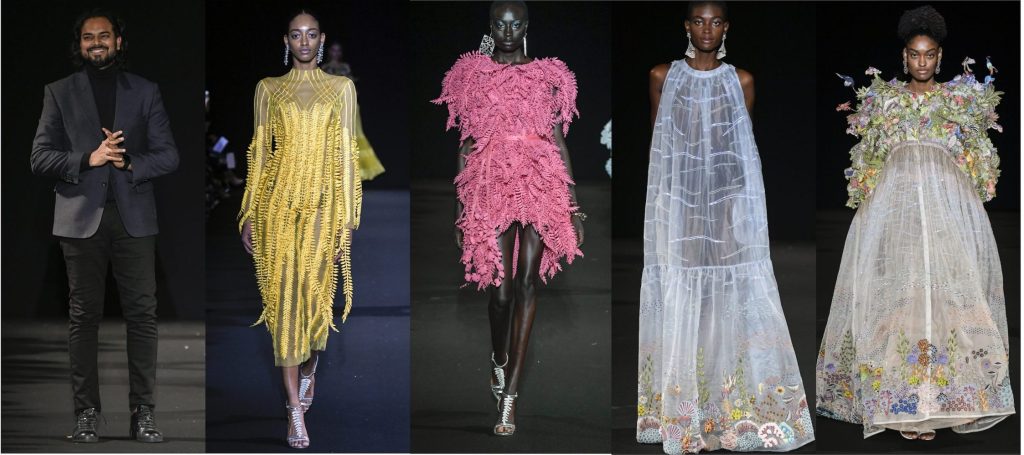
Media coverage plays a pivotal role in celebrating African fashion exhibitions abroad, amplifying the narratives embedded in each collection. Deola Sagoe’s transformation of African textiles onto global runways exemplifies how couture craftsmanship can elevate indigenous motifs to international acclaim . Similarly, Imane Ayissi’s historic presentation at Paris Haute Couture Week in 2020 marked a milestone for sub-Saharan African designers, showcasing the potential for haute couture to embrace diverse cultural influences. Exhibitions like the Victoria and Albert Museum’s ‘Africa Fashion’ exhibition further validate the continent’s creative contributions, situating African design within broader cultural frameworks such as Afrofuturism .
Small-scale entrepreneurs are also making significant strides, expanding their reach globally while addressing socio-economic challenges. Faith Oluwajimi’s label Bloke exemplifies this trajectory, challenging conventional menswear norms with genderless collections that resonate with progressive audiences . In Cameroon, abundant natural resources and affordable labor provide fertile ground for innovative ventures. Brands like Pine Kazi in Kenya utilize renewable biomaterials—such as pineapple leaves—to produce biodegradable footwear, demonstrating how ancestral craftsmanship can merge with modern technology to drive sustainability. Additionally, favorable investment policies and foreign capital repatriation laws support African startups seeking to scale internationally .
Despite these successes, challenges persist, including bureaucratic hurdles for market entry and environmental concerns stemming from industrial production. However, the resilience and ingenuity of African designers position them as critical players in reshaping global fashion norms. By prioritizing inclusivity, sustainability, and cultural authenticity, they contribute to a more equitable and innovative industry. Further research could explore the long-term impacts of international collaborations and the scalability of small-scale ventures, providing actionable insights for policymakers and stakeholders committed to fostering Africa’s creative economy.
18 Top Fall Fashion Trends From Africa
To present the top fall fashion trends from Africa, we can organize the key elements into a structured format. The table below outlines 18 distinct trends identified through the research, categorized by their primary focus areas such as sustainability, cultural heritage, innovation, and global influence. Each trend is supported by relevant examples and citations.
| TREND NO. | TREND DESCRIPTION | EXAMPLES/DESIGNERS MENTIONED | FOCUS AREA |
| 1 | Sustainable textiles using eco-friendly materials | Ugandan bamboo, Kenyan organic cotton | Sustainability |
| 2 | Revival of Aso Oke fabric | Olubiyi Thomas, Abiola Olusola | Cultural Heritage |
| 3 | Hand-dyeing techniques like Adire | Kofar Mata dye pits, Abiola Olusola | Sustainability |
| 4 | Integration of storytelling via heritage motifs | Zetu’s SeatPack, trims honoring Ugandan identity | Cultural Heritage |
| 5 | Ethical labor practices and circular business models | Organic cotton, digital product passports | Sustainability |
| 6 | Bogolanfini (Mudcloth) with symbolic patterns | Malian artisans, concentric circles, zigzags | Cultural Heritage |
| 7 | Modern reinterpretation of traditional prints | Lisa Folawiyo, Ankara fabric | Innovation |
| 8 | Gender-fluid and inclusive designs | Orange Culture, Adebayo Oke-Lawal | Global Influence |
| 9 | Use of bold colors and maximalist patterns | Nigerian agbadas, Ethiopian habesha kemis | Cultural Heritage |
| 10 | AI integration in fashion design | Brandwatch, Syte.ai | Innovation |
| 11 | Artisanal craftsmanship and fair trade certifications | Sindiso Khumalo, Studio One Eighty Nine | Sustainability |
| 12 | Balloon silhouettes blending tradition and modernity | Simone Rocha, Chloé | Innovation |
| 13 | Afro-futurism in textile design | Solomon Abrams, Tokyo James | Innovation |
| 14 | Collaborations between African and global designers | Louis Vuitton x Studio 189 | Global Influence |
| 15 | Monochromatic styling with traditional garments | Max Mara, Fendi | Innovation |
| 16 | Slow fashion emphasizing regional narratives | Oshobor Odion | Sustainability |
| 17 | Wearable tech and smart fabrics | Senegalese AI artist Aïda Mbaye | Innovation |
| 18 | Preservation of artisanal techniques amid modernization | Bogolanfini, Nakunté Diarra | Cultural Heritage |
The table highlights the diversity and depth of African fashion trends for fall 2025. These trends emphasize sustainability, cultural storytelling, and technological innovation, reflecting Africa’s leadership in ethical and creative fashion practices. Notably, trends like Bogolanfini and Aso Oke demonstrate how traditional methods are being revitalized and reinterpreted for contemporary audiences. Similarly, collaborations with global brands underscore Africa’s growing influence on international fashion stages . This curated list provides a comprehensive overview of the dynamic forces shaping African fashion this season.
Conclusion
The exploration of “18 Top Fall Fashion Trends From Africa” underscores a transformative period in the global fashion industry, characterized by the seamless integration of tradition, innovation, and sustainability. African designers are at the forefront of this movement, redefining elegance through their unique cultural lenses while addressing contemporary global demands. From the revival of heritage textiles like Adire and Aso Oke to the adoption of cutting-edge technologies such as AI and wearable tech, these trends encapsulate a dynamic interplay between past and present.
Key findings reveal that African fashion is not merely about aesthetics but serves as a conduit for cultural storytelling, socio-economic empowerment, and environmental consciousness. Initiatives like Studio One Eighty Nine and Pine Kazi exemplify how sustainable practices and ethical production methods are being prioritized, aligning with consumer preferences for eco-friendly and socially responsible products . Furthermore, collaborations between African and international designers highlight the continent’s ability to reinterpret global trends while preserving its distinct identity.
Looking ahead, the continued rise of African fashion on global platforms presents both opportunities and challenges. While the industry is poised for significant growth, estimated at a CAGR of 12.14%, issues such as carbon emissions, waste management, and the risk of cultural appropriation must be addressed to ensure long-term viability . Future research should focus on scalable solutions that integrate traditional craftsmanship with modern industrial processes, ensuring quality and authenticity are maintained.
Ultimately, the vibrancy and sophistication of African fall fashion in 2025 affirm its pivotal role in shaping global narratives. By championing inclusivity, sustainability, and cultural preservation, African designers are not only redefining elegance but also setting new benchmarks for the future of fashion worldwide.
As Africa continues to shape global style with its bold creativity, cultural depth, and fearless innovation, these fall fashion trends prove once again that the continent is not following fashion — it’s defining it. At EyeAfrica.news, we celebrate the designers, makers, and movements driving this renaissance. For readers who want to understand the deeper forces influencing African fashion today, we recommend exploring “Secondhand Empire: How the Global Thrift Industry is Killing African Fashion,” our in-depth investigation into how overseas textile dumping threatens local designers and creativity. Together, these stories reveal not just what Africa is wearing, but what the future of African fashion truly depends on.
